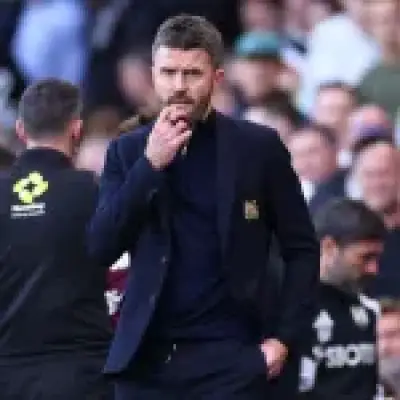
Argentina head coach Lionel Scaloni emphatically dismissed references to the 1982 Falklands conflict ahead of the World Cup semi-final against England, insisting the match is purely about football. “No, no, no. This is just a football match. Let’s not look for other stuff. It’s a football game against a great team, with a great manager who I admire. But it’s a football match. End of,” Scaloni said at his press conference.
Players Echo Call for Focus on Football
Argentina midfielder Rodrigo De Paul agreed, acknowledging the match’s transcendent nature but emphasising the need to separate football from politics. “We understand it’s a football game that transcends; it brings back memories of what Diego did. We sing songs about our Malvinas heroes, mainly to remember them, but we have to understand that it’s a football match and that the Malvinas have to be discussed elsewhere. What happened was an atrocity and we always remember the fallen, but what we want is to win this match to get to the final,” De Paul said.
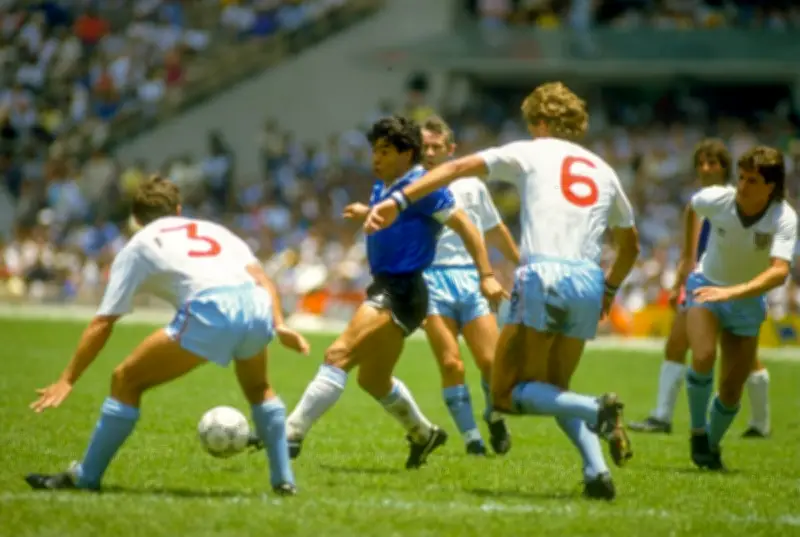
“What Diego did” refers to Diego Maradona’s iconic performance in the 1986 World Cup quarter-final against England, where he scored both the infamous “Hand of God” goal and the “Goal of the Century.” Maradona later joked about the handball, saying “maybe it was the hand of God,” and described it as “like pickpocketing an Englishman.” In 2014, he called the Falklands war a senseless conflict orchestrated “by two murderous governments.”
Violence and Camaraderie in Rivalry History
At the 1986 World Cup, an arranged fight between Argentinian barra bravas and English hooligans took place. One barra brava, a Falklands veteran, later told a journalist: “Nobody hates war more than a soldier. This here is about love, beauty and joy. This has nothing to do with hate.”
Argentinian novelist Juan Sasturain once said: “We have a lot to thank the English for. They gave us Borges’s literature, and they gave us football.” Jorge Luis Borges, who died a week before the 1986 quarter-final, famously described the Falklands conflict as “two bald men fighting over a comb.”
Memorable On-Pitch Moments
In 1998, Michael Owen’s solo run left fans gasping, but David Beckham’s sending off for reacting to a provocation by Diego Simeone dominated headlines. In 2002, Beckham avenged the incident by scoring a penalty against Argentina, avoiding eye contact with Simeone as advised by a psychologist. That defeat marked Argentina’s earliest World Cup exit in decades.
The most recent match between the two countries was a 2005 friendly in Geneva, which England won. Argentina’s coaching team now includes Scaloni, Walter Samuel, Roberto Ayala, and Pablo Aimar, emphasising congeniality and strong human bonds.
Looking Ahead to Match 102
After their quarter-final matches, both Scaloni and England manager Thomas Tuchel praised their teams’ mentality. Tuchel said their mentality was something they “could bottle and sell.” The rivalry, while steeped in war and vitriol, also includes friendship, poetry, and pop culture. As the teams prepare for match 102, the focus remains on football.