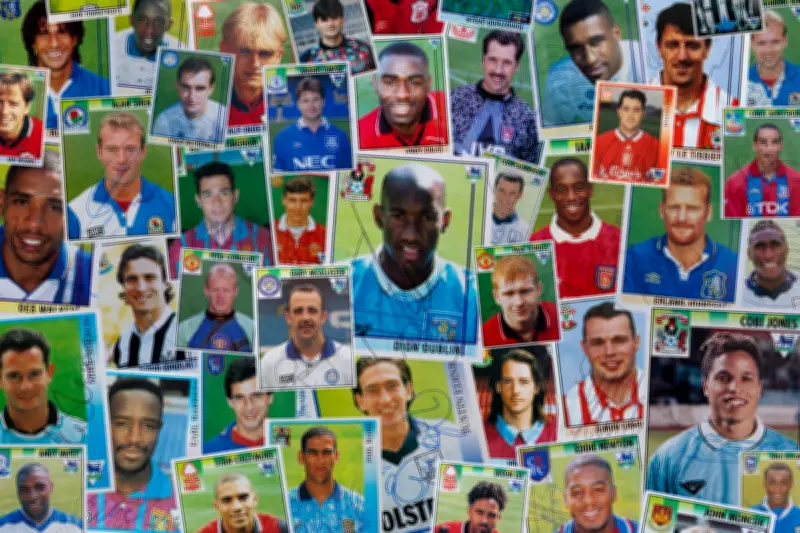
The Autograph Hunt: A Coventry Childhood in the Premier League Era
Looking through my childhood collection of football autographs from the 1990s evokes a powerful mix of delight and melancholy. The Merlin sticker albums, Pro Set trading cards, and Shoot annuals document a youth spent traveling across England with my father, following Coventry City during the early years of the Premier League. We would track visiting teams to their hotels before matches, hoping to secure signatures during their morning walks, then navigate around Highfield Road after games to catch players boarding team buses.
A Quarter-Century Since Top-Flight Football
It has been twenty-five years since Coventry City last competed in the Premier League—more than half my lifetime. No other club has returned to the top division after such an extended absence. The Sky Blues experienced a dramatic decline, falling three divisions within sixteen years and playing "home" matches in Northampton and Birmingham during a protracted stadium crisis that nearly destroyed the club. While fans clung desperately to hope, life continued its relentless march: I attended university, lived abroad in multiple countries, became a parent myself, and watched my autographs begin to deteriorate in storage.
Coventry's Premier League Legacy
At their peak, Coventry were a respectable Premier League side that consistently threatened to break into the top ten but never quite managed it. They regularly defeated elite opponents: a Micky Quinn hat-trick at Arsenal, Darren Huckerby's spectacular solo effort against Manchester United, and consecutive opening-day victories over Chelsea. The team produced memorable moments, from Stephen Froggatt's stunning strike against Everton to Dion Dublin's remarkable goal against Newcastle at Shay Given's expense. Even signing Brazilian player Isaias in 1995 felt extraordinarily exotic for the time. Sitting with my father in the M&B Stand, I failed to fully appreciate how fortunate I was to witness those golden years.
The Rules of Autograph Collecting
First rule: Value often lies in obscurity. While I coveted superstars like Eric Cantona, my father—with over 30,000 autographs dating to World War I—treasured signatures like that of Lee Hildreth, whose Coventry career lasted just sixty seconds against Burnley in 2007. Second rule: One signature is never enough. I recall encountering Liverpool's "Spice Boys" at a Coventry hotel and asking Steve McManaman for multiple autographs. When I requested "just one more," he shouted for the entire hotel to hear: "Are you having a laugh?" Third rule: Always use permanent marker, as ballpoint ink fades almost as quickly as youth itself.
A Father's Collecting Obsession
My father's passion for autographs began in 1950s Bristol after his own father sold half his collection. This childhood interest evolved into a lifelong obsession, with decades spent traveling across Britain and beyond to build an unparalleled collection. If you played professionally for Coventry—or for Liverpool, Manchester United, Arsenal, or Chelsea—chances are my father obtained your signature. This vast archive deserves museum exhibition but instead resides in plastic containers and peach-colored wardrobes, organized in a system only he comprehends.
The End of an Era
My enthusiasm for autograph hunting eventually waned. In April 1996, while searching for Queens Park Rangers' hotel, we arrived at the Holiday Inn behind a Blockbuster Video—where "crap teams" stayed. When my father asked if I could see the players, I lied and said no. I couldn't bear to admit I no longer wanted to wait hours in a dull hotel lobby just for Kevin Gallen's signature.
Relegation and Reflection
Coventry long served as the Premier League's great escape artists. Needing victory at Tottenham on the final day of 1997 to avoid relegation, they triumphed 2-1 thanks to Paul Williams' spectacular strike. Driving home in my father's burgundy Renault Laguna, listening to fan reactions on the radio, we felt invincible. But by 2001, our time had expired. I hold Craig Bellamy personally responsible for Coventry's relegation—in my memory, an arrogant, petulant player who failed to score from open play all season (though records show six goals, including two penalties). Relegation came at Aston Villa after surrendering a two-goal lead to lose 3-2. Wearing my Subaru-sponsored Coventry shirt—the last kit I ever purchased—I wept in the stands as a fan held a sign reading: "We'll be back." At eighteen, preparing to leave home, I knew my season-ticket days were over. This marked the definitive end of my childhood.
An Unexpected Return
Who could have predicted that Frank Lampard—whose autograph I obtained as a West Ham youth player—would eventually manage Coventry back to the Premier League? Not the former players who attempted to revive the club's fortunes, nor Mark Robins, who engineered seven years of steady progress that brought Coventry within a penalty shootout of promotion. Under Lampard, Coventry have dominated the Championship with a midfield reflecting his playing style and an exceptional goalkeeper in Carl Rushworth, destined for England recognition. While overdue for another top-flight opportunity, I harbor mixed feelings about promotion. The modern Premier League appears stale and joyless compared to the division we left behind, with concerns about competitiveness and whether my father and I could even obtain tickets for matches. Regardless of what happens, those precious 1990s memories remain more valuable than any autograph—a testament to the bond forged through football.