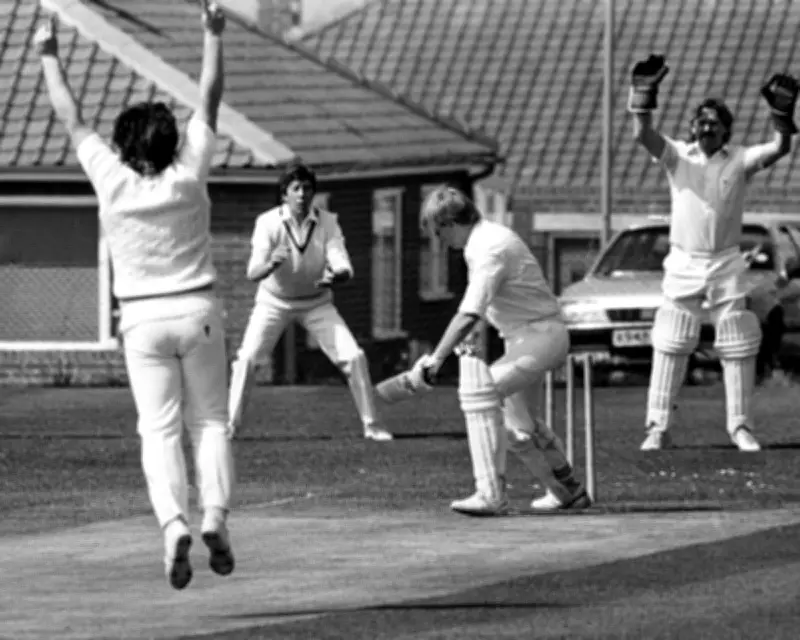
A cricket match in North Yorkshire has sparked a global conversation about sportsmanship after a fielder was caught on video clicking his fingers to deceive the umpire. The incident, dubbed “Clickgate,” occurred during a game between Saltburn second XI and Norton second XI, and the footage has been viewed more than 7 million times. The fielder, identified as Brian, has been nicknamed “Clicky Ponting” in a nod to former Australian cricket captain Ricky Ponting, though he has no connection to the scandal.
The Rise of Cheating Scandals in British Pastimes
The incident has reignited debate about the state of fair play in the UK. While cricket is often seen as a gentleman’s game, it is not the only pastime plagued by cheating. Amateur golf has seen numerous complaints, with one survey of over 3,250 golfers finding that more than 40% reported “known cheats” at their clubs, and another poll showing that 94% had witnessed deliberate rule-breaking on the course.
Even conkers, a classic playground game, has not been immune. In 2024, 82-year-old David Jakins won the annual title in Southwick, Northamptonshire, for the first time since 1977. However, organizers found a metal replica conker in his pocket after his victory, leading to accusations that he had cheated. His opponent claimed his conker “disintegrated in one hit.” Jakins was later cleared after an investigation.
From Giant Vegetables to Marathons
Giant vegetable-growing competitions have also faced cheating allegations, with growers accused of passing off shop-bought produce and injecting vegetables with water to increase their weight. Organizers have introduced water-detecting machines to combat this, and some have been accused of using paint to conceal moldy parts.
In athletics, runners with implausible times have been caught cutting corners. In 2011, Rob Sloan of Sunderland Harriers was stripped of his third-place finish at the Kielder Marathon after allegedly traveling part of the route by bus. He denied cheating, but event organizer Northumbrian Water said he admitted to failing to complete the course. In 2014, the London Marathon investigated a runner who allegedly cut 10 miles (16 km) off the route by jumping over a barrier, with times logged faster than Olympic champion Mo Farah.
Why Do Brits Cheat?
Social scientist David Hugh-Jones notes that “some people do cheat more than others – young people, for instance,” and that national variations in dishonesty exist. “Britain and other Northern European/Protestant countries often score relatively well on those tests, which of course makes this news all the more shocking.” He adds, “People often cheat or violate norms because they think other people will do the same. So perhaps this is a sad reflection on declining standards in the gentleman’s game.”
David Shepherd, a senior lecturer in economic crime at the University of Portsmouth, blames broader societal trends: “World leaders lie and cheat and they’re admired for it. LinkedIn is stuffed full of look-at-me exaggerations and downright lies. It teaches us that this is the efficient way to get on. Social media influencers lie. They teach us it is something to aspire to. AI is making cheating even more efficient.”
Shepherd also points to football: “Footballers openly cheat. They drop like they’re shot and magically spring back up once the penalty is awarded.” He suggests a potential solution: “Women are more honest than men. Ergo, if the cricket teams included men and women, there would be less cheating.”
Historical Cheating Scandals
The UK has a history of high-profile cheating scandals. Perhaps the most famous is Charles Ingram, who was found guilty of conspiring to cheat his way to the £1 million jackpot on “Who Wants to Be a Millionaire?” in 2001, using coughs from his wife and another contestant as signals. He maintained his innocence, and the payment was withheld. Ingram was not the first to win the jackpot; that honor went to others before him.
These incidents raise questions about the erosion of traditional values of fair play and honesty in Britain, prompting reflection on how societal influences may be reshaping behavior in sports and beyond.