Chilean Women's Football Union Pioneers Labor Rights Across South America
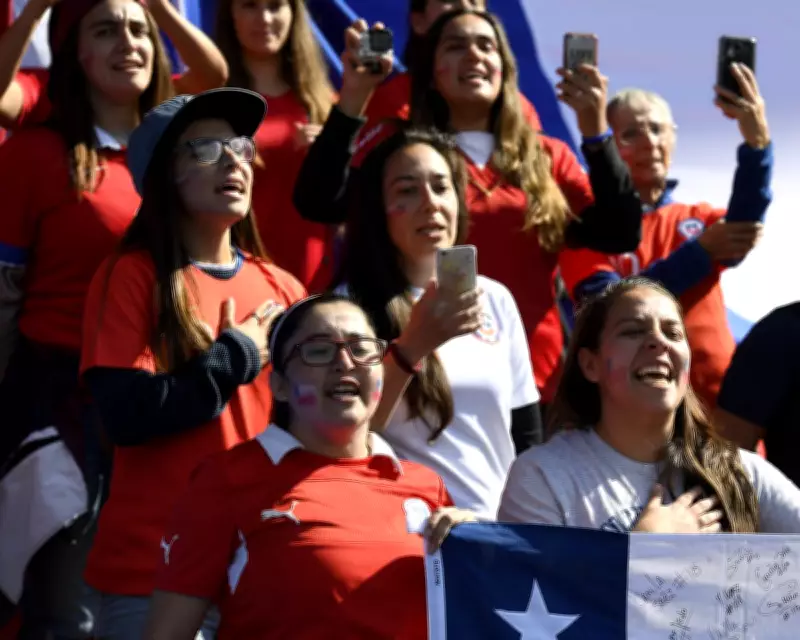
Chile's female football players have achieved a landmark victory by officially establishing a union under national labor law, setting a powerful precedent for women's sports across South America. The National Women's Football Players Association (ANJUF) transitioned to full union status in December, granting players unprecedented legal protections and collective bargaining rights.
From Informal Association to Legal Union
ANJUF has existed for nearly a decade as an advocacy group, but its new legal status fundamentally changes the landscape for women's football in Chile. Under current labor regulations, clubs and the national football federation are now legally obligated to engage in formal dialogue with players regarding contracts, benefits, and working conditions. This represents a significant shift from previous voluntary cooperation to mandatory negotiation.
"We want this movement to become massive," says Javiera Moreno, president of ANJUF and former Universidad Católica captain. "Our goal is to spread this to other countries. While Chile needed a specific union for women, at minimum there should be women's representation within every country's footballers' union worldwide."
Building on a Decade of Progress
The union traces its origins to 2016 when a group of pioneering players including Christiane Endler, Iona Rothfeld, Camila García, Fernanda Pinilla, Romina Parraguirre, and Moreno herself organized to fight for better conditions. Their efforts have yielded substantial results over the past eight years, including comprehensive medical care for professional players and policies addressing abuse, harassment, and precarious employment.
A major breakthrough came in 2022 when the Chilean government passed legislation requiring first and second division clubs to provide professional contracts for all players. This target was successfully achieved three years later, marking a significant milestone in the professionalization of women's football.
Regional Collaboration and Challenges
Camila García, an ANJUF director and former board member of global players' union Fifpro, emphasizes the importance of cross-border collaboration. "In Argentina, the professionalization process was sparked by a player. Brazilian players made huge contributions to reforms over the past five years," she notes, highlighting Aline Pellegrino's instrumental role at the Brazilian Football Confederation.
García points to Colombia's players addressing sexual and labor abuse as another example of regional progress. "Collaboration is inevitable, but we must recognize certain barriers in South America. Players need support and resources to organize effectively across the continent."
The 2027 World Cup as Catalyst
Both Moreno and García believe the 2027 Women's World Cup in Brazil represents a transformative opportunity for South American women's football. As the first Women's World Cup hosted in South America, the tournament could accelerate development and strengthen regional connections among players.
"Now the main challenge is how each country will leverage this opportunity, especially those qualifying for the World Cup," Moreno explains. "We hope Chile qualifies too, as that would significantly boost visibility for our national team and domestic league."
García adds a note of cautious optimism: "I witnessed Chile's incredible transformation after hosting the 2008 Under-20 World Cup. It changed stadium infrastructure and inspired a generation. But for women, that momentum faded when authorities didn't maintain commitment. I truly hope Brazil and South America use 2027 as a milestone for sustained development."
Addressing Systemic Challenges
Moreno, who also works as a sports psychologist, identifies data deficiency as a major obstacle to growth. In 2022, ANJUF conducted research demonstrating how professional contracts improved players' mental health, confidence, and motivation. "Players with guaranteed contracts felt more secure, which positively impacted their performance," she reveals.
The union now plans to launch comprehensive studies on players' mental health to develop targeted support programs. This data-driven approach represents the next phase of their advocacy, moving beyond basic rights to optimizing player welfare and performance.
Protecting Players from Retaliation
García emphasizes the union's protective role for players engaged in labor negotiations. "It can be very taxing if you're still trying to compete and maximize your career. You don't want to face retaliation for your advocacy efforts," she explains. "We've been transparent about this risk and offer every possible protection to our members."
Looking Toward the Future
Moreno reflects on the journey from modest beginnings to ambitious goals. "Ten years ago, dreaming beyond professionalization seemed utopian. We started by correcting fundamental wrongs like guaranteeing health insurance so players wouldn't pay injury treatment costs themselves. This sequence of actions allowed us to institutionalize and solidify our work."
As Chile's women footballers continue to break new ground, their union serves as both a model and catalyst for change across South America. With the 2027 World Cup approaching, the region stands at a crossroads between maintaining traditional structures and embracing the transformative potential of organized, empowered female athletes.