Carrick's Derby Masterclass Raises Crucial Manchester United Question
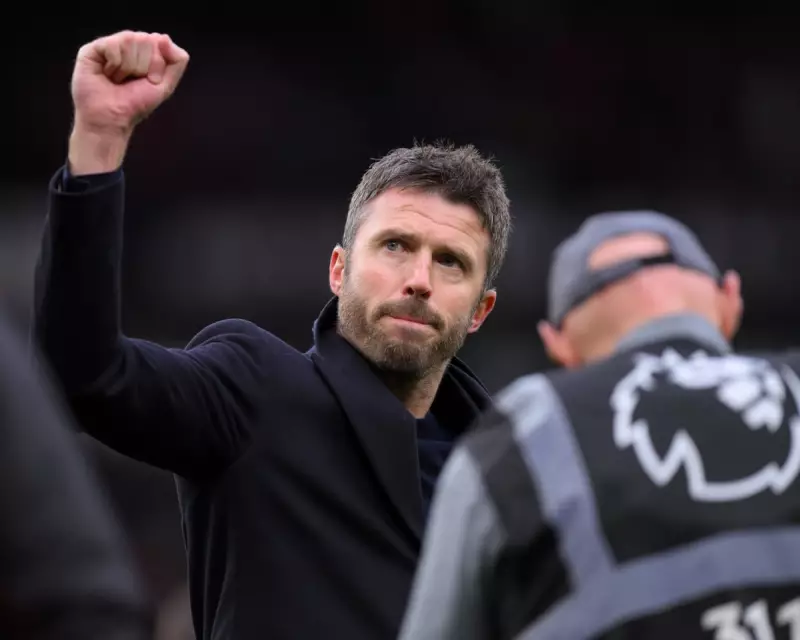
Michael Carrick's triumphant salute to the Manchester United faithful following his team's commanding 2-0 derby victory over Manchester City has sparked intense discussion throughout the football world. The caretaker manager's tactical masterclass against Pep Guardiola's side demonstrated both immediate impact and raised fundamental questions about the club's long-term direction.
The Solskjær Precedent Looms Large
The problem facing Manchester United's hierarchy is painfully familiar. After thirteen years of managerial instability and seven different appointments failing to deliver sustained success, every potential decision carries the weight of previous failures. Should the club retain Carrick permanently, they risk repeating the Ole Gunnar Solskjær situation where initial promise faded into familiar disappointment.
Yet replacing him presents equally troubling prospects. Whether considering Premier League veterans, foreign tactical maestros, renowned past-their-peak winners, gegenpressing specialists, or ideological Portuguese coaches, United have tried virtually every profile without achieving the desired transformation. This pattern suggests the club's issues may run deeper than any single managerial appointment.
Carrick's Impressive Start Demands Careful Consideration
Carrick's opening games have undeniably impressed. His Manchester United side displayed renewed pace, creativity, and attacking verve that had been conspicuously absent. The liberation players experienced after being released from restrictive tactical systems was palpable, with previously underutilised talents like Amad Diallo flourishing in new roles and Bruno Fernandes rediscovering his creative spark as a traditional number ten.
The comprehensive nature of United's derby victory cannot be overstated. They didn't merely defeat their city rivals; they dominated them tactically and physically, unpicking Guardiola's sophisticated system with surprising ease. This immediate success naturally prompts calls for Carrick's permanent appointment, but history offers crucial perspective.
Historical Parallels and Cautionary Tales
Solskjær's initial tenure provides instructive parallels. His first match after replacing José Mourinho delivered a spectacular 5-1 demolition of Cardiff City, followed by thirteen victories in sixteen games. The temporary manager's early success created overwhelming public pressure for his permanent appointment, which United's hierarchy ultimately conceded to in March 2019 despite having no contractual necessity to decide so soon.
This premature decision proved costly. United won only two of their final twelve matches that season, and by summer it was already apparent they had made a significant error. The club's tendency to bow to public clamour rather than conducting thorough, evidence-based assessments has repeatedly undermined their managerial recruitment process.
Assessing Carrick's Credentials Beyond Immediate Results
Carrick brings reasonable credentials to consider. His previous caretaker stint yielded three unbeaten games, and while he didn't achieve promotion with Middlesbrough during nearly three seasons there, he maintains the second-best win percentage of any manager who spent six months or more at the Riverside Stadium.
However, the derby victory requires contextual understanding. Manchester City arrived at Old Trafford ravaged by injuries and in poor form, having failed to win in four Premier League matches and suffering a surprising Champions League defeat to Bodø/Glimt shortly afterwards. United's performance nevertheless showcased the attacking freedom and tactical intelligence that once characterised the club at its best.
The Unique Challenge of Manchester United's Managerial Assessment
United face particular difficulties in evaluating managerial candidates. Their squad should theoretically be fresher than most opponents they'll encounter this season, with only West Ham and Bournemouth having played fewer games among remaining fixtures. If United appear more dynamic than rivals in coming months, this may reflect Carrick's tactical approach but could equally stem from their comparative freshness.
The fundamental challenge remains: how can any Premier League club accurately assess managerial potential? Success at mid-table clubs doesn't guarantee capability at elite level, as Thomas Frank's struggles at Tottenham demonstrate. Similarly, achievement in secondary European leagues like Portugal or the Netherlands offers no certainty of Premier League success.
Navigating Manchester United's Decision Dilemma
United's decision cannot rest solely on results or even performances alone. It requires nuanced assessment of leadership qualities, tactical sophistication, player motivation capabilities, and the unique pressures of managing a global institution. These judgments are inherently subjective, blending analytical evaluation with intuitive feel for a candidate's potential.
The most concerning aspect for Manchester United supporters is that throughout thirteen years of managerial turbulence, nobody within the club's hierarchy has demonstrated the insight necessary to identify and appoint the right candidate consistently. As Carrick's impressive start generates both optimism and apprehension, United face their familiar dilemma with renewed urgency and higher stakes than ever before.