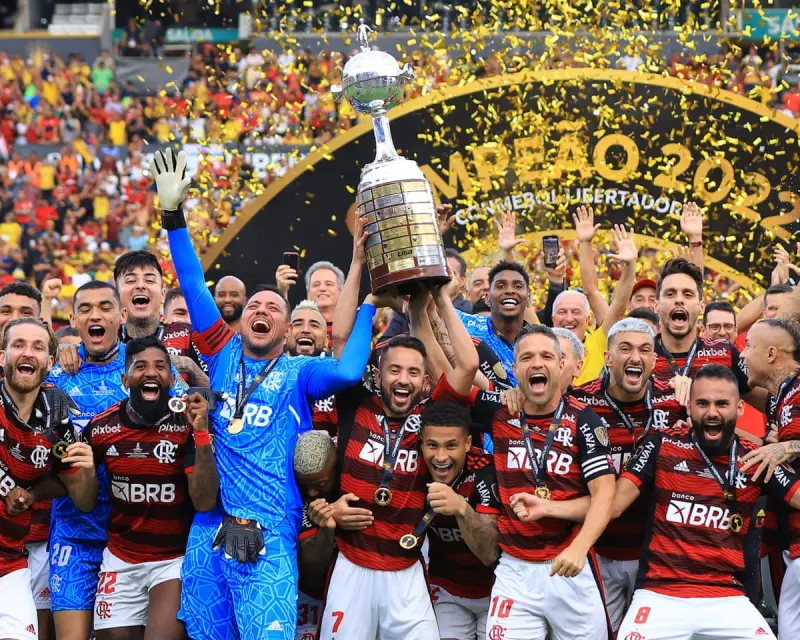
South American football's ultimate prize will be decided this Saturday when Brazilian giants Palmeiras and Flamengo clash in the Copa Libertadores final at Lima's Estadio Monumental. This marks the fifth time in seven years that one of these two clubs will lift the continent's most prestigious trophy, cementing their status as football superpowers that have fundamentally reshaped the competitive landscape.
The Rise of Brazilian Football Dominance
To the surprise of few observers, this year's final continues Brazil's overwhelming dominance of the competition. One of these clubs will have won five of the last seven Libertadores tournaments, with only River Plate's 2018 victory interrupting Brazilian supremacy over the past nine years. The winner will become Brazil's most successful club in continental history with four titles, while Brazil will draw level with Argentina on 25 Libertadores trophies overall.
The final carries additional significance in the domestic context, with Flamengo currently leading Palmeiras by five points in the Brazilian league with just two matches remaining. The Rio club also boasts a psychological advantage after winning both league encounters between the sides earlier this season.
European-Scale Ambitions in South America
What makes this final particularly significant is how both clubs have evolved into institutions with European-level resources, reach and expectations. Palmeiras invested an astonishing £100 million in 12 signings across 2025, including the £22.5 million acquisition of Vitor Roque from Barcelona - the highest fee ever paid by a Brazilian club.
Flamengo have matched this financial muscle, spending nearly £50 million on seven players including their record £20.5 million signing of Samuel Lino from Atlético Madrid. The club's commercial success is equally impressive, with Flamengo posting record revenue of £190 million last year, closely followed by Palmeiras at £180 million.
Contrasting Paths to Lima
Palmeiras reached the final in dramatic fashion, overturning a 3-0 first-leg defeat against LDU Quito with a stunning 4-0 home victory. Their campaign has been defined by the attacking partnership of Vitor Roque and Flaco López, who have contributed 43 goals between them this season. López arrives as the competition's joint-top scorer with seven goals, while Roque's form has earned him a recall to the Brazilian national team.
Under manager Abel Ferreira, now the longest-serving coach in Brazilian football in three decades, Palmeiras have enjoyed their most successful era ever. The Portuguese has collected 10 trophies in five years, including back-to-back league titles and consecutive Libertadores triumphs, among them the 2021 victory over Flamengo in Montevideo.
Flamengo's journey to the final saw them edge past Estudiantes on penalties in the quarter-finals before overcoming Racing in the semis. The Rubro-Negro are coached by former player Filipe Luís, who won the competition as a player with the club in both 2019 and 2022. His squad features several former Premier League players including Jorginho, Danilo and Emerson Royal, but their standout performer has been Uruguayan midfielder Giorgian de Arrascaeta, who has produced 23 goals and 17 assists in his most prolific season.
The final's location in Lima has raised concerns, with Peru currently under a 30-day state of emergency amid rising violent crime and youth-led protests. The shift to single-match neutral finals in 2019, mirroring UEFA's Champions League format, has significantly increased costs for travelling fans. Remarkably, flying to Peru is now cheaper from London than from São Paulo or Rio de Janeiro, raising questions about whether the 80,000-seat stadium will be filled.
This clash represents more than just another chapter in Brazil's footballing dominance - it showcases how two clubs have transformed themselves into institutions capable of competing with European counterparts while raising the bar for what's achievable in South American football.