The Englishman Who Changed Swedish Football
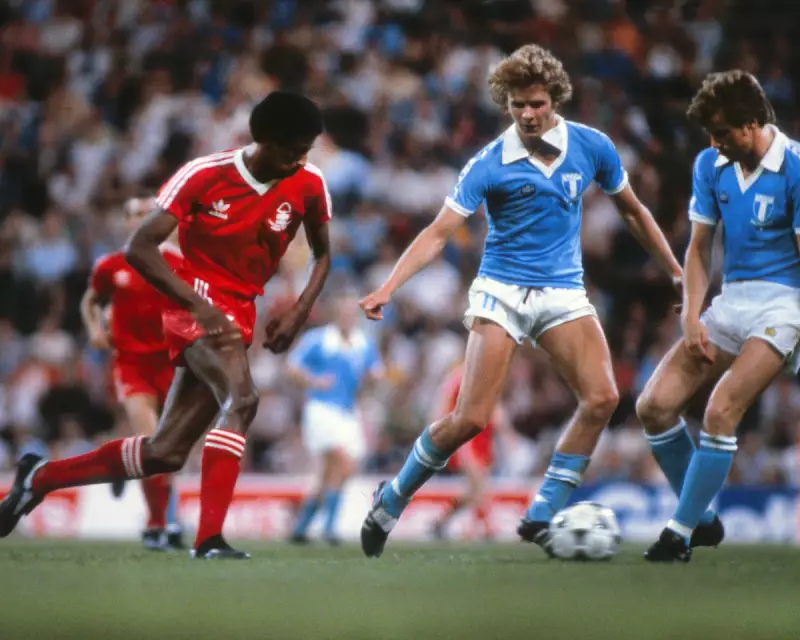
In the opening moments of the 1979 European Cup final, a defensive error from Nottingham Forest's Kenny Burns presented Malmö's Jan-Olov Kindvall with a golden opportunity. The Swedish striker attempted to lob the advancing Peter Shilton, but misjudged the goalkeeper's position, allowing Shilton to make a comfortable catch. That early chance proved decisive as Malmö's hopes of European glory began to fade against Brian Clough's formidable side.
"I had quite a good chance to score and then they were the better team," Kindvall reflects. "Maybe if we had got the first goal, we might have had a chance. We were very good when we didn't have the ball ourselves, with excellent organisation in defence."
An Unlikely Appointment
The man behind Malmö's remarkable journey was English manager Bob Houghton, who in 1974 became the club's coach at just 26 years old - younger than several of his players. Houghton arrived as Swedish football predominantly used German-style libero systems with man-marking, but he brought revolutionary ideas from England's coaching courses.
Having studied under the FA's technical director Allen Wade, Houghton advocated for a back four, zonal marking and a direct approach. His methods initially shocked players, particularly his approach to pre-season training. "Every year when we began training, we didn't take our boots," recalls midfielder Claes Malmberg. "Just trainers. Running, running, running. But Bob took us straight on to the pitch and we became afraid that we wouldn't have the fitness."
The Road to Munich
Under Houghton's leadership, Malmö won the Swedish league in 1974 and 1975, establishing the effectiveness of his methods. When the club secured the title again in October 1977, it earned them a place in the 1978-79 European Cup.
Their European campaign began with victory over Monaco, where Kindvall scored the decisive away goal. "We went out and we bumped into Ringo Starr, who lived there because of tax," Kindvall remembers. "He was sad because Liverpool had lost to Forest; he had no idea who we were."
The journey continued with a remarkable result against Dynamo Kyiv in the Soviet Union. "We had Abba records, jeans and things like that, and we got gifts and caviar from them; it was a good swap," says Kindvall of their 0-0 draw in Kharkiv, followed by a 2-0 home victory.
Malmö's quarter-final saw them overcome Wisla Krakow with four goals in the final 25 minutes of the second leg, before a 1-0 aggregate victory against Austria Wien in the semi-finals secured their place in the final.
The Final Showdown
As Malmö prepared to face Nottingham Forest in Munich's Olympic Stadium, disaster struck. Key players Bo Larsson and Roy Andersson were already ruled out through injury when captain Staffan Tapper sustained an injury in the final training session. Tapper attempted to play but was forced off after just 20 minutes.
Claes Malmberg, who came on as substitute, recalls: "I walked to my place and I did my job. We knew exactly what we should do. Every metre, every centimetre, we knew exactly our position. We knew each other so well in the team."
Despite their organisation and defensive discipline, Malmö struggled against Forest's quality. The English side's winner came from Trevor Francis, England's first £1m footballer, highlighting the gulf in resources between the clubs.
Reflecting on what might have been, Kindvall acknowledges the impact of the injuries: "To have three of our most experienced players not playing the game... I think we were better in April than in May."
The achievement becomes even more remarkable considering Malmö's squad comprised players born within 40 miles of the city, with only five full-time professionals. Many players maintained other careers - Roy Andersson worked as an engineer, while Malmberg was a sales manager for Toshiba even during the European Cup campaign.
Looking back on their incredible journey, Kindvall summarises: "The whole journey was fantastic. It would be absolutely impossible today." Bob Houghton's English revolution may not have ended with European glory, but it forever changed Swedish football and created one of football's most unlikely underdog stories.