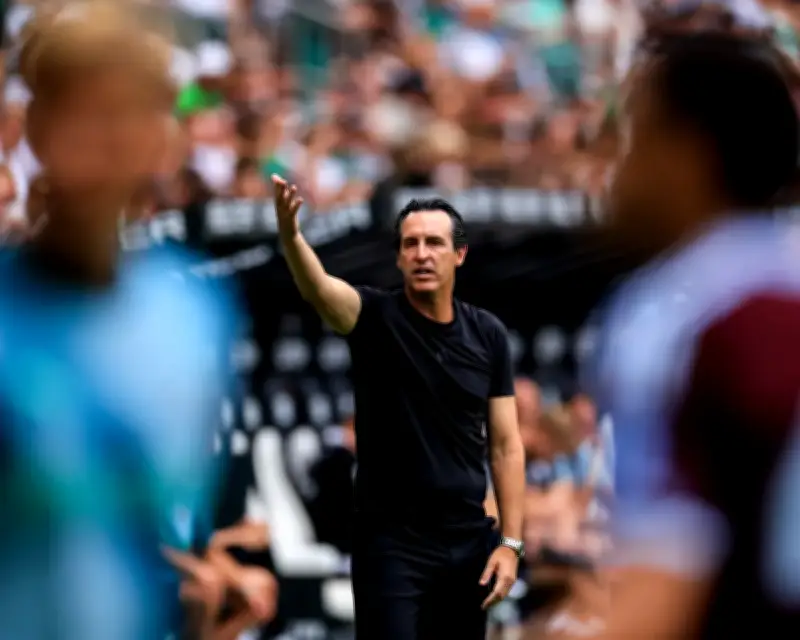
Aston Villa have undergone a significant squad and backroom overhaul this summer, with key players departing and a wave of youthful arrivals signalling a fresh start under manager Unai Emery. The club has generated a net surplus of £160m from sales, with Morgan Rogers, Youri Tielemans, and Ezri Konsa among those leaving, while Emí Martínez and Ollie Watkins may follow.
Record season and the question of what comes next
Last season was Villa's greatest since winning the European Cup in 1982. They claimed their second European trophy by lifting the Europa League, and even without that, they secured Champions League qualification by finishing fourth in the Premier League. Despite a miserable start where they failed to win any of their first five league games, there was a spell around Christmas when Villa looked like potential title challengers.
The question after such a season is always: where next? The answer is probably less clear now than it was amid the delirium of Istanbul in May. A reasonable consideration even a couple of weeks ago would have been whether that was a one-off high, the limit of the club's ambitions, or whether there was more to come. The danger for any team, particularly one relatively unfamiliar with success, is to rest on its laurels, to be too loyal to those who brought the long-awaited silverware.
Key departures and backroom changes
Villa have not rested on their laurels. Three major players – Rogers, Tielemans, and Konsa – have left, Martínez seems likely to join them, and Watkins might go as well. This is not a fire sale, nor is it a club cashing in while it still can, but it probably wasn't quite planned this way either. The exodus combines accepting that certain players are ready to fly the nest and trying to make as much money as possible for a rejuvenation of the squad. The danger is that too much is being changed too quickly.
Changes have not just been among the playing staff. Two physios and the head of the medical team went to Arsenal. Jaime Arias Galán, a technical assistant, has left. The individual development coach, Rodri, went to Como. Most significantly, Emery's assistant, Pako Ayestarán, departed, while set-piece coach Austin MacPhee went to Chelsea. There are always changes among backroom staff and the impact is hard for outsiders to assess, but the departures add to the sense of flux and uncertainty.
Financial logic behind the player sales
There is logic in the changes to playing personnel, though. Rogers is 24 and had been at the club for two and a half seasons. He scored 14 goals in all competitions in each of the past two seasons, many spectacular. He squeezed in the third goal in the Europa League final and will be remembered with great affection by Villa fans, but he wanted to go for a better salary and perceived better opportunities at Chelsea.
Once a player's mind is set on leaving, there is rarely much point in standing in their way. An Alexander Isak at Newcastle situation helps nobody. Far better to accept the cash and reinvest it. For a player who cost £15m, a fee of £117m, less the 20% owed to Middlesbrough, represents excellent business. Konsa is 28 but had two years left on his contract; a fee of £51m feels reasonable. Tielemans went after Manchester United triggered his £35m release clause. There was nothing Villa could have done, but given the Belgian is 29, they can at least console themselves that they're selling a player picked up on a free in summer 2023 for a reasonable price before any decline began.
Exciting new arrivals and future plans
While no club enjoys losing high-class players, trading is a necessary part of squad development – and there is reason to be excited about Villa's recruitment. Johan Manzambi is a hugely gifted young attacking midfielder, Zion Suzuki is recognised as one of the most promising young goalkeepers in the world, João Gomes has already shown signs of the tenacity he can bring to the midfield, and Matteo Ruggeri probably represents an upgrade on Lucas Digne at left-back. Alejandro Garnacho is a loan signing with potential; the Argentinian winger clearly has talent, but the issue is releasing it consistently. Aaron Wan-Bissaka, reliable cover at right-back, has joined from relegated West Ham.
All that with a net surplus of £160m, plus whatever they may get for Watkins should he leave. More signings will arrive. There is need of a defender to replace Konsa. Chelsea's Nicolas Jackson represents an obvious option to replace Watkins, given his capacity to exploit the space behind opposing defensive lines. The thought of him and Manzambi linking with Brian Madjo, the 17-year-old centre-forward who made such an impression in the Uefa Super Cup defeat by Paris Saint-Germain, is undeniably enticing. Another central midfielder looks essential, particularly after Amadou Onana tore his anterior cruciate ligament at the World Cup. There will probably be at least one and possibly two more creative players, one to operate centrally and one on the left.
That means potentially seven or eight major arrivals over the summer, and that is a lot. It hasn't always been easy for new signings to adapt to Emery's methods. The Spaniard has insisted there are “six or seven contenders” better equipped than Villa this season. Managers habitually try to play down expectation, and given the changes, it's understandable Emery should take that stance. It may even be accurate. But it's also true that a lot of sides have undergone a lot of change this season – and Villa at least have retained the same manager.
It may even be that this is a necessary stage of development, of rejuvenation and of the accumulation of capital before a renewed assault on the heights. Certainly the shift from Profitability and Sustainability Rules to squad cost ratio should suit Villa. But in an ideal world, all three of Rogers, Konsa, and Tielemans would not have gone in the same summer; to undergo this much change at once is an enormous risk. It is, though, risk with a potential upside, whereas sitting back and relishing the memory of last season would have led inevitably to decline. One phase is ending, a new one beginning, and while it might go wrong, Emery 2.0 may, in time, be even better for Villa than the first version.