The Argentine Football Association (AFA) has officially designated July 15 as 'National Football Teams Day' to celebrate their dramatic 2-1 victory over England in the semi-finals of the 2026 World Cup. The announcement comes just weeks after the tournament, where Argentina eventually fell to Spain in the final.
A Rivalry Renewed After 21 Years
England and Argentina met for the first time in 21 years, reviving one of football's most intense rivalries. The match took place exactly 40 years after the infamous 1986 quarter-final, where Diego Maradona's 'Hand of God' goal helped Argentina to a 2-1 win. This time, England took the lead through Anthony Gordon's second-half strike, but two late goals from Argentina turned the game on its head.
Enzo Fernandez's long-range effort in the 85th minute leveled the score, and Lautaro Martinez headed home the winner in the 92nd minute, sending Argentina into the final and breaking English hearts.
Official Statement from the AFA
In a statement, the AFA explained the choice of date: 'The date was chosen to commemorate the Albiceleste's great and historic victory over England in the semi-final of the 2026 World Cup.' The statement also praised the team led by Lionel Scaloni, noting that they 'were trailing the English side by a single goal but, thanks to goals from Enzo Fernández and Lautaro Martínez, managed to turn the result around and send the whole country into a frenzy, with people flooding the streets in celebration.'
The tribute extends beyond the senior team, as the AFA emphasized: 'The recognition, of course, is also for each and every one of the national teams (youth, men and women, futsal, beach soccer and field soccer), which day by day train at the Lionel Andrés Messi centre with the enthusiasm, joy and responsibility of defending the blue and white.'
Controversy and Falklands Tensions
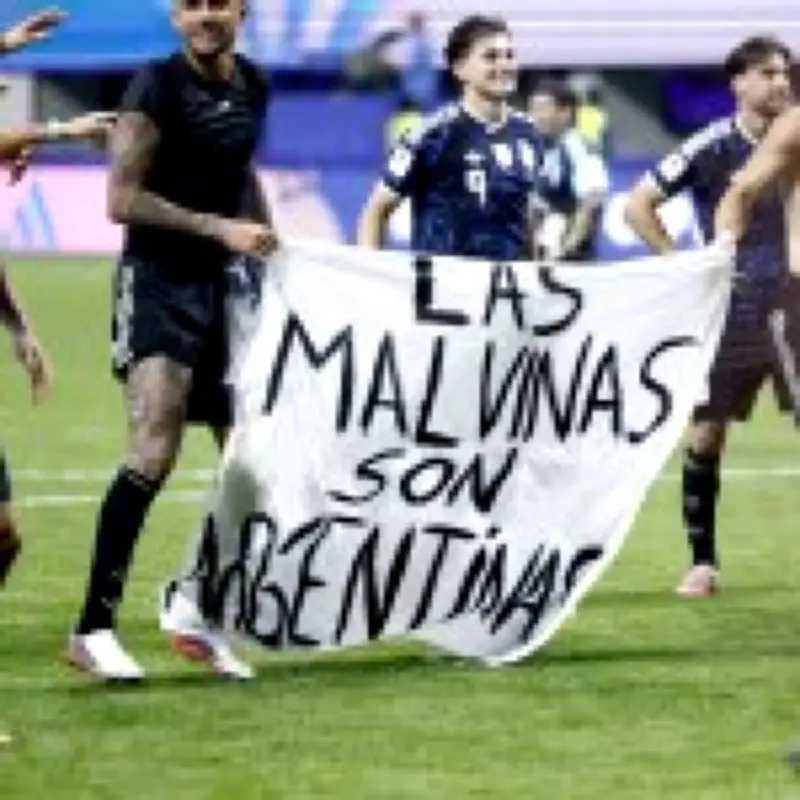
The victory was not without its controversies. After the match, some Argentine players held up a banner reading 'Las Malvinas son Argentinas' ('The Falklands are Argentine'), a direct reference to the long-standing territorial dispute over the Falkland Islands, a British Overseas Territory. The banner drew immediate criticism from the UK government and led to FIFA charging Argentina for the incident.
In addition to the banner, FIFA is investigating the AFA for potential breaches related to discrimination, racist abuse, and the throwing of objects by fans at 'several' matches during the tournament. The governing body also opened proceedings against players Leandro Paredes and Nahuel Molina, as well as coach Roberto Ayala, for assault following an ugly brawl at the end of the World Cup final. Separately, Molina and Thiago Almada are under investigation for unsporting behavior, as is Spanish midfielder Gavi.
Historical Context and Impact
The Falklands conflict remains a sensitive issue. In 1982, Argentina invaded the islands, leading to a 74-day war that resulted in the deaths of 255 British servicemen and 649 Argentinian personnel. The islands are home to around 3,000 people and are a self-governing territory, but Argentina has never relinquished its claim.
The creation of 'National Football Teams Day' is seen as a provocative move by many in England, adding fuel to an already fiery rivalry. The date, July 15, will now be a permanent reminder of Argentina's triumph over England on the world's biggest stage.