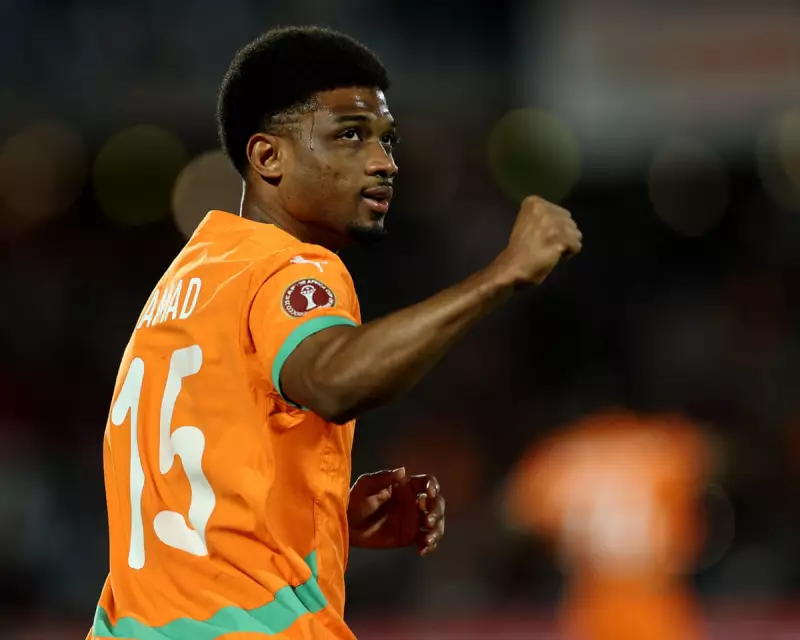
The 2025 Africa Cup of Nations has provided a compelling subplot for Manchester United fans, as winger Amad Diallo emerged as one of the tournament's standout performers for Côte d'Ivoire. His dazzling displays on the continental stage have sparked fresh debate about his role and future at Old Trafford, particularly following the dismissal of manager Ruben Amorim.
From United Prospect to Ivorian Luminary
It is remarkable to consider that Amad Diallo is still only 23 years old. Since his high-profile move from Atalanta to Manchester United five years ago for a reported £19 million plus add-ons, his journey has been one of patience and gradual ascent. Initial struggles for minutes led to loan spells at Rangers and Sunderland, but the player who returned to Manchester has transformed into a genuine difference-maker.
This season, his importance to United's build-up play has been quantifiable. According to FBref data accurate to 9 January 2026, no United player has registered more progressive carries than Amad in the 2025-26 campaign. He has become the crucial outlet against high presses, frequently receiving the ball out wide, beating his marker, and driving United forward.
A Tactical Evolution Under Amorim
A significant part of Amad's development this season came under the now-departed coach Ruben Amorim. The Portuguese manager's system often deployed the Ivorian in a more defensive wing-back role, which paradoxically unleashed his attacking confidence. His attempted take-ons per 90 minutes skyrocketed from 1.01 before Amorim's arrival to 4.28 afterwards.
His creative numbers have been equally impressive. In the Premier League this season, Amad ranks 11th for key passes and 6th for shot-creating actions per 90 minutes among qualifying players. Within the United squad, only captain Bruno Fernandes has produced more. With Fernandes now 31 and perennially linked with a move away, Amad has demonstrated a burgeoning ability to orchestrate attacks that could make him part of the solution to replace the skipper.
However, a shift to a wing-back role has impacted his goal output. He has managed just two Premier League goals in roughly 1,200 minutes this term—an area that must improve if he is to assume a greater attacking responsibility.
Afcon Dominance and a Post-Amorim Future
Any doubts about Amad's potency in the final third were emphatically dismissed at Afcon. In just four starts for Côte d'Ivoire, he scored three goals and provided one assist, propelling his nation through an undefeated group stage and a round-of-16 victory over Burkina Faso. Their tournament ended in the quarter-finals against Egypt.
His statistics were dominant. According to Opta, Amad averaged 5.17 shots and 0.45 expected goals (xG) per 90 minutes at the tournament—no player took more shots per 90. A memorable solo goal against Cameroon, where he cut inside and curled a superb finish into the net, was a highlight of his campaign and secured a vital point for the Elephants.
Amorim's departure now creates uncertainty but also opportunity. The tactical shift likely means an end to Amad's stint as a wing-back, potentially freeing him for a more advanced, central role. His Afcon performances, where he operated as a primary attacking force, offer a tantalising glimpse of what he could offer United in a more offensive setup.
As he stated in a recent press conference, "I'm not trying to be Ivory Coast's best player." Yet, his performances in Morocco suggest he has already achieved that status. The challenge for Manchester United is to harness that same transformative impact at club level in a new tactical era.