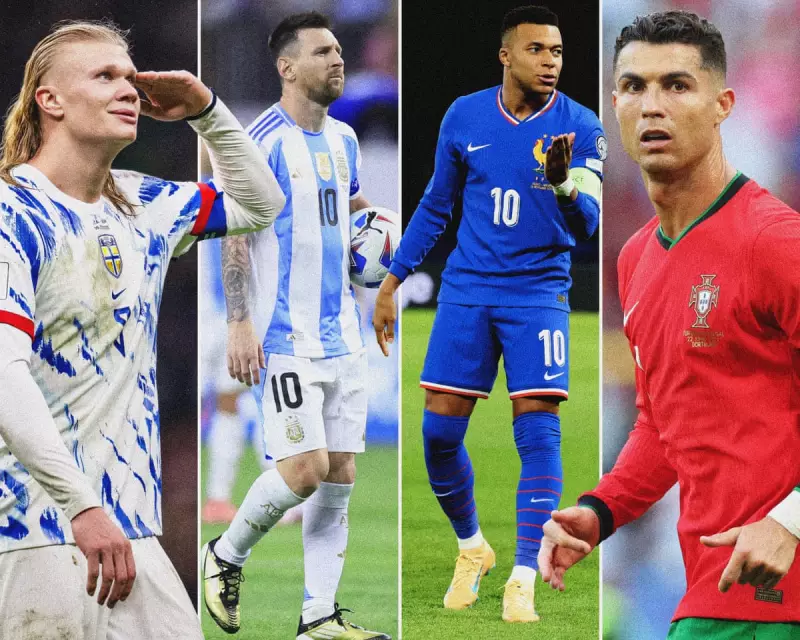
The draw for the 2026 FIFA World Cup has set the stage for a spectacular tournament across North America, promising thrilling group-stage encounters featuring the game's biggest stars. From Lionel Messi's potential final bow to a heavyweight clash between Kylian Mbappé and Erling Haaland, the expanded 48-team format offers a fascinating mix of established giants and emerging nations.
Group-by-Group Breakdown: The Path to Glory
Group A will open the tournament at the iconic Azteca Stadium with a repeat of the 2010 opener between Mexico and South Africa. Mexico, managed by former player Javier Aguirre, will aim to channel their home advantage from 1986. South Africa, back for the first time since hosting, qualified under veteran coach Hugo Broos. South Korea, in their 11th consecutive finals under Hong Myung-bo, will be joined by a European play-off winner from the Czech Republic, Denmark, North Macedonia, or the Republic of Ireland.
In Group B, Canada, led by Jesse Marsch, will hope their talented generation featuring Jonathan David and Alphonso Davies can secure a first-ever World Cup point. They face a stern test from a consistent Switzerland side and hosts Qatar, whose squad is entirely domestic-based. The group's complexion hinges on whether Italy can navigate their UEFA play-off.
European Giants and African Contenders
Group C sees Scotland's long-awaited return, facing a daunting task against Brazil, managed by Carlo Ancelotti, and a formidable Morocco side. Haiti completes the group. Group D features hosts the USA, who have found form under Mauricio Pochettino. They will face Paraguay, Australia, and a European play-off winner from Kosovo, Romania, Slovakia, or Turkey.
Germany, under Julian Nagelsmann, will look to rebound from recent disappointments in Group E against the defensively solid Ecuador, Afcon champions Côte d'Ivoire, and minnows Curaçao. The Netherlands headline Group F, opening against an impressive Japan. Tunisia and a potential Sweden side, managed by Graham Potter, complete a competitive section.
Star Power and Tactical Battles
The draw has set up several mouth-watering individual duels. Group I promises a blockbuster finale when France, with Kylian Mbappé, meet Erling Haaland's Norway. France must first navigate a rematch with Senegal, who beat them in 2002. Senegal, managed by Pape Thiaw, remain a powerful force in African football.
In Group J, the focus will be on Lionel Messi. The Argentine icon will turn 39 during the tournament as the reigning champions, under Lionel Scaloni, face Algeria, Austria, and Jordan. The eternal question of Cristiano Ronaldo's role lingers over Group K. Portugal's manager Roberto Martínez has committed to selecting the 40-year-old, despite concerns his presence may disrupt a fluid attack. They face DR Congo, Uzbekistan, and Colombia.
England's Charge and the Final Group
England travel with genuine expectation under Thomas Tuchel, who has a specific brief to win the trophy. With a squad brimming with creative talent, they qualified without conceding a goal. Group L presents a familiar hurdle in the shape of Zlatko Dalić's Croatia, alongside a gifted Ghana side and Panama.
Spain, the European champions and world number one, are favourites in Group H. Luis de la Fuente's dynamic side face a Uruguay team in flux under Marcelo Bielsa, the rising Cape Verde, and Saudi Arabia. Group G features Belgium and Egypt, both in transitional phases, alongside Iran and New Zealand.
The 2026 World Cup draw has laid a compelling foundation for the expanded tournament, blending narrative, rivalry, and sheer star quality across the North American continent.