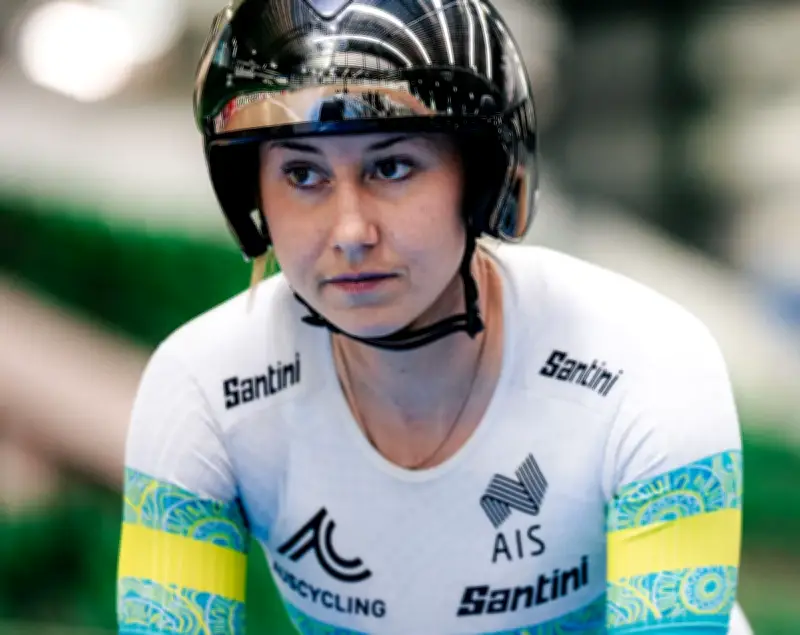
Australian cyclist Brodie Chapman has said she was nearly struck by a car during the Tour of Britain Women, raising fresh concerns about rider safety in the race. The incident occurred on the second stage of the event, which took place in the Scottish Borders.
Details of the incident
Chapman, who rides for the FDJ Nouvelle-Aquitaine Futuroscope team, described the moment as “terrifying” and said the car appeared to ignore the race convoy. According to Chapman, the vehicle overtook the race convoy and drove directly towards the peloton, forcing riders to take evasive action.
“I was in the middle of the bunch and suddenly a car came from the opposite direction, overtaking the convoy and heading straight for us,” Chapman told the Guardian. “We had to swerve to avoid it. It was a really close call.”
Safety concerns raised
The incident has prompted calls for improved safety measures at the Tour of Britain Women, which is one of the most prominent women’s cycling events in the UK. Chapman said that while race organisers do their best to ensure safety, the behaviour of some road users remains a problem.
“The organisers do a great job, but you can’t control what other drivers do on the road,” she said. “It’s scary to think how easily something could go wrong.”
The Tour of Britain Women, which began in 2024, has faced criticism over safety in previous editions. In 2025, a similar incident involving a car was reported during the race, though no injuries occurred.
Impact on the race and future
Despite the incident, Chapman completed the stage and finished the race. She said she hoped the incident would serve as a reminder to all road users to be aware of cyclists during events.
“We just want to be able to race safely,” Chapman said. “I hope people understand that we’re not just out there for fun—we’re professionals doing our job.”
The Tour of Britain Women is scheduled to continue with its next edition in 2027, with organisers promising to review safety protocols. The incident has also sparked discussion among riders and teams about the need for better communication with local authorities and police during races.