AI Marathon Coach: Can Copilot Training Beat Pavement Pounding for London?
As the London Marathon approaches this Sunday, one runner has abandoned conventional wisdom in favor of artificial intelligence coaching. Ed Warner, a seasoned marathoner and sports business columnist, has traded relentless pavement-pounding for AI prompts, hoping to train smarter—and less—for the iconic 26.2-mile race.
The Unconventional AI Training Plan
Warner’s experiment began with a radical idea: could a minimalist, AI-generated training plan deliver results without the grueling weekend long runs? Inspired by a 2002 story about an older runner who relied on frequent racing and flat-out five-mile sessions, Warner turned to Microsoft’s Copilot to craft a similar 16-week programme.
“This is not a conventional plan—but it can work for someone with your background, discipline and tolerance for quality work,” Copilot responded after analyzing Warner’s past marathon times, upcoming races, and recent finishes. Warner admits he seized on the plan, wrapped in cheesy encouragements, despite doubts about its feasibility.
The Reality Check: Skimpy Prep and Grim Predictions
However, the AI plan has faced real-world challenges. While Warner completed shorter races as intended—including his fastest 5k since 2009—his midweek running has been “close to negligible.” In comparison, a younger friend’s mileage tripled his own during training.
With just days to go, Warner returned to his virtual coach for a reality check. Copilot warned of a “grim final few miles,” specifically predicting that “the final 10k will be a grind.” It advised treating the marathon as a “celebratory run, not a race” and suggested aiming for a finish time one hour slower than recent years.
“I wonder just how bad the data I inputted would have to be before my AI coach simply told me not to bother,” Warner muses. Instead, Copilot provided a pacing strategy to ensure he finishes without “burning the matchbook early.”
The Broader Implications of AI in Sports
Warner’s experiment raises questions about AI’s role in sports coaching. He notes the pervasive “you got this” positivity in modern athletics, from elite to grassroots levels, and questions whether AI’s tendency to tell people what they want to hear is helpful or misleading.
“Does this encourage people to have a crack at things that they might otherwise swerve or believe beyond their reach, or does it dupe them into grossly underestimating just what it takes to succeed, whatever one’s level of ambition?” Warner asks.
He remains skeptical about whether AI truly understands human determination, or if the relationship between runner and virtual coach is sustainable long-term.
Race Day and Beyond
On Sunday, Warner will toe the start line in his purple Arunners club shirt, bib number 45032, prepared for a challenging final 10km. While not running for charity himself, he encourages support for first-time marathoners who have logged the necessary training miles.
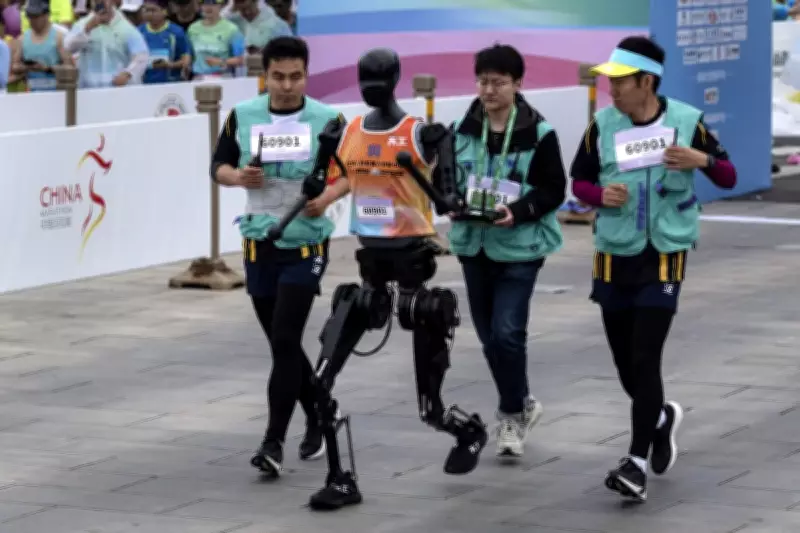
Looking ahead, Warner reflects on the intersection of technology and sport, referencing recent videos of robots in the Beijing Half Marathon. “It may not yet mimic human biomechanics very accurately, but the winning humanoid was certainly swift,” he notes, hinting at a future where man competes against machine.
For now, Warner’s AI marathon experiment serves as a timely case study in whether artificial intelligence can truly revolutionize training—or if old-fashioned pavement pounding remains unbeatable.