The Felix Project: Transforming London's Food Landscape
What began as a heartfelt tribute in a garage has blossomed into London's most significant food redistribution initiative. The Felix Project, established in memory of 14-year-old Felix who tragically passed away from meningitis in 2014, now delivers an astonishing over 38 million meals each year to families and community organisations across the capital.
A Legacy Born from Compassion
The charity's origins trace back to a poignant moment when Felix, aged just ten during a football tournament, expressed distress to his father Justin upon learning that opposing team members hadn't eaten that day. This memory remained with Justin, and following Felix's sudden death, the family channeled their grief into creating what would become London's premier food redistribution charity.
In the eleven years since its humble beginnings, The Felix Project has expanded dramatically, now supporting almost 30,000 individuals and 107 organisations across Ealing, Hillingdon, and Hounslow alone in the past twelve months.

How the Operation Works
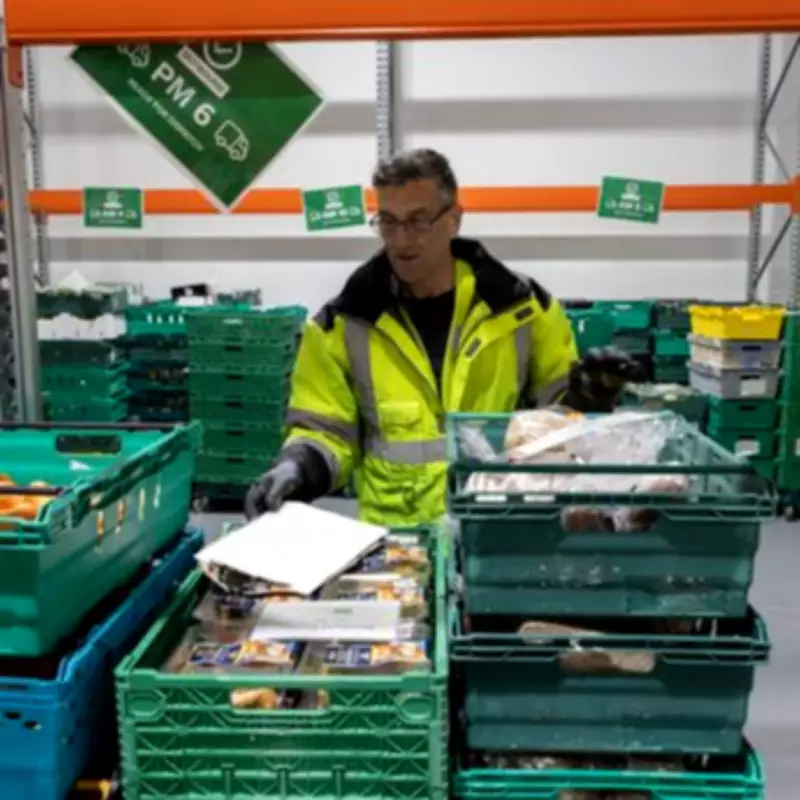
The charity operates through sophisticated partnerships with major food retailers including Ocado and Sainsbury's, collecting surplus stock that would otherwise go to waste. This food is transported to dedicated depots where volunteers sort and prepare it for redistribution to food banks across London.
At their Acton hub, which transforms into a crucial distribution centre, speed is paramount. Much of the donated food has limited shelf life, necessitating rapid processing to ensure families receive fresh produce, often on the same day it arrives at the depot.
Beyond Food: Addressing Broader Needs
In recent years, The Felix Project has expanded its mission beyond basic nutrition. The charity now provides essential hygiene products like toothpaste and shampoo, recognising that financial desperation forces many families to make impossible choices between different necessities.
Charlie Neal, communications manager for the charity, observes a troubling increase in children with dental problems, describing how "people have to choose what is essential" when facing financial hardship. "Toothpaste becomes 'non-essential' because of the need for food," Neal explains, highlighting how what some might call 'dental poverty' is fundamentally about broader economic struggle.
Government Policy and Future Growth
The charity has begun advocating for significant policy changes to enhance food redistribution across the UK. Charlotte Hill OBE, CEO of both The Felix Project and FareShare, points to concerning statistics: while 191,000 tonnes of food were rescued and redistributed in 2023 (equivalent to 456 million meals), this represents less than 1% of available surplus food.
Hill emphasises that "3.3 million tonnes of food are wasted on UK farms before produce even leaves the farm," with much currently directed toward animal feed or biofuel production rather than human consumption.
The charity proposes specific tax reforms, urging the government to extend corporation tax relief to include food donations. Currently, businesses receive tax benefits for donating money, property, equipment, or even employee time, but not for donating food. Hill notes that where such incentives exist internationally, food donation levels increase significantly.
Community Impact and Testimonials
Karen, a volunteer with Hillingdon Pentecostal which operates seven weekly food banks supplied by The Felix Project, describes the charity as "amazingly helpful" and essential to their operation. "Without them there would be many hundred more hungry people," she states, noting they feed approximately 650 families weekly through this partnership.
She observes changing patterns in food bank usage: "We see a lot of people bringing their children now to the food bank... there are definitely more people coming." This reflects broader trends of increasing food insecurity even among working families, with Neal noting that 23% of food bank users come from working households.

From its origins in personal tragedy to its current status as London's leading food redistribution organisation, The Felix Project demonstrates how compassionate response can evolve into systemic change. As the charity continues to expand its operations and advocate for policy reforms, it remains committed to its founding principle: ensuring no Londoner goes hungry when surplus food exists to feed them.