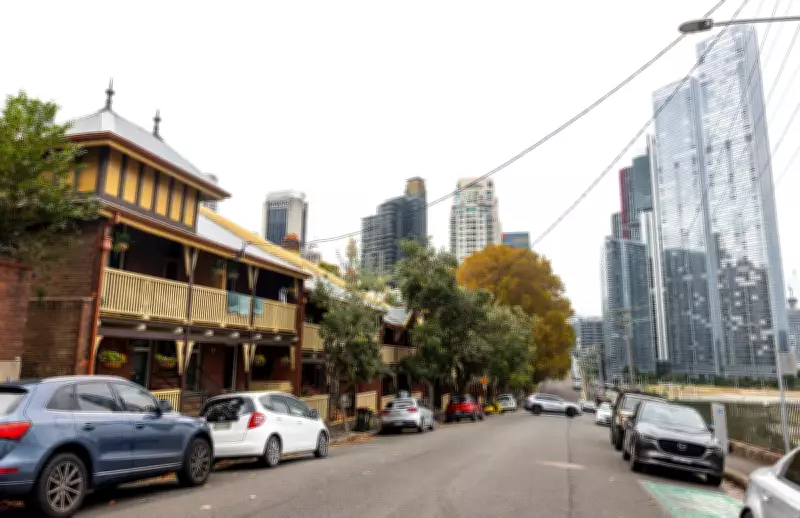
At 10am on High Street in Millers Point, Sydney, checkout time is in full swing. Departing guests have left laundry bags on verandas for cleaners, who have laid out fresh towels in neighboring rooms. Other tourists, clad in "I love Sydney" T-shirts, head out for sightseeing. Despite enviable harbour views, this is not a tourist resort but a street of Federation-era houses, once some of the oldest public housing in Australia, now overtaken by short-term rentals, many managed through Airbnb.
Community Erosion
Halfway down the street, leaves from plane trees pile up outside KU Lance kindergarten, which opened as a supervised playground in 1912 but closed at the end of last year due to insufficient local children. "Now we're a city without grandchildren," says Cormac Champion, a Millers Point resident whose youngest child attended the centre before class sizes dwindled. On neighbouring Kent Street, where Champion lives, every second Victorian terrace sports a key-safe on the front door—a telltale sign of a short-term rental. The area, nestled beside the Harbour Bridge and home to Sydney's oldest pubs, is understandably popular with visitors. But while the five-star Langham hotel sits quietly on the corner, the suburb around it has transformed into a giant hotel.
Council Motion for Ban
Last week, the City of Sydney passed a motion to investigate the feasibility of banning short-term rentals where the host does not live at the property. The motion includes a potential ban linked to rental vacancy rates or in the worst-affected suburbs, with Millers Point described as "the canary in the coalmine" by Greens councillor Matthew Thompson. Thompson, who brought the motion, says a ban could return as many as 5,000 properties to the long-term rental market. Last year, the council investigated lowering a statewide 180-day annual cap for short-term rentals to 60 days, following a move in Byron Shire, which covers tourist hotspots Byron Bay and Mullumbimby—a region with the second highest rate of homelessness in New South Wales after Sydney.

Caps vs. Ban
Thompson says caps don't work and are difficult to enforce. He favours a de facto ban like those in Barcelona, Amsterdam, and New York. "It's not the silver bullet, this is not going to fix the housing crisis, but it's something that we could do to return houses that already exist, that could be someone's home," he says. Rental data from asset analyst SQM, used by the council, indicates vacancy rates between 1% and 1.5% in most postcodes across the local government area. Murray Cox, founder of Inside Airbnb, which collects data on short-term rentals globally, was a key activist who campaigned for restrictions on non-primary residences being used as short-term rentals in New York, in place since September 2023. Cox, who grew up in Sydney, says vacancy rates are well below what most cities would consider a housing emergency—less than 5%. "I don't think we need to cannibalise our housing markets just to provide cheaper travel options," he says. "I think we need to prioritise people that are trying to find housing, housing for our children and our students, our elderly."

Enforcement Challenges
Deputy mayor Jess Miller says a ban would be difficult to enforce without changes to the state government's register of short-term rentals. "We don't have the ability to match whether or not it's a primary or secondary residence," she says. "We don't know if it's a property under management by an agent. We don't know if it belongs to a consortium." Champion began renting his Kent Street house as an office space in 2018 for his sales and marketing business and moved his family there in 2020. "We've seen so much change in the last six or seven years in this neighbourhood but in the city as well," he says. He has seen about 20 families with children leave Millers Point. "There was one family in particular, their rent from one lease to the next, they wanted to raise it by $600 a week," he says. "That's because the houses on either side of them had become Airbnbs, and that's what the owners were making." Many short-term rental operators rent properties and sublease them as holiday homes, turning up to rental inspections alongside prospective tenants, applying for leases, and running portfolios of dozens of properties, typically with landlords' permission. One Airbnb superhost identified by local residents has listings for at least 66 properties in inner Sydney, including several on High Street.
Government Inaction
Ad-hoc bans exist in NSW: strata corporations can vote to restrict short-term rentals if the property isn't the host's principal place of residence. But if the host lives there, they can still rent out rooms or the whole home while away. The Minns government came out strongly against short-term rentals after being elected, launching a review of the sector in 2024. However, more than two years after the initial four-week public consultation, the government is yet to release its report. Meanwhile, Airbnb donated $7,900 to the NSW Labor party in 2025, more than doubling the $3,750 donated across 2024 and 2023. The company also donated $2,000 to the Liberal party when it was in government in 2022. In 2024 and 2025, it was a community partner to Vivid Sydney, the annual light festival run by Destination NSW, the state government's tourism agency. Last year, it was both a community partner to Local Government NSW's annual conference and an "elite partner" for the agency's Destination and Visitor Economy Conference. A spokesperson for Local Government NSW said "event partners do not have any role in Local Government NSW's policy positions or advocacy." According to diary disclosures, the company or lobbyists representing it have met 12 Minns government ministers across 24 occasions, including at larger industry events, since 2023. Asked if the government supported a ban, a spokesperson said it was reviewing the planning and regulatory framework surrounding short-term accommodation and would make an announcement in due course, but did not say when the housing minister's review would be released. They added: "The best way to reduce demand for short-term rentals is to build more visitor accommodation. Short-term rental accommodation provides important economic benefits and choice for visitors." Airbnb declined to provide a written statement but shared a statement from Claudia, an Airbnb host with a listing near St Vincent's hospital in Darlinghurst: "It gets booked by families in medical crisis who need to be close to the hospital and families who book my place specifically because they have neurodiverse children and they simply cannot stay in a hotel." Champion says one short-term rental a few doors down advertises itself online as a hotel. One day, a lost guest knocked on his door looking for it. "We want [tourists] here," Champion stresses. "But it's not as if they won't come because they can't rent a whole house for their visit."