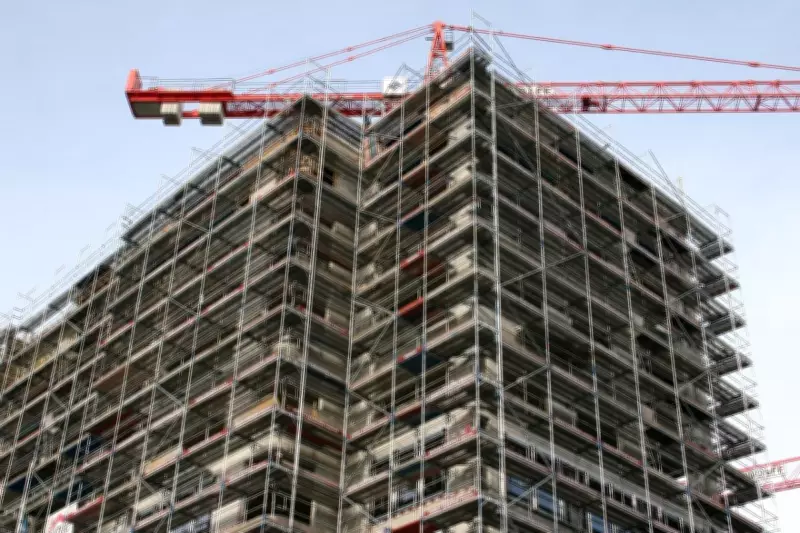
The construction of build-to-rent homes across Britain is teetering on the brink of a complete standstill, with planning delays in London having nearly doubled over the past six years. Exclusive data reveals a concerning ninth consecutive quarterly decline in build-to-rent construction, casting serious doubt on the government's ambitious housing targets.
A Steep and Sustained Decline
According to exclusive figures shared with Capital Post, compiled by the British Property Federation (BPF) and estate agents Savills, the number of build-to-rent homes under construction has fallen by a total of 22% since the first quarter of 2026. The situation is even more dire for new projects, where construction starts have collapsed by more than 70% over the last two years, plummeting from 19,044 in early 2024 to just 5,619 this year.
Industry leaders warn that this sector, which contributes nearly one in ten new homes, is vital for housing delivery, especially as more young people rent for longer. The government's pledge to build 1.5 million homes by the next general election now appears increasingly imperilled by low demand, soaring costs, and crippling bureaucratic delays.
London's Stark Reality
The crisis is particularly acute in London, where the BPF describes the outlook as "starker." While the capital requires approximately 88,000 new homes annually to meet demand, consultancy Molior predicts a meagre 4,550 will be built in both 2027 and 2028. The number of rental homes under construction in London fell 29% year-on-year to 12,134 in Q1 2026, with starts down a staggering 67% to just 1,048.
Robert Colvile, director of the Centre for Policy Studies think tank, stated the drop-off is "disappointing but not a surprise." He highlighted severe viability problems, noting, "London housebuilding is in an absolute state. The cost of capital has gone up hugely, and the cost of construction has risen above inflation." Colvile also pointed to the new building safety regulator making it "essentially impossible to build buildings above 18 metres, which in London is pretty much every building."
Planning Paralysis
The BPF identifies planning application delays as a primary culprit harming housebuilding. The average wait for planning consent for a build-to-rent home in London has lengthened from eight to fifteen months on average over the last six years. This represents a 150% increase over the statutory 13-week time limit for major applications. Nationally, the average wait has also grown considerably to fourteen months.
Jacqui Daly, director of Savills' residential research, emphasised the need for change: "If build-to-rent is to realise its full potential as a scalable and reliable source of new homes, it needs a more supportive operating environment. This requires improved planning efficiency, regulatory certainty, and faster progression from consent to construction."
Industry Pleas and Policy Pressure
In February, the Association for Rental Living wrote to the government urging it to loosen policy and tax constraints to boost the sector. This warning followed the collapse of retailer John Lewis's build-to-rent venture, which the shadow business secretary called a "major blow" to Labour's housebuilding ambitions.
Danny Pinder, director of the BPF, warned of intense pressure on the rental market, with supply constrained and development challenged. He cited "entirely avoidable impacts" from the incoming Renters' Rights Act and renewed discussions around rent controls as exacerbating factors. The BPF argues that while incoming planning policy changes could streamline decision-making, the government must also consider loosening taxes on construction to stimulate activity.
The Ministry of Housing, Communities and Local Government has been contacted for comment on this escalating crisis, which threatens to deepen London's already severe housing shortage and leave thousands without adequate rental options.