Gilston's 10,000-Home Garden Town Breaks Ground After 20-Year Planning Battle
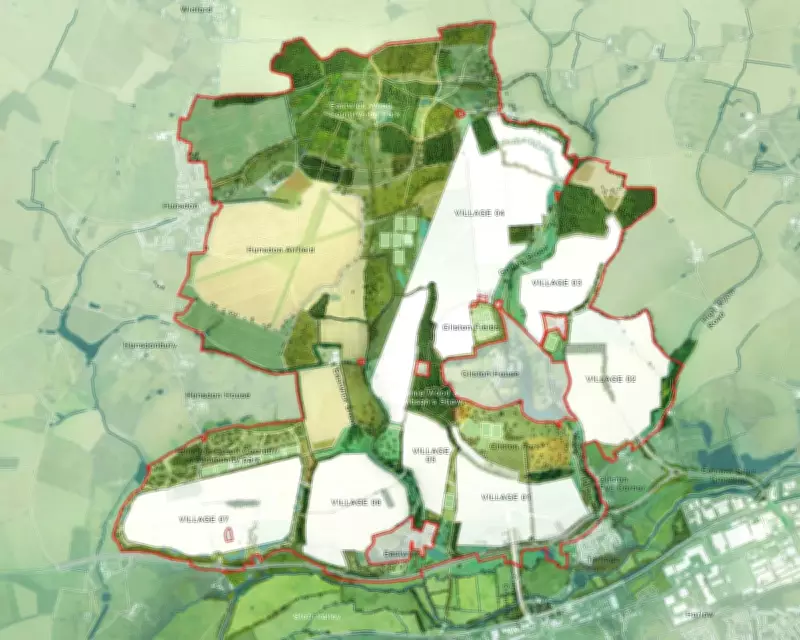
After two decades of legal wrangling and planning bottlenecks, construction has finally commenced on a transformative project in east Hertfordshire that developers are hailing as a blueprint for future community building in Britain. The Gilston development will see the creation of seven interconnected villages, comprising 10,000 new homes nestled within a sprawling 660-hectare landscape of country parks and woodland.
A Modern Rebuttal to Cookie-Cutter Estates
Built on a former green belt site, the project's acceleration followed a Court of Appeal ruling that dismissed a longstanding legal challenge from a landowner. With judicial hurdles now cleared, Gilston is being positioned not merely as a housing development but as a deliberate rebuke to the uniform, car-centric estates that have dominated Britain's suburban fringes for decades.
Greg Reed, the chief executive of Places for People (PfP), the social enterprise leading the development, highlighted the project's protracted timeline as a stark reminder of the UK's sluggish planning system. "PfP's journey with Gilston started at the same time my 20-year-old son was born," Reed remarked. "I was thinking about all the things that have happened in his life... and it's a bit depressing."
Rooted in Garden Town Philosophy
The vision for Gilston is deeply rooted in the garden town philosophy, serving as a modern extension of Harlow in Essex, one of Britain's original postwar new towns. A key differentiator from traditional developments is the front-loaded infrastructure investment. Unlike projects where amenities are often an afterthought, Gilston benefits from a £1bn infrastructure budget allocated from the outset.
Plans are comprehensive, including two secondary schools, seven primary schools, health centres, and extensive leisure facilities. Crucially, the design consciously rejects the car-centric model. "We put the schools in the villages so that people can walk their kids or ride their bikes," Reed explained. "I love that space aspect. I live in Edinburgh, and whenever anything's built, every square inch is built on. There's no space."
The Scale and Structure of the Development
The scale of the project is immense. Each of the seven villages will consist of between 800 and 1,800 homes, all linked by an expansive network of parks equivalent to more than 800 rugby pitches, covering approximately 5 square kilometres. PfP will deliver 8,500 of these homes, while Taylor Wimpey will construct the final 1,500 in the seventh village.
Gilston arrives at a critical juncture for the UK government, which has pledged to build 1.5 million homes by 2029. Although not officially one of the government's recently announced "12 new towns," PfP asserts that Gilston serves as a live proof of concept for this ambitious model.
Overcoming Inertia and Addressing the Housing Crisis
Reed is vocal about the necessity for national pressure to overcome local inertia in housing development. "In the past, when those sort of targets didn't have any teeth, or were watered down, then everything kind of came to a halt because it's very hard and very contentious," he stated.
He dismisses cynicism surrounding government housing targets, drawing a powerful comparison to a public health emergency: "If we said: 'Hey, let's try to cure cancer in five years', would everyone be like: 'Whoa. No way. Tell us you're wrong'? Let's go, let's fund it, and let's go."
Commitment to Mixed Tenure and Community Integration
Gilston will adopt a "mixed tenure" format. Of the initial 10,000 homes, at least 2,300 are designated as affordable housing. However, Reed emphasises that as a social enterprise, PfP intends to push that number higher as the project evolves over its projected 30-year build timeline.
"We want to create rural communities where there's social housing, affordable housing, shared ownership and outright sales," Reed said. He advocates for a "tenure blind" design, where social housing is indistinguishable from private property. "In some communities, you can tell by the front doors what kind of housing it is. We're painting them all the same colour. The idea is for no one to have any idea, and for everyone just to get on with their lives."
Long-Term Vision and Addressing Skills Shortages
While residents will begin moving into the site within the next few years, the entire project is likely to reach completion around 2050. "I will not be here when it's finished," Reed acknowledged. "But we're sort of caretakers for these things. We're going to be in that community... as a steward for decades to come."
Even with planning permission and land secured, the industry faces a significant shortage of skilled labour. In a proactive response, PfP has launched a national training academy to fast-track tradespeople and planners. "People say: 'Even if we had the money and the planning, we don't have the skills.' Well, so what? Get the skills," Reed asserted.
A £6bn Economic Boost and a Test for Britain
The commencement of work at Gilston represents a substantial £6bn boost to the UK economy and is expected to create more than 2,000 permanent jobs. For a nation grappling with a severe housing shortage that has left 170,000 children in temporary accommodation, Gilston is more than just a construction site. It stands as a significant test of whether Britain can still conceive and build integrated, sustainable communities designed to endure for generations.