London Luxury Property Market Suffers Worst Decline in a Decade
Thursday 16 April 2026 9:48 am
London's luxury property market has experienced its most significant downturn in ten years, with transactions and values falling dramatically across the capital's most prestigious neighborhoods. A comprehensive investigation by City AM reveals that prime property sales have plummeted by 37 percent year-on-year, marking the steepest decline since 2015.
The Struggle to Sell in Prime Locations
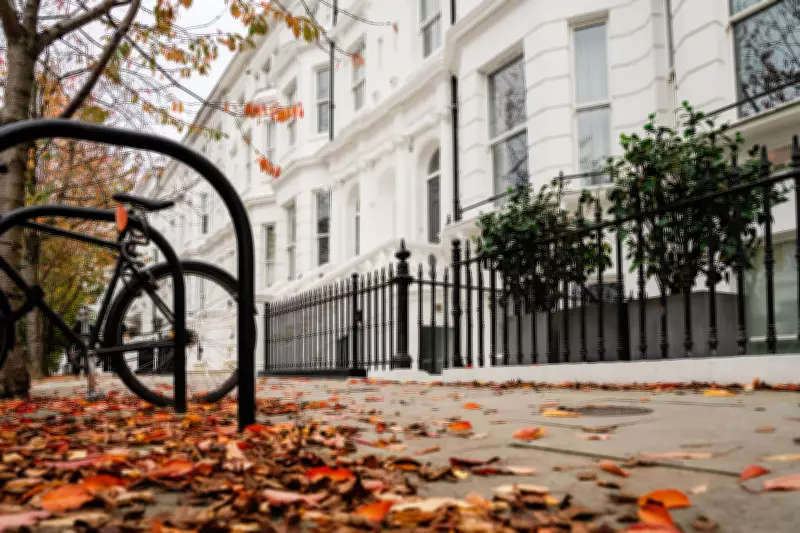
Emma, a Kensington homeowner who spoke under a pseudonym due to privacy concerns, exemplifies the challenges facing luxury property sellers. After initially listing her Kensington home for just over £4 million nearly three years ago, she rejected several low offers before accepting one slightly below her asking price. However, the buyer withdrew at the last minute after months of hesitation.

"The viewings were quite slow, very much dribs and drabs," Emma explains. After consulting with her previous agent, she reluctantly reduced the asking price by more than £500,000, a substantial cut of approximately one-eighth. Despite this significant discount, the property remains unsold, though interest has increased since the price reduction.
"The house has been described as 'always the bridesmaid and never the bride', because we've had so many near misses," she says. "We've had quite bad luck in that respect and it can be really soul-destroying."
Market Analysis Reveals Stark Decline
City AM's analysis of Land Registry data examined more than 1,000 transactions over the past decade across more than 100 of London's most desirable residential streets. While the prime property market peaked in 2021 with 156 sales in the surveyed areas, activity dropped sharply to only 84 transactions last year, representing the lowest level since 2017.
This decline is nearly triple the size of the next-largest drop of 13 percent recorded in 2016. The value of these transactions has also stagnated, with the average sale price last year reaching £8.7 million, only slightly higher than the previous year's £8.6 million but far below inflation-adjusted expectations that should have pushed average transactions above £10 million.
Expert Insights on Market Challenges
Stuart Bailey, head of prime central London sales at Knight Frank, attributes the market's struggles to a significant decline in top-quality properties. "If it's not the best of the best, or it needs work, or it needs doing up a bit, its value is going to get knocked," Bailey explains. "That type of property that's in the middle is in no man's land."
While premium properties continue to command substantial prices, Bailey notes that "it's the medium stuff that's dragging the market down." This situation has been exacerbated by what he describes as "negativity around successive governments' approaches to self-generated and entrepreneurial wealth."
Multiple Factors Driving the Downturn
Several interconnected factors have contributed to London's luxury property market decline:
- Tax Changes: The abolition of the non-dom tax regime in 2024 has reduced demand from wealthy international buyers who previously benefited from favorable tax treatment.
- Economic Uncertainty: Speculation surrounding the November Budget last year created significant uncertainty, with rumors of radical property tax reforms discouraging both buyers and sellers.
- Historical Shocks: Sean Williams, associate director at Hamptons estate agents, points to Brexit, the pandemic, rising inflation, and interest rate increases since 2022 as cumulative pressures on market confidence.
- Quality Concerns: The market faces a glut of mid-tier properties that fail to meet the exacting standards of luxury buyers, particularly following the collapse of shadow lender MFS.
Specific Examples Highlight Market Weakness
City AM's investigation uncovered several examples of properties selling at minimal gains or losses when adjusted for inflation:

- A house on Princess Road in Camden sold for £3.5 million last year after being purchased for £3.4 million in 2019, representing only a £100,000 profit over six years.
- A property on Tor Gardens in Kensington and Chelsea sold for £17.5 million early last year, the same price it commanded in 2021, resulting in a significant inflation-adjusted loss.
Market Activity Patterns and Future Outlook
Transaction data reveals a concerning pattern throughout 2025, with sales declining from a May peak to zero transactions in December. The collapse of Harrods Estates last week further underscores the market's challenges, with experts suggesting the end of the non-dom regime played a "major part" in the luxury property arm's failure.
While Knight Frank has observed increased interest from Middle Eastern expats seeking prime rental properties following the Iran war, most leases are for six months or less, providing little sustained boost to the residential market.
For sellers like Emma, the experience has been disillusioning. "I think London is going through a very depressed stage," she reflects. "Everything has become cripplingly expensive. The whole economic face of London is changing."
Emma plans to leave London once her property eventually sells, noting, "I'll be able to buy something beautiful outside London and I'm ready for a new start." Her sentiment reflects broader concerns about London's appeal to wealthy residents as the luxury property market faces its most challenging period in a decade.