In Wagga Wagga, regional New South Wales, the Wilks Park homeless encampment has become a flashpoint in Australia's housing crisis, as residents face eviction notices and fines of $1,100. The situation has drawn community advocates, council action, and state government promises, but the underlying shortage of affordable homes remains unaddressed.
Eviction threat and community response
On Tuesday, the deadline for residents to leave Wilks Park or face a fine passed, but a last-minute council motion delayed the evictions. Advocate Leigh Swansborough, who helps the camp's residents, expressed disappointment that no moratorium was declared, saying, "We had hoped that there'd be a definitive moratorium on not moving people on. But we still aren't sure or positive that they would keep their word."
The camp gained national attention in May when a newborn baby died on the riverbank, 300 metres away, after its mother gave birth in a tent. Since then, the response has been fragmented, with some locals providing food and transport while others support the council's clearing efforts.

Life inside Wilks Park
Residents like JJ, a 68-year-old who lived in the camp for 14 months, have moved out to avoid fines but still return to help. "I packed up because I don't want to have any problems," she said. JJ now pays $300 a week to camp in Narrandera, 100km away, and continues to support those left behind.
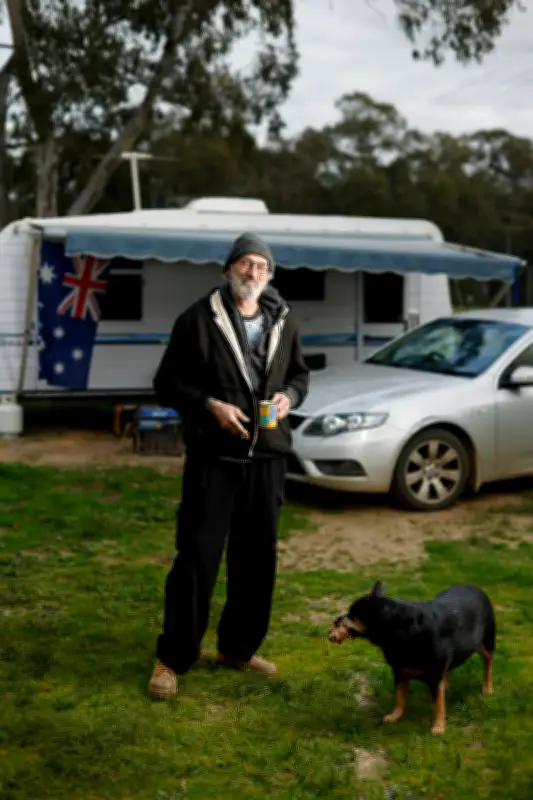
John, 38, stays with his dog YouWin, saying he can't enter a motel because of her. "I feel like I can stand my ground, or go into a motel, but if I do, what happens to little miss? She goes into a home or possibly gets put down," he said. He is on the social housing list, but the wait is long.
Mark, a caravan resident on the disability support pension, prefers independence: "I don't like to ask for help because I have in the past and been knocked back." He values proximity to medical appointments in central Wagga.
Housing shortage and rising demand
The crisis is driven by a severe shortage of affordable homes. Social housing wait times in Wagga are now five to ten years, with the Tolland estate project not due until 2030. The number of social housing dwellings fell from 1,449 in 2021 to 1,310 in 2025, while priority waitlist applicants surged from 17 to 102 in the same period.
Dom Rowe, CEO of Homelessness NSW, highlighted the scale: "The city has recorded the fastest increase in priority social housing demand anywhere in NSW, rising 500% in just four years, while median rents increased by 41%." He added, "That is what happens when the cost of private housing races ahead but the social housing safety net does not grow with it."
Government response and motel 'last resort'
The NSW government, led by Minister Rose Jackson, has promised 12 prefabricated modular homes by June 2026, with four already delivered. However, motels have become the default temporary solution, despite being imperfect. Young couple Krystal and Jamie, who applied for 600 rentals without success, now stay in a motel, paying $180 a week for Ubers and coping with a broken microwave. "If it didn't happen, honestly, we would have just sat at hospitals," Krystal said.
Jackson defended the approach, stating, "I've always said that hotels and motels should be a last resort. Purpose-built crisis accommodation is always preferable, because it comes with those wraparound supports that help people get back on the path to stable housing." She noted $230m has been allocated to homelessness response, with community organisations invited to partner.
Council's position and community frustration
Council general manager Peter Thompson said evictions would not proceed if residents have no government-provided accommodation, but community organisers report people being turned away from motels. Angelo described driving a man to a motel where he was rejected for "having too many bags" – four half-full shopping bags. "He was ecstatic in the vehicle as I was driving him out there, that he was going to get to have a hot shower and jump straight into a warm bed. And then looking at him as the person from the hotel was saying no, seeing him break. It was terrible to watch."

Swansborough remains critical of the response: "Homelessness is a serious issue in Wagga. It hasn't been addressed. It's been disregarded and dismissed. And the response from council and the state government has been one that's more punitive than therapeutic and leading with compassion."