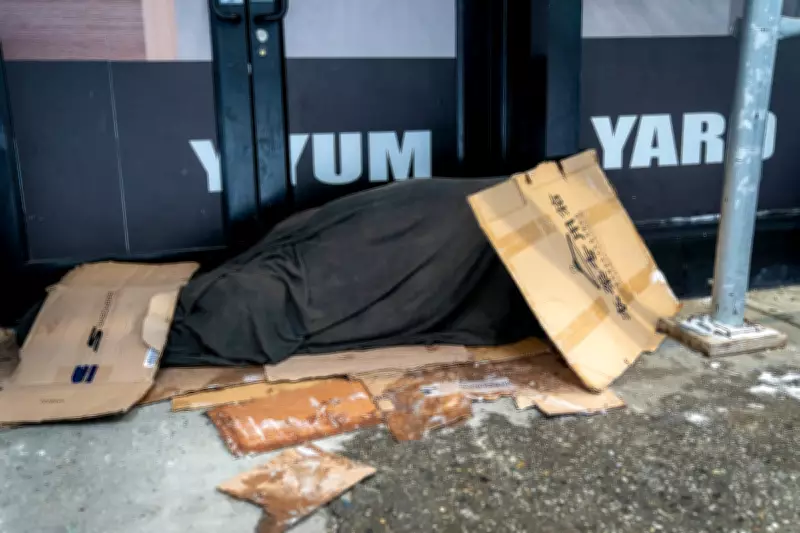
Homeless New Yorkers Face Deadly Cold as Winter Storm Claims Lives
At least ten individuals have perished outdoors in New York City during a prolonged period of bitterly cold temperatures, with support groups warning that a lack of affordable housing and safe shelter options is exacerbating the crisis. The recent winter storm, which has affected vast swathes of the United States, has led to a spike in cold-related fatalities, underscoring the dire situation faced by the homeless population.
A Tragic Toll in Freezing Conditions
Data reveals that New York City recorded an average of 30 cold-related deaths annually between 2018 and 2022, a significant increase from the 14 such deaths averaged in the five prior years. David Giffen, executive director of the Coalition for the Homeless, noted that he could not recall ten people dying outdoors in such a short timeframe, attributing this to both the brutal temperatures and a rise in homelessness in recent years.
In November, more than 100,000 people slept nightly in New York City shelters, with thousands more residing in public spaces. By January 2025, the city's Department of Homeless Services reported over 4,500 unsheltered individuals on a single night, a stark increase from less than 2,800 in 2016.
Shelter Fears and Systemic Failures
Many homeless individuals, like an older man nicknamed "Uncle" who frequented a Coalition van in Hudson Yards, avoid shelters due to past traumatic experiences. Juan De La Cruz, the Coalition's director of emergency relief services, explained that fears of violence or threats in shelters often lead people to risk sleeping outdoors, even in freezing conditions.
Dr Michael Liu, an internal medicine practitioner at Brigham and Women's Hospital in Boston, co-authored a study on cold-related deaths and emphasised that such fears can have disastrous consequences during frigid weather. The city does have sufficient shelter space under New York State's "right to shelter" law, but Giffen pointed out a shortage of "safe haven" shelters designed for those with mental illnesses or cognitive disabilities who struggle with the general shelter system.
Emergency Responses and Ongoing Challenges
During the winter storm, the Coalition deployed volunteers in three vans each night to encourage people to move to shelters or warming centres, distributing blankets, clothing, and food. However, De La Cruz observed that many homeless individuals politely decline offers to go indoors, suggesting a deep-seated reluctance to engage with the shelter system.
Among the recent fatalities, six had been connected to the city's Department of Homeless Services, according to Mayor Zohran Mamdani. Victims included a 60-year-old man found dead outside St Barnabas Hospital in the Bronx and 90-year-old Doreen Ellis, who had dementia and was discovered in the snow in Crown Heights.
A Call for Basic Necessities
De La Cruz expressed anger and frustration over these preventable deaths, stating that in a country like the United States, providing basic necessities should be a given. The primary issue, as highlighted by Giffen, remains a critical lack of affordable housing, which forces individuals into a cycle of homelessness and vulnerability.
With freezing temperatures forecasted to continue until at least 7 February, the urgency for effective solutions to protect New York's homeless population has never been greater. The spike in cold-related deaths serves as a grim reminder of the ongoing struggles faced by those without stable housing in one of the world's wealthiest cities.