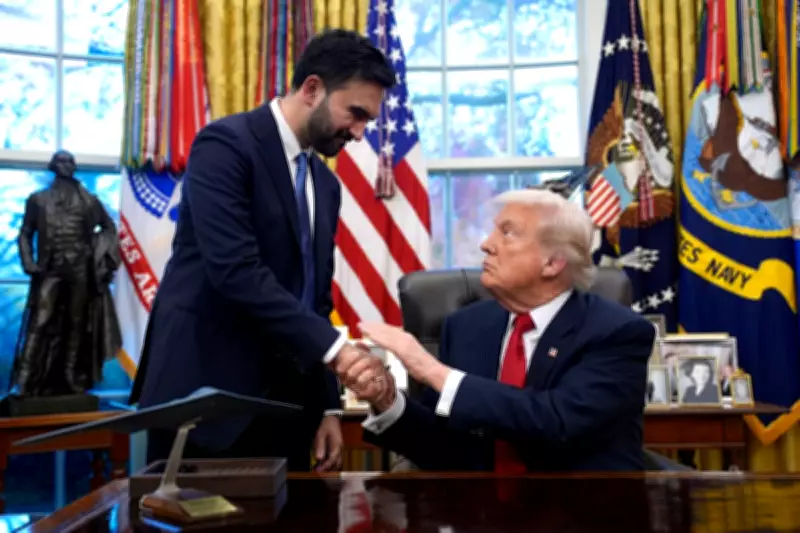
Mayor Mamdani's Strategic White House Visit Nets Major Concessions from President Trump
In a surprising display of political diplomacy, New York Mayor Zohran Mamdani secured significant victories during a private Oval Office meeting with President Donald Trump on Thursday. The encounter, which began as an undisclosed sit-down, evolved into what observers are calling a "Trojan Horse triumph" for the progressive mayor.
Property-Focused Proposal Wins Presidential Enthusiasm
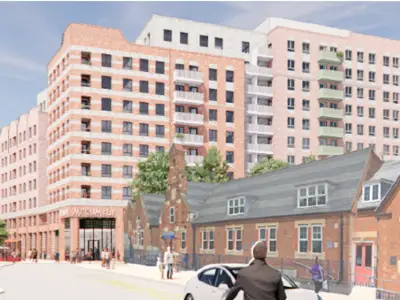
According to Mamdani's chief spokesperson, the mayor presented a comprehensive $21 billion federal grant proposal aimed at addressing New York City's affordable housing crisis. The centerpiece of this ambitious plan involves constructing a deck over the busy Sunnyside rail yard in Queens to create approximately 12,000 new housing units. President Trump reportedly responded with "enthusiasm" to the real estate-focused pitch.
The mayor strategically appealed to Trump's background as a real estate developer and his preoccupation with legacy building. Mamdani presented the president with two New York Daily News front pages: the infamous 1975 edition where President Gerald Ford told a bankrupt New York City to "drop dead," and a custom mock-up that read "Trump Delivers 12,000+ Homes; Most Since 1973."

Unexpected Immigration Victory
Beyond the housing discussion, Mamdani achieved an immediate humanitarian victory. During the meeting, he secured the release of a Columbia University student who had been detained by Immigration and Customs Enforcement (ICE) earlier that same morning. Additionally, the mayor requested that Trump consider dismissing the cases of four other detained students, including Palestinian activist Mahmoud Khalil.
This dual success—combining major policy advancement with urgent individual relief—demonstrated Mamdani's effective approach to White House negotiations. Rather than engaging in public confrontations, the mayor employed what some are calling "soft power via Photoshop," referencing the customized newspaper cover that played to Trump's ego.
Evolving Political Relationship
The cordial meeting represents a significant shift from Mamdani's campaign rhetoric, where he labeled Trump a "despot" and positioned himself as the president's "worst nightmare." Since their first surprisingly amicable meeting in November, the two New Yorkers have maintained a working relationship that has avoided the public fallouts characteristic of Trump's interactions with other Democratic mayors.
During his recent State of the Union address, Trump offered a notably mild assessment of Mamdani, stating: "I speak to him a lot. Bad policy, but nice guy." This stands in stark contrast to the president's typically harsh criticism of political opponents.
Progressive Concerns and Future Challenges
Some progressive observers have expressed concern about Mamdani's conciliatory approach toward an administration he once vowed to resist. The mayor, who ran as a democratic socialist promising to "reject Donald Trump's fascism," now faces questions about whether his cooperative strategy represents strategic pragmatism or political compromise.
Recent local controversies, including continued homeless encampment sweeps that contradict campaign promises, have added to progressive unease about Mamdani's governance style. However, the mayor's office maintains that working constructively with the White House represents the most effective path to delivering results for New Yorkers.
Uncertain Future for Housing Initiative
While the $21 billion housing proposal received positive initial reception, significant questions remain about its implementation. New Yorkers await confirmation that the Trump administration will actually allocate the necessary funds, and observers note the president's mercurial nature when it comes to following through on commitments.
The proposed Sunnyside development would represent one of the largest affordable housing initiatives in recent New York history if realized. The project's success would depend not only on federal funding but also on navigating complex local zoning and community approval processes.

For now, Mamdani appears committed to his strategy of engagement, leveraging shared New York roots and real estate interests to advance his agenda. As one administration insider noted: "It's two guys from New York, yapping about real estate—but with billions of dollars and people's lives at stake."