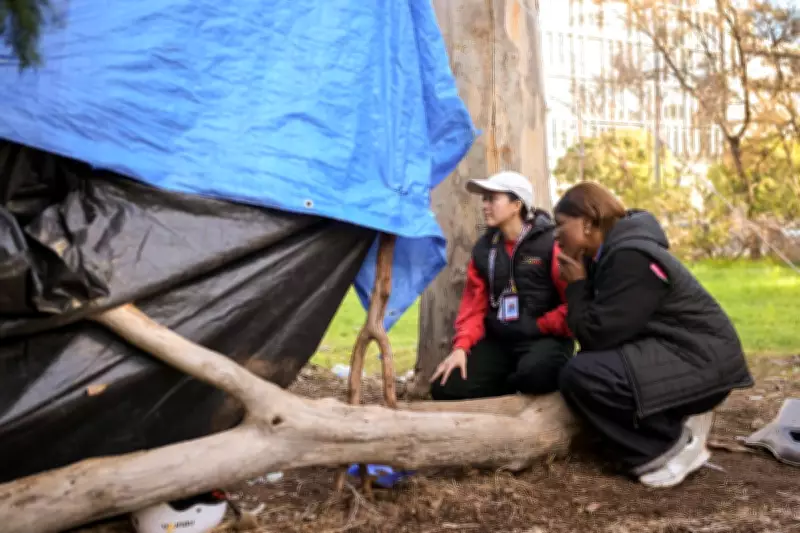
On a cold, bright autumn morning in the Adelaide parklands, curious dogs and mostly incurious humans pass by tents half-hidden in bushes. Rough sleepers are both the most visible and the most invisible homeless people. They are in public, but the public often looks away.
Street Connect: A New Approach
A program in Adelaide is helping rough sleepers be seen. Locals who spot them can make a notification on a website called Street Connect by dropping a pin on a map, along with details of the person spotted. That triggers outreach workers to check on them.
The Toward Home Alliance team, a network of outreach services, searches the city in a grid, adding extra checks wherever pins are dropped. They leave water, protein bars, band-aids, and tampons, and ask rough sleepers what else they need. They know people's names and their backstories.
Community Involvement
Street Connect is "a way for the community to be able to help inform us, and direct us to areas of concern that we're not seeing," says Shaya Nettle, senior manager at Toward Home. "It's also really helpful for identifying and responding to community hotspots. It ensures we're not missing things."
Outreach workers check the location of every dropped pin within 12 hours, but Nettle says people should still call emergency services if there is a critical situation. She emphasizes the fine line between checking in and respecting privacy. "If you're genuinely concerned, just say 'hey, I just want to check you're OK.'"
Overcoming Stigma
Nettle notes that homeless people often feel invisible. "Any level of normalising them in a human, daily experience is really important. That starts with eye contact, a hello. If you're going to get a coffee anyway, offer them one."
Homelessness can stem from family violence, drug issues, mental illness, job loss, or rent increases. In Adelaide, about 200 people sleep rough in the CBD and North Adelaide.
David, who asked that his surname not be used, spent about eight years on the streets. With help from the Hutt St Centre, he got rehab and a public housing spot. Now studying community service, he visits people on the streets to help. "I feel amazing for it. It's such a beautiful life to live now," he says.
Systemic Challenges
Nettle describes homeless services as the emergency department of the community, with pressures from the rental market and cost of living. Governments need to fund the full spectrum of housing support, from crisis options to long-term accommodation.
The state's human services minister, Katrine Hildyard, says raising community awareness is important. "Sometimes people don't understand why someone is in that position, and they maybe don't understand what to do to support someone."