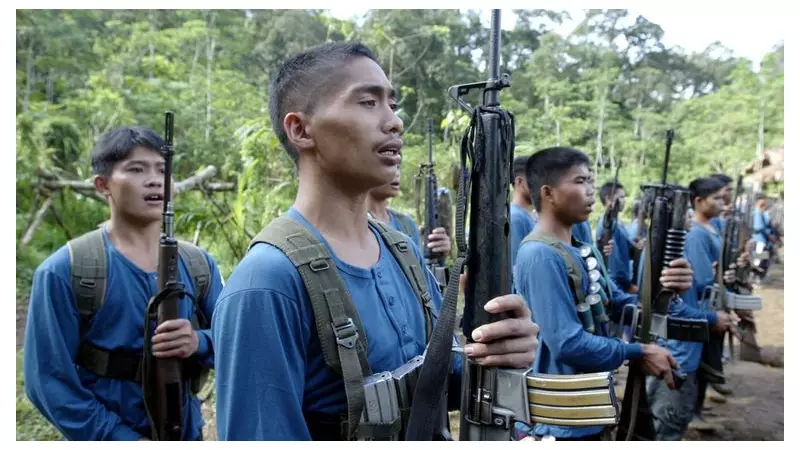
In a world currently experiencing more violent conflicts than at any time since the Second World War, a single, fragile tradition offers an annual glimpse of humanity. For decades, the protracted communist insurgency in the Philippines has paused its fighting each Christmas, providing a brief respite in one of history's longest-running guerrilla wars.
A Tradition of Temporary Peace in a 56-Year War
The conflict between the Maoist rebel group, the New People's Army (NPA), and the Philippine government is poised to enter its 57th year in 2026. This struggle, which has claimed an estimated 60,000 lives, is widely regarded as the planet's most enduring communist insurgency. Yet, a remarkable custom has taken hold: around the Christmas period, both sides typically lay down their arms.
This practice of declaring unilateral ceasefires has been observed in many years since at least 1986. It stands as a rare moment of restraint, starkly contrasting with the broader global trend of escalating violence. According to the Peace Research Institute Oslo (PRIO), the number of conflicts involving states reached its highest level since 1946 by the end of last year, with 61 active conflicts in 2024—nearly double the figure from two decades ago.

Researcher Siri Aas Rustad from PRIO notes that 2024 was the fourth-most violent year since the Cold War's end, surpassed only by the three preceding years. Major drivers of this deadly spike include the spread of Islamic State franchises since 2014 and the devastating toll of the wars in Ukraine and Gaza.
A Fraying Global Order and the Meaning of Small Pauses
Experts point to a deeply concerning macro-trend behind this surge in conflicts: the decline of the Western-led liberal international order and multilateral institutions like the United Nations. Professor Oliver Richmond, a leading peace researcher at the University of Manchester, argues this order, founded on ideals of human rights and democracy, once encouraged non-violent dispute resolution. However, he contends that Western allies, led by the US, often prioritised their own interests, failing to create a genuinely equitable system and thereby inviting challenges.
Emerging powers like China, Turkey, Russia, and Gulf states have positioned themselves as peacemakers but are frequently pursuing their own systems of domination, Richmond states. The result is that conflicts from Ukraine to Sudan persist as external actors tolerate or even enable violence in pursuit of a 'victor's peace'.
Against this bleak backdrop, the annual Christmas truce in the Philippines gains symbolic weight. Such brief pauses, rooted in the biblical message of 'peace on earth', have historical precedent, most famously during the 1914 Christmas Truce of the First World War. While they rarely end wars outright, Siri Aas Rustad explains they can aid the 'long-term trust building' essential for eventual peace agreements.
In the Philippine context, the tradition involves each side independently declaring a ceasefire without a formal pact. Even former president Rodrigo Duterte, known for his brutal drug war, occasionally called for these holiday truces to allow 'quietude and serenity'.
Propaganda, Grassroots Peace, and a Fading Custom
The motives are not purely altruistic. Political historian Patricio Abinales from the University of Hawai'i at Manoa observes that 'Christmas ceasefires were good propaganda on both sides'. The temporary silence of guns allows rural communities, government troops, and NPA guerrillas alike to celebrate the season peacefully.
Professor Richmond emphasises that sustainable peacemaking is often more successful when informed by such grassroots, local practices rather than being driven by meddling geopolitical powers. Communities directly affected by violence, he argues, typically have a clearer understanding of what a genuine settlement requires.

This contrasts sharply with failed ceasefire attempts elsewhere, such as in 2023 when Ukraine rejected a Russian-proposed truce for Orthodox Christmas, suspecting it was a tactical ploy. Rustad notes a clear lack of trust prevented agreement, underscoring that political will remains the ultimate factor in ending protracted wars.
The tools for peace—strengthening multilateral institutions, investing in peacekeeping, mediation, and human rights law—are well-known, Richmond says. Yet, he laments that major powers are 'unwilling to do that even as societies clamour for peace'.
Meanwhile, in the Philippines, the Christmas tradition persists, but tenuously. In 2024, as in 2023, the NPA declared a four-day holiday ceasefire, though it was not always reciprocated by government forces. Professor Abinales suggests the insurgency has been significantly weakened and is becoming increasingly irrelevant. If this trend continues, he warns, 'Christmas ceasefires will become a thing of the past', potentially bringing the decades-long conflict to an end not with a peace deal, but through slow dissolution.