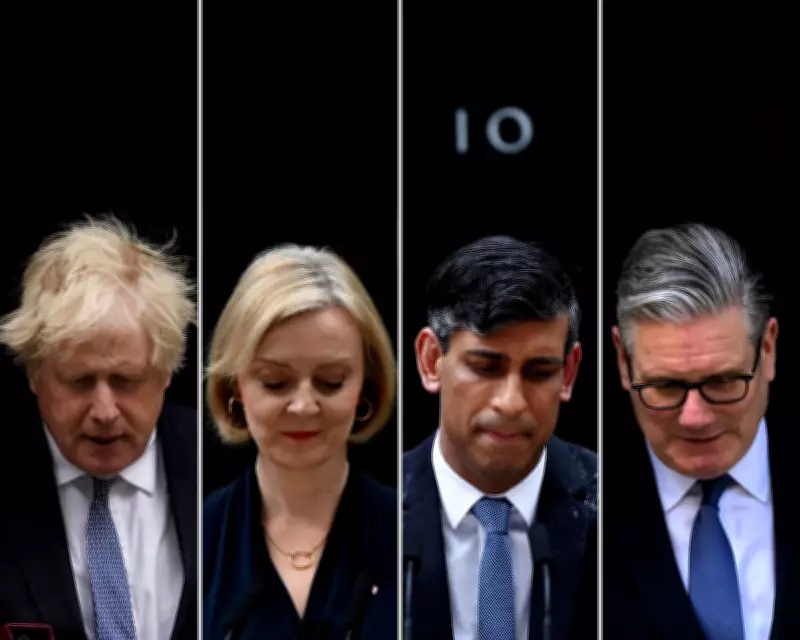
The premierships of Boris Johnson, Liz Truss, Rishi Sunak, and Keir Starmer have all been notably short-lived, raising questions about the stability of the office itself. This trend, unprecedented in British history, mirrors the turmoil of France's Fourth Republic (1946-1958), where prime ministers came and went rapidly amid political rancor and stalled reforms. Unlike France, which eventually turned to Charles de Gaulle for a new order, Britain appears stuck in a cycle of leadership churn that undermines long-term governance.
A Historical Perspective
According to Anthony Seldon, author of The Impossible Office?, the period since 2016 is unique in British history. While the 18th and 19th centuries saw similar rates of turnover, the current era involves not just prime ministers but also chancellors and foreign secretaries changing frequently. Since 2016, there have been six prime ministers, eight chancellors, and nine foreign secretaries, creating a sense of perpetual upheaval.
The Impact of Ministerial Turnover
Gus O'Donnell, former cabinet secretary, highlights the problem of ministerial musical chairs. He recalls a period with nine pension ministers in five years, making long-term planning impossible. When a new prime minister takes office, they typically reshuffle the cabinet, bringing in inexperienced ministers who must learn on the job. Cath Haddon of the Institute for Government warns that this denies leaders the time needed to learn, govern, and see projects through.

The Case of Theresa May
Theresa May's premiership illustrates how survival instincts can dominate. After losing her majority in 2017, her focus narrowed to Brexit, sidelining other priorities. Damian Green, her de facto deputy, took over domestic policy, but progress on issues like social care stalled. The constant threat of removal can be as disruptive as actual removal.
John Major's Struggles
John Major's tenure from 1990 to 1997 was marked by constant battles for survival after Black Wednesday in 1992. Jill Rutter, who served in his policy unit, describes a No 10 that was embattled and suspicious, making smart solutions harder to achieve. The focus was often on getting back on track rather than long-term strategy.
Economic and Social Underpinnings
The underlying cause of this instability may be economic stagnation since the financial crisis, which has made public policy arithmetic harsher. However, historian Sudhir Hazareesingh points to deep cultural divides—Brexit, Gaza, generational gaps—that fragment the electorate. Unlike the postwar era, where class was the main divide, today's multiple cleavages make it difficult to build and sustain coalitions.
The Role of Leadership
Margaret MacMillan, a leadership historian, argues that leaders must appeal to people's better natures and be honest about the need for effort and time. She cites Mark Carney in Canada as an example of this approach. The French Fifth Republic, born from the Fourth Republic's chaos, showed that effective governance is possible when politics is done properly, focusing on long-term solutions rather than short-term survival.
As Tom Clark writes in Prospect, the key to unlocking far-sighted policies is not depoliticizing but doing politics properly. Andy Burnham and his rivals should take this lesson to heart.