White House Stands By President's Controversial Comments
The White House has issued a robust defence of Donald Trump's reference to a Bloomberg News correspondent as "piggy", claiming without evidence that the president "calls out fake news when he sees it". Press secretary Karoline Leavitt made these remarks during a White House briefing on Thursday, arguing that Trump's bluntness contributed to his re-election and that media members should appreciate his willingness to engage with them.
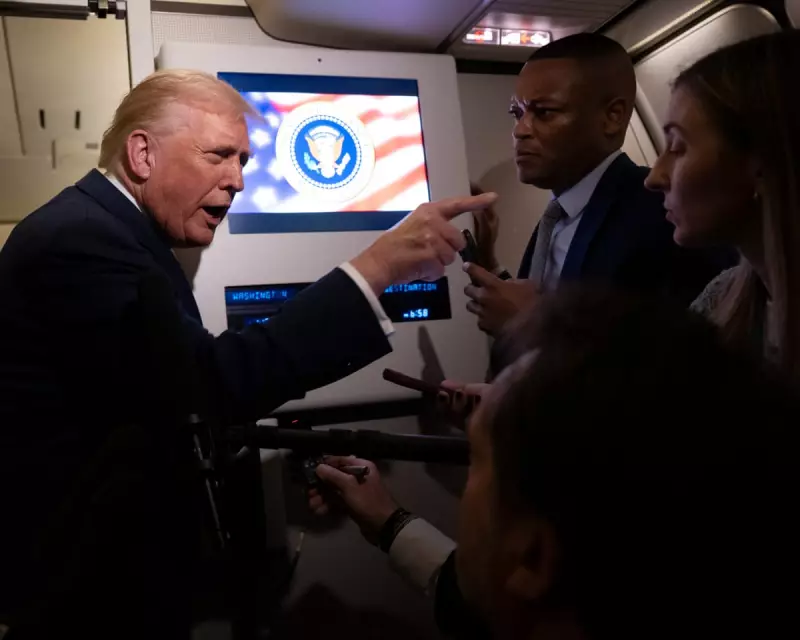
The controversial incident occurred on Friday aboard Air Force One when Catherine Lucey, Bloomberg's White House correspondent, questioned Trump about the unfolding Jeffrey Epstein scandal. She specifically asked why Trump was behaving as he was "if there's nothing incriminating in the files" regarding the House vote to release all documents connected to the Epstein case.
Backlash From Media Organisations
Trump's response – pointing at Lucey and saying "Quiet. Quiet, piggy" – drew widespread condemnation from fellow journalists throughout Monday and Tuesday. CNN anchor Jake Tapper described the comment on X as "disgusting and completely unacceptable", while former Fox News presenter Gretchen Carlson called it "disgusting and degrading".
The Society of Professional Journalists released a statement condemning Trump's remarks to both Lucey and ABC News reporter Mary Bruce, whom Trump called "a terrible person" in the Oval Office on Tuesday. Bruce had questioned visiting Saudi crown prince Mohammed bin Salman about the killing of Washington Post journalist Jamal Khashoggi and pressed Trump on why he hadn't released the Epstein files.
SPJ executive director Caroline Hendrie emphasised that "targeting women reporters with humiliating insults should not be tolerated". She added that "when US leaders downplay the murder of a journalist or shame reporters for demanding transparency, it reverberates far beyond Washington".
Pattern of Behaviour
While Trump has consistently expressed contempt for journalists publicly, this week has seen particularly open vitriol directed at female reporters. The SPJ statement noted these incidents form "part of an unmistakable pattern of hostility – often directed at women – that undermines the essential role of a free and independent press".
Leavitt's defence maintained that Trump "provides unprecedented access to the press and answers questions on a near-daily basis", though she failed to specify what "fake news" or "false information" Trump believed Lucey was spreading when he used the derogatory term.