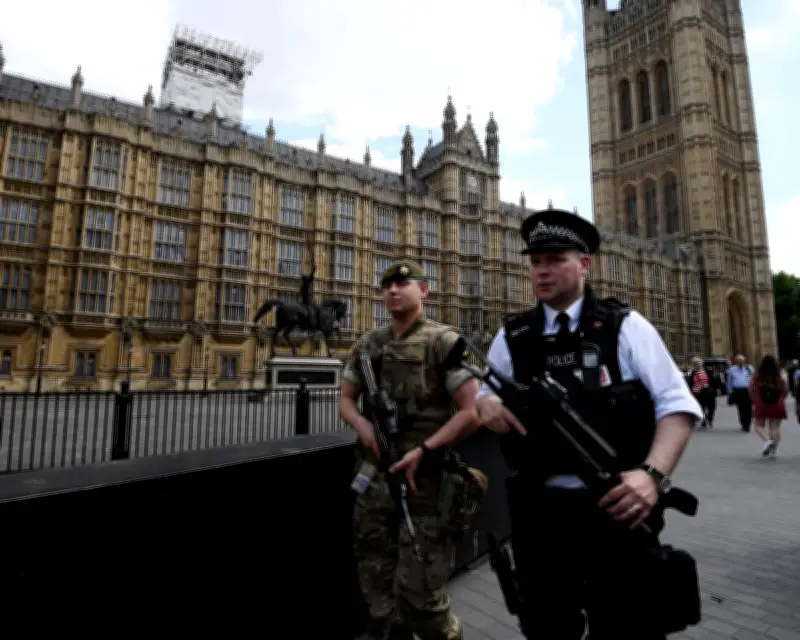
When Andy Burnham returned to Westminster as an MP last month after a decade away, what shocked him—some of his colleagues have said—was the security. In recent years, particularly since the 2017 Houses of Parliament terrorist attack in which five people were killed, security around Westminster has visibly tightened, with armed police patrolling the estate, and vehicle barriers and heavy exterior fencing erected.
Rising threats and normalisation of abuse
Violence, abuse and intimidation towards MPs, their staff, families and many others in public life is growing exponentially: rape and death threats are counted in their hundreds and, with increasing regularity, politicians face offline aggression. The killing of Reform UK spokesperson and former Conservative MP Ann Widdecombe at her home in Devon last week has resonated strongly with those in public life.
Dr Hannah Phillips from the Jo Cox Foundation stressed that the response must extend beyond physical security to change this toxic culture. “More and more people in public life, MPs, councillors, staff, even families of politicians, activists, are saying experiencing some form of violence, abuse or intimidation is expected. And that normalisation is something we’re really concerned about,” she said.
Impact on political participation
Evidence of the worsening threat level is abundant. A substantial report from the Electoral Commission on the 2024 general election found that over a quarter of candidates had experienced harassment, intimidation or abuse at least four times, with women and those from ethnic minority backgrounds more likely to report serious abuse.
MPs receive so many rape and death threats they have to remind themselves not to be blasé, Labour MP Jess Phillips told the Guardian earlier this week. Former Conservative MP Dame Penny Mordaunt, who lost her seat in 2024, revealed that since then: “I haven’t had a day when I haven’t had a live police investigation [into rape or death threats] or court case going on.”
On Wednesday, a man was arrested over an alleged threat to shoot the Reform UK leader, Nigel Farage, who has estimated he receives 300 threats every month. Increasingly, the threat is moving offline. MPs’ staff describe “horrendous” in-person threats of violence, being doxed and followed, as well as a rising number of “mentally and emotionally unstable constituents” who require sensitive management, according to a recent staff welfare report.
Consequences for democracy
More evidence is emerging that all this is affecting how people participate in politics, says Phillips. When a tranche of women MSPs stepped down from Holyrood at May’s Scottish parliament election, many referenced on and offline harassment as part of their rationale for not seeking reelection. Phillips says elected politicians are self-censoring, not having as many in-person meetings nor engaging with members of the public online.
The Electoral Commission research also discovered that some candidates didn’t participate in hustings because they were fearful of abuse. “That seems to have been a change in recent years,” says Phillips, whereby candidates modify their behaviour not through direct experience but expectation. “That’s really concerning for our democracy.”
There is also a pipeline effect: in 2023, Girl Guiding UK revealed that more than a third of girls are deterred from specific careers, including politics, because of the abuse meted out to high-profile women.
Solutions and broader change
Andy Burnham has said a serious review is needed into MP security following Widdecombe’s death. Improvements are ongoing: Operation Ford is a new scheme extending Bridger-style resources nationwide to local politicians and candidates. The Scottish parliament has offered an online threat monitoring service for all MSPs since 2024, removing the burden from individual offices and providing early notice to police.
Jess Phillips told the Guardian that the threat to MPs must be tackled at source, amidst an ongoing refusal by social media platforms to take responsibility for what’s published on their platforms: “Everybody who’s ever attacked me has read a load of untrue stuff online that they had been fed by their algorithm.” The Jo Cox Foundation is supporting a campaign for an elections code of practice aimed at social media companies, with a particular emphasis on risk assessments around the spreading of disinformation.
“But in order to address this complex problem, we need broader political and societal change,” says Hannah Phillips. This is the Jo Cox Foundation’s primary purpose: connecting across difference, improving community cohesion and generating more respectful politics. Research they commissioned for the tenth anniversary of Cox’s death found that, while many of us feel that our communities have become more divided and that our ties to our neighbours have weakened, a third remain committed to improving those connections.
Community connection as a bedrock
The barriers to improved connection that the study identified are worth digesting: those who are financially comfortable feel more connected to their community; younger people said anxiety, lack of confidence and digital fatigue stopped them reaching out; older generations were more likely to build on “micro-moments” of connection—a chat with a neighbour or giving directions to a stranger. The research also discovered that people who feel well connected to their local community are the most likely to report having meaningful interaction with people of different political viewpoints.
That challenge is met at grassroots level by community-building facilitated by the Jo Cox Foundation along with other groups like Who is Your Neighbour? and Hope Unlimited. “Social connection is not just nice to have,” Phillips says, “it’s a bedrock of safe, resilient, cohesive society.”