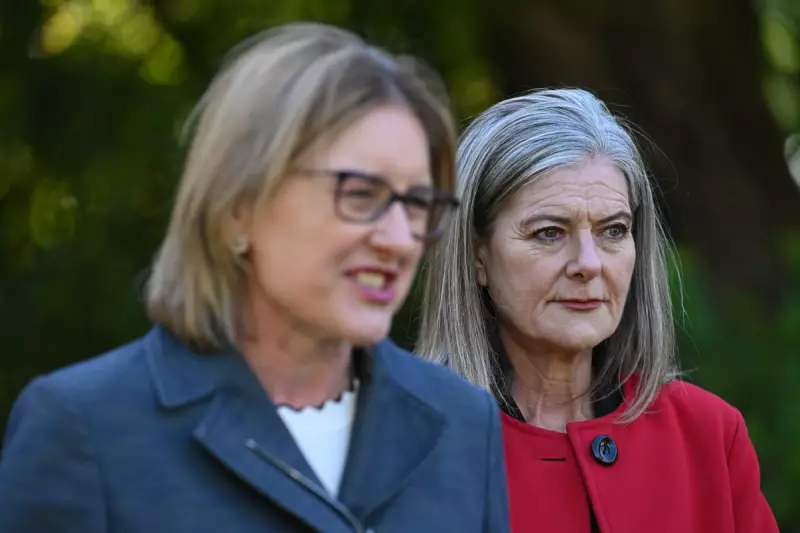
In a significant policy reversal, the Victorian Labor government has announced it will introduce legislation to make coercive control a standalone criminal offence. This move comes after the state's opposition leader, Jess Wilson, vowed to enact the same reform should the Coalition win the next election.
A Swift Political Response
Attorney-General Sonya Kilkenny confirmed the government's intention to legislate in 2025, with the new offence slated to take effect in 2026. The announcement marks a stark change in position for the Allan government, which had previously argued that existing family violence laws already covered coercive behaviour. The shift occurred on the same day the Liberal opposition introduced bills in both houses of parliament to establish the offence.
While Labor voted against the Liberal bill in the lower house, it supported a motion in the upper house to "urgently expedite" coercive control laws. Kilkenny stated that while current laws recognise this behaviour as criminal, "more must be done" to address the insidious nature of coercive control. She emphasised that the work must be informed by consultation to avoid unintended consequences.

The Opposition's Pledge and Political Debate
The government's backflip was triggered by opposition leader Jess Wilson's commitment last week. Wilson promised that if the Coalition wins the November 2026 state election, she would create the offence within her first 100 days in office. The Liberal bill largely mirrors laws passed in New South Wales in 2022, which carry a maximum penalty of seven years' imprisonment. In Queensland, where similar laws took effect this year, the maximum penalty is 14 years.
The debate in parliament was heated. The Minister for Women, Natalie Hutchins, labelled the Coalition's plan as "undercooked" and "unfit for purpose," accusing them of making the issue political. In response, the Liberal spokesperson for women, Cindy McLeish, argued Victoria was "lagging behind" other states and urged the government to support criminalisation to protect those living in fear.
Understanding Coercive Control and Wider Reforms
Coercive control describes a pattern of abusive behaviour used to dominate, isolate, and manipulate a partner. It encompasses tactics like monitoring, gaslighting, financial control, and social isolation. The issue gained national prominence following the 2020 murder of Hannah Clarke and her three children by her estranged husband.
Separately, the government has another bill before parliament which proposes significant changes to family violence intervention orders, including:
- Introducing a two-year minimum term for orders.
- Allowing orders to continue for children after they turn 18.
- Broadening the legal definition of family violence to include stalking, systems abuse, and animal mistreatment.
The government's commitment to a standalone coercive control offence represents a major step in aligning Victoria with other Australian jurisdictions in the fight against domestic abuse.