In a stark warning issued this week, Liberal Democrat leader Ed Davey has declared that Britain must abandon its strategy of appeasement towards Donald Trump and instead develop its own formidable "trade bazooka" to confront the American president's aggressive international stance. This call to action comes amid escalating tensions following Trump's recent threats against Greenland and his broader undermining of NATO alliances.
A Failed Strategy of Quiet Diplomacy
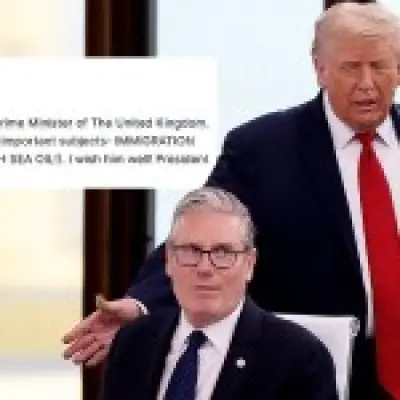
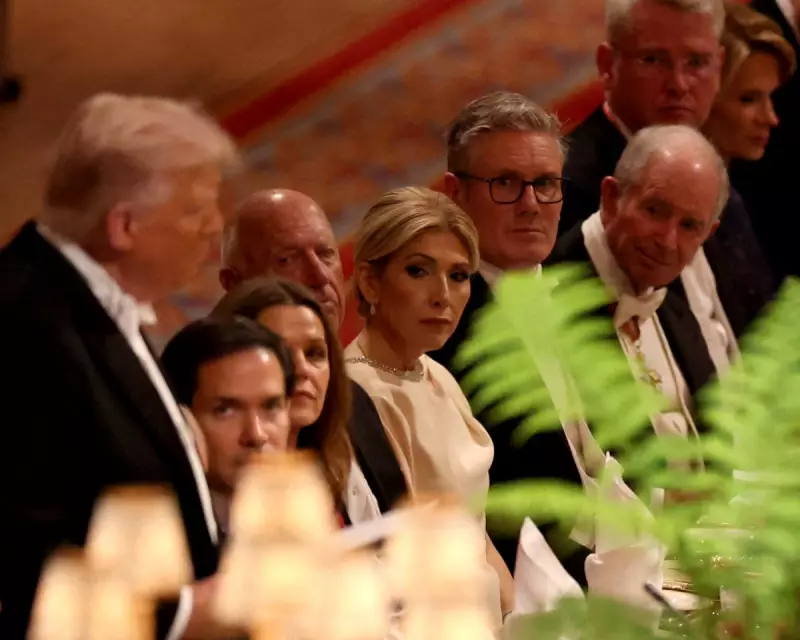
Davey has launched a scathing critique of Prime Minister Keir Starmer's diplomatic approach, which he characterises as overly passive and ineffective. He points to the state banquet at Windsor Castle in September 2025, where Trump was fêted and spoke of the "special relationship," as a symbol of a strategy that has now spectacularly unravelled. According to Davey, Starmer's belief that avoiding confrontation would protect British industries has proven to be a miscalculation, leaving the UK vulnerable as Trump's actions threaten to shatter long-standing transatlantic bonds.
"Starmer's Mr Nice Guy diplomacy has failed," Davey asserts, emphasising that the time for quiet acquiescence is over. The Liberal Democrat leader argues that the US president's behaviour, from leaking private communications with world leaders to publicly coveting the Nobel Peace Prize, demonstrates a descent from instability into what appears to be outright recklessness. This, he contends, demands a robust and unified response from Britain and its allies.

Forging a United Front with European Allies
The proposed solution centres on economic strength and coordinated action. Davey advocates for the UK to align closely with the European Union, the world's largest trading bloc, to create a powerful deterrent. He references French President Emmanuel Macron's suggestion of an EU "trade bazooka"—a suite of punitive trade measures designed to retaliate against Trump's threatened tariffs—and insists Britain must craft its own equivalent arsenal.
"Bullies like Trump only respond to strength," Davey states, drawing parallels with the abandoned US-China trade war, where financial market pressures ultimately forced a retreat. He highlights Trump's political vulnerability ahead of the US midterm elections, noting that 75% of Americans are reportedly feeling the economic strain of his "America first" policies. By leveraging collective economic clout, Davey believes the UK and EU can make the cost of aggression too high for the Trump administration to bear.
Targeted Measures to Hit Where It Hurts
Beyond broad trade strategies, Davey outlines specific, targeted actions the UK government could take to apply pressure directly on Trump and his inner circle. Key proposals include:
- Immediately cancelling the pharmaceuticals deal with the US, which is projected to cost the NHS an additional £3 billion in medicine expenses.
- Implementing tariffs on companies like Tesla to impact billionaire Elon Musk, a figure associated with the administration.
- Excluding US defence firms such as Palantir, owned by prominent Trump supporter Peter Thiel, from future UK government contracts.
Davey describes Trump as "the most reprehensible US president in history" and argues that the only effective way to compel him to back down is to strike at the financial interests of his network. This, he suggests, is a necessary shift from diplomatic pleading to concrete economic consequences.
A Defining Moment for British Foreign Policy
Davey frames the current situation as a critical juncture for the UK, Europe, and global stability. He contends that the so-called "special relationship" is effectively frozen for the duration of Trump's tenure in the White House, and that continued fawning or appeasement is not a viable option.
The Liberal Democrat leader presents Starmer with a clear ultimatum: persist with a failed strategy of placation or demonstrate leadership by standing up to Trump as one would any bully. "Bullies don't stop when they are asked to: they stop when they are forced to," Davey concludes, urging a decisive and courageous pivot in British foreign policy to protect national interests and uphold international norms in the face of unprecedented challenge.