
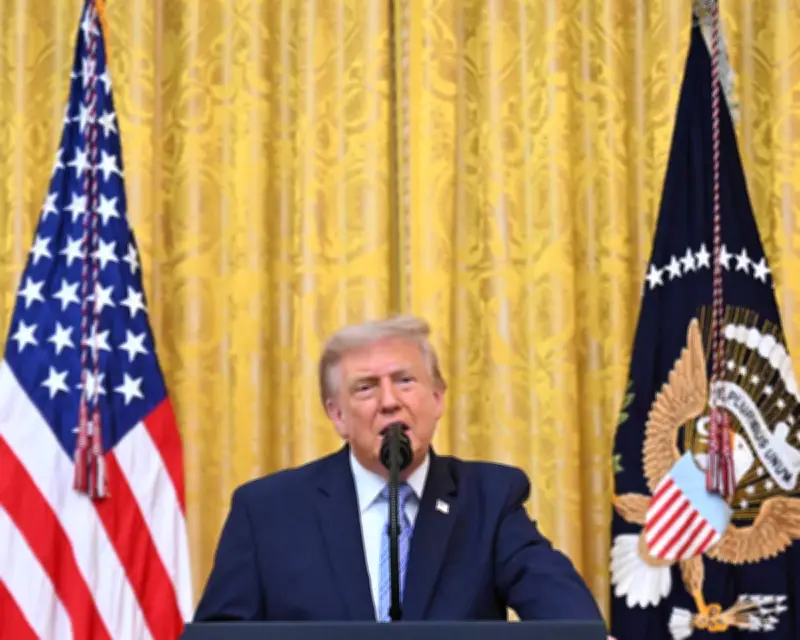
Donald Trump's primetime address from the White House's East Room on election integrity marked a dangerous escalation in his campaign to undermine faith in American democracy, according to legal scholar Austin Sarat. Speaking in an op-ed, Sarat described the speech as "a declaration of war on US elections, delivered in Orwellian fashion in the name of protecting them."
Trump's assault on electoral trust
During the Thursday night address, Trump claimed the "election system is so broken and so vulnerable that no one can possibly defend it," and outlined steps the federal government would take to protect elections from nonexistent threats. The New York Times noted that "no evidence has ever emerged showing that vote counts have been manipulated or corrupted." Sarat argued that Trump himself poses the gravest threat to election integrity, comparing his speech to "a fox announcing it would guard the henhouse."
The president's history of crying foul in contests he doesn't win dates back years, including calling the Emmys "all politics" after The Apprentice lost, and alleging fraud in the 2016 Iowa caucuses he lost to Ted Cruz. In 2016, after losing the popular vote, Trump tweeted about millions of illegal votes—a claim repeatedly debunked.
Breaking with tradition
Televised White House addresses have historically been reserved for moments of national gravity. Harry Truman first used the format in 1947 to address post-war famine in Europe. Dwight Eisenhower in 1957 spoke from the White House to explain his decision to enforce school desegregation in Little Rock, Arkansas, saying his words would convey both sadness and firmness. Trump's speech, by contrast, focused on grievances from the 2020 election, which he lost to Joe Biden.
A PBS/NPR/Marist poll found that "Americans' confidence that their elections will be run fairly has dropped to its lowest point in years," a direct result of Trump's relentless denialism. Sarat called it a shame that the president trashed the dignified aura of a White House address to peddle conspiracy theories.
Mobilizing resistance
Sarat concluded that Trump's speech was a warning and that it is up to Americans to mobilize to resist and foil his plan. The op-ed serves as a call to action against what critics see as an ongoing assault on democratic norms.




