Trump's War on Iran: Britain Must Recognize the US as a Hostile Power
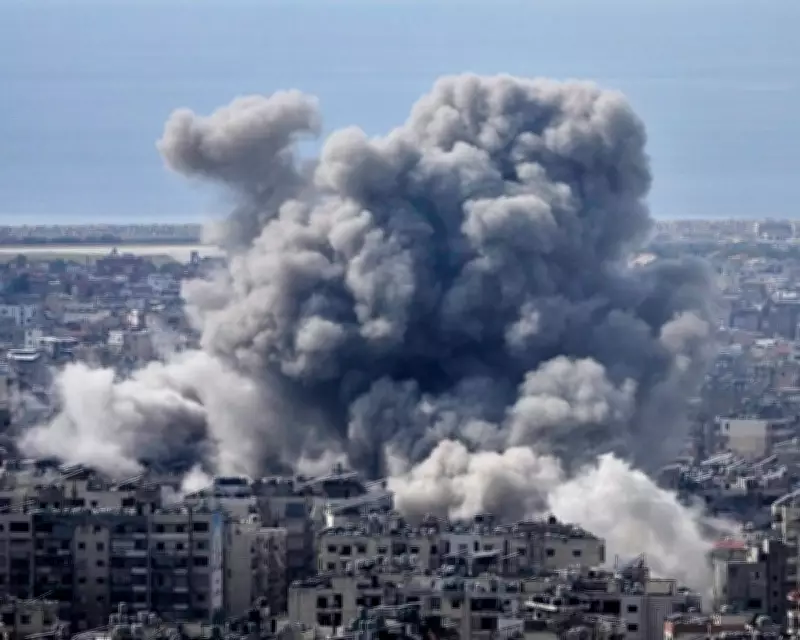
Smoke billows over Beirut's southern suburbs following an Israeli airstrike on March 6, 2026, a stark visual reminder of the escalating violence in the Middle East. The image, captured by photographer Hussein Malla, symbolizes the chaos unleashed by a conflict that is rapidly spiraling out of control. In this volatile landscape, Britain finds itself at a crossroads, forced to confront a harsh reality: its traditional ally, the United States, under President Donald Trump, has become an adversary threatening the very foundations of international law and democratic stability.
The Unjustified Escalation of Conflict
Nine days into what many deem an illegal and disproportionate war against Iran, the situation grows increasingly dire. The torpedoing of an Iranian navy ship off the coast of Sri Lanka by a US submarine underscores Trump's reckless approach, treating the entire globe as his personal battlefield. Diplomacy has been utterly abandoned, replaced by relentless airstrikes that have claimed hundreds of civilian lives in Iran. The White House, under Trump's erratic leadership, resembles a madhouse, with war aims shifting daily and officials like "secretary for war" Pete Hegseth advocating for merciless violence.
Iran's leaders, those who have survived the onslaught, are not capitulating as Trump might have hoped, reminiscent of his failed Venezuela coup. Despite being drastically outgunned, Iranian forces are inflicting pain across the region, deploying waves of drones and missiles that overwhelm defenses. This response was anticipated; Iran had warned of a region-wide conflict if attacked again. Trump has now alienated US allies, adopting George W. Bush's simplistic "for us or against us" doctrine from the Iraq war. Gulf Arab states and war-torn Lebanon desperately seek an end to the hostilities, while Britain and Europe, though reluctant, are being inexorably drawn into the fray. The global economy teeters on the brink of crisis, with Trump's war creating a world of victims, not heroes.

Legal and Moral Failures
Israeli Prime Minister Benjamin Netanyahu, already facing war crimes charges related to Gaza, and Trump must be held accountable by the International Criminal Court for atrocities in Iran, such as the horrific bombing of a school in Minab on February 28. Both leaders should face sanctions from the UK and all nations that uphold the UN Charter, human rights, and the rule of law. Their countries, too, deserve punitive measures. While many Americans and Israelis condemn their leaders' actions, these figures act in their names, with citizens left to demand an end to the chaos as legislative bodies fail to intervene.
It has long been evident that Trump is no friend to Britain, but his latest act of lethal hubris—launching an illegal war against Iran without prior warning to the UK—solidifies his administration as an enemy. The US, akin to Russia in Ukraine, has initiated an aggressive war against a sovereign state, basing its actions on unsubstantiated claims of an "imminent" threat. Its military operates without restraint, ignoring moral and legal norms, including the brazen assassination of a head of state. This rampage terrorizes millions, disrupts global trade and energy supplies, and proves the US, like Israel, is an outlaw state posing a fundamental threat to the UK.
Britain's National Interests at Stake
Reducing Iran to ruins is not in Britain's national interest. Nor is it beneficial for the Tehran regime, however reprehensible, to resort to asymmetric tactics like terror attacks in European cities for survival. The fragmentation of Iran into Iraq-style anarchy, potentially spurred by uprisings among Kurds and other minorities, would trigger a refugee crisis surpassing the Syrian exodus. Most critically, the erosion of the rule of law and laws of war accelerates the disintegration of the global order, a scenario detrimental to the UK.

Trump's recent crimes follow a pattern of destabilizing actions: kidnapping Venezuela's president, threatening to invade Greenland, hypocritically expanding the US nuclear arsenal while criticizing Iran's hypothetical capabilities, sabotaging UN climate efforts, imposing punitive trade tariffs, supporting far-right parties in Europe and Reform UK, and betraying Ukraine by appeasing Russia. All these moves adversely impact the British people and state.
Historical Context and Future Implications
Unlike the US, which lacks diplomatic relations with Iran, Britain has maintained dialogue with the Islamist regime since the 1979 revolution. This engagement has provided insights that the US, in its profound ignorance, lacks. Suggesting Iran will surrender meekly is naive; economic sanctions, reinforced by Trump's withdrawal from the 2015 nuclear deal, only empower hardline factions. The US missed opportunities to support reformists like former president Hassan Rouhani, contributing to Iran's current repressive state.
Iran desperately needs renewal, with many citizens yearning for a freer, more prosperous society. However, the US-Israeli regression into imperialist vandalism crushes hopes for peaceful change, risking a fractured nation dominated by a brutal, paranoid regime. Britain's deep entanglement with the US in defense and intelligence might seem to preclude a break, but history shows Britain can survive without conditional American support. Scrapping costly dependencies like the Trident nuclear system, reliant on US technology, could free the UK from Trump's dangerous leverage.
A Call to Action for Britain
As the conflict enters its tenth day, the question looms: how much longer will this last? Trump and Netanyahu must be stopped for the sake of Iran, the Middle East, and global security. The threat to democratic values from Trump, Netanyahu, and allies like Vladimir Putin is pervasive and growing. For Prime Minister Keir Starmer, an honorable leader facing unjust criticism, this war's paramount lesson is to know your enemy—and act decisively.
This is Trump's war of choice, but Britain has choices too. Two hundred and fifty years after American independence, it may be time for a British declaration of independence, asserting sovereignty in the face of a hostile power. The stakes could not be higher for the future of law, peace, and democracy worldwide.