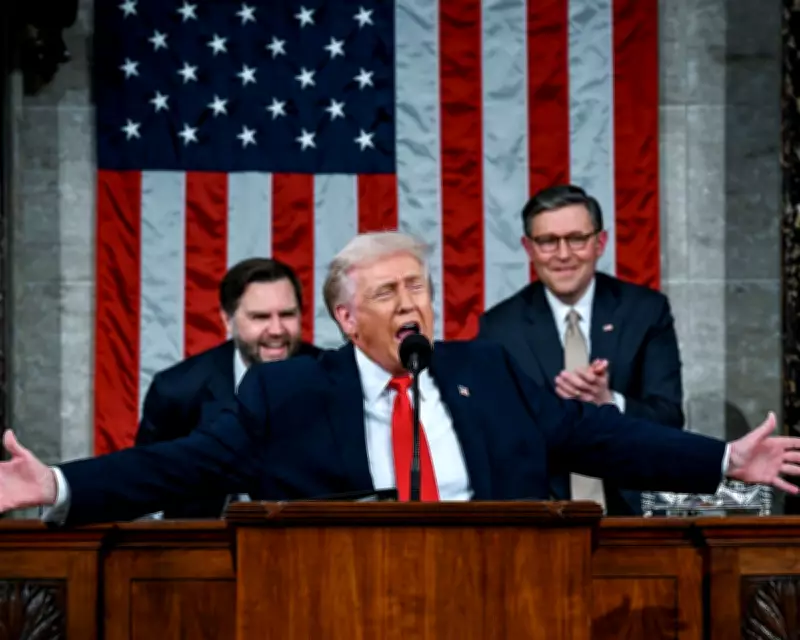
Trump's State of the Union Address: A Declaration of Victory and Political Warfare
In a highly anticipated State of the Union speech, former President Donald Trump took to the national stage to assert his political dominance and confront his adversaries head-on. The address, delivered with characteristic fervor, was marked by bold claims of electoral success and a relentless assault on his opponents, both within and outside his party.
Claims of Triumph and Electoral Validation
Trump opened his speech by proclaiming victories in recent electoral contests, framing them as a resounding endorsement of his leadership and policies. He emphasized that these wins, which he described as historic and overwhelming, demonstrate the unwavering support of the American people for his vision. The former president detailed specific races where his endorsed candidates prevailed, arguing that this trend signals a broader shift in the political landscape favoring his agenda.
Throughout this section, Trump reiterated his belief in the legitimacy of these outcomes, dismissing any skepticism as partisan interference. He portrayed himself as the true voice of the electorate, contrasting his claimed successes with what he labeled as the failures of the current administration.

Scathing Attacks on Political Foes
The speech quickly turned confrontational as Trump launched into a series of pointed attacks against his political enemies. He singled out key figures in the Democratic Party, accusing them of corruption, incompetence, and undermining American values. Trump also did not spare members of his own party who have opposed him, labeling them as traitors and weak leaders who have betrayed the conservative cause.
Using strong and often inflammatory language, Trump accused his foes of engaging in what he called a witch hunt against him and his supporters. He claimed that these attacks are driven by a desire to silence dissent and maintain a grip on power, rather than any genuine concern for the country's welfare.
Policy Promises and Future Vision
Amid the rhetoric, Trump outlined a series of policy proposals that he vowed to implement if returned to office. These included measures on immigration, economic revitalization, and national security, all framed as essential to restoring American greatness. He promised to reverse what he described as the damaging policies of the current administration, offering a stark alternative that he claimed would bring prosperity and strength.
Trump's vision was presented as a direct rebuttal to his opponents' approaches, with him positioning himself as the only leader capable of delivering real change. He called on his supporters to rally behind him, emphasizing the urgency of the upcoming electoral battles.
Reactions and Implications
The speech has already sparked intense reactions across the political spectrum. Supporters have praised Trump's unapologetic stance and his willingness to take on the establishment, viewing it as a necessary fight for the soul of the nation. Critics, however, have condemned the address as divisive and factually dubious, warning that it could further polarize an already fractured political environment.
Analysts suggest that this State of the Union speech sets the tone for Trump's campaign strategy moving forward, focusing on mobilization of his base through confrontation and claims of victimhood. The impact on upcoming elections and the broader political discourse remains to be seen, but it is clear that Trump intends to remain a central and contentious figure in American politics.
In summary, Trump's State of the Union address was a powerful mix of self-congratulation and political aggression, designed to energize his followers and challenge his opponents. As the political season heats up, his words are likely to echo through the halls of power and the minds of voters nationwide.