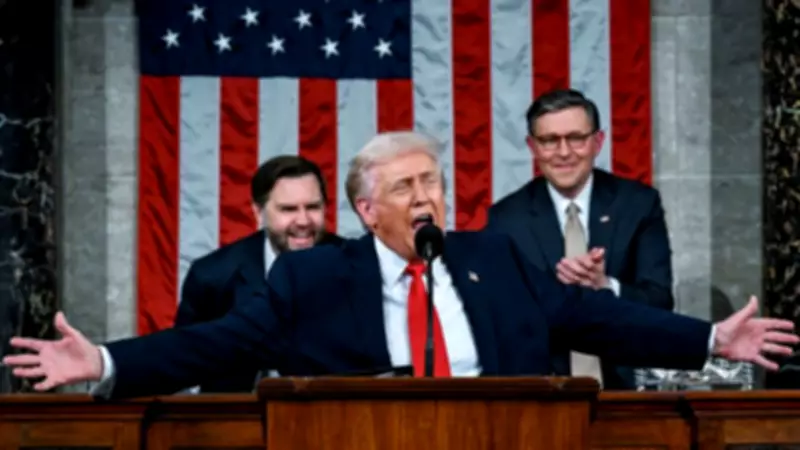
Trump's State of the Union Address: A Showbiz Spectacle Lacking Substance
In a marathon 1 hour and 48-minute address to Congress, former President Donald Trump delivered what many analysts are calling a vintage performance—full of familiar rhetoric but strikingly devoid of new policy announcements. The State of the Union speech, his first of a second term, ultimately proved to be a news event without a clear news line, leaving observers questioning its strategic purpose.
A Return to Campaign Trail Rhetoric
Trump's speech heavily relied on well-worn themes from his previous campaigns. He repeatedly emphasized "America first" policies, promoted his "drill baby drill" energy agenda, and touted what he described as success on border immigration. The address painted a picture of a golden age under his leadership, despite recent polling showing his popularity has plummeted significantly.
The president faces a critical challenge: he must shore up support among Republican deserters during a mid-term election year. This political pressure likely explains his decision to return to a back-to-basics stage routine on Capitol Hill. However, the context has shifted dramatically—Trump is now being judged on his actual record rather than campaign promises.

Economic Claims Versus Public Perception
While Trump boasted of a "roaring economy," many Americans aren't experiencing the financial benefits in the numbers his administration needs for political success. This disconnect between presidential proclamation and public perception represents a significant vulnerability as the mid-term elections approach.
International Tensions and Ambiguity
Perhaps most notably, the address occurred against a backdrop of escalating tensions with Iran. With speculation mounting that the administration is "on the brink of bombing Iran," many in the chamber listened intently for clues about future foreign policy direction. Instead, Trump offered what analysts describe as a holding position that didn't advance his public stance, though he continued to "beat the drums of war."
The president did reveal one concerning development: Iran is reportedly working on missiles capable of reaching the United States. This disclosure added gravity to an otherwise theatrical presentation but failed to clarify the administration's intended response.
The Showbiz President Takes Center Stage
The event frequently resembled a television game show more than a presidential address. Trump appeared comfortable in his own skin and on stage, peppering the proceedings with tributes and awards to deserving attendees. Highlights included a reunion between Venezuelan politician Enrique Marquez and his niece, a tribute to the late Charlie Kirk, and condemnation of political violence.
In a particularly populist moment, Trump introduced the universally acclaimed U.S. men's ice hockey team—his personal invitees to the event. This blend of showmanship and politics characterized the entire address, with plenty of both elements on display.
Political Implications and Uncertain Futures
For the Republican Party, the address provided less certainty than many had hoped. With mid-term elections looming, party leaders are looking to their president to "put wind in its sails" and provide clear direction. Instead, they received a performance heavy on nostalgia but light on forward momentum.
The spectacle demonstrated Trump's enduring ability to command attention and deliver the kind of theatrical politics that energized his base during previous campaigns. However, with his popularity declining and his party facing crucial elections, questions remain about whether showmanship alone can address the substantive challenges ahead.
As one observer noted, "He took a long time to say a little"—a summary that captures both the duration and the content of an address that may be remembered more for its style than its substance.