Donald Trump's recent assertion that the United States should confiscate oil from seized Venezuelan tankers represents a clear example of a wider right-wing belief in "resource imperialism," according to foreign policy analysts.
A Familiar Playbook: Regime Change and Oil
In a significant escalation of pressure on the government of Nicolás Maduro, the Trump administration has in recent weeks intercepted two tankers carrying Venezuelan crude and initiated pursuit of a third. This aggressive move has been coupled with intensified rhetoric, including labelling fentanyl allegedly flowing from Venezuela as a "weapon of mass destruction."
Critics have been quick to draw parallels with the lead-up to the Iraq war, citing a familiar cocktail of regime-change language, security justifications, and transparent oil interests.

Speaking to reporters on Monday, Trump explicitly framed the seized oil as a potential US asset. "Maybe we will sell it, maybe we will keep it," he stated. "Maybe we'll use it in the strategic reserves. We're keeping the ships also."
A Doctrine of Extraction: From Iraq to Syria and Beyond
This approach is not new for Trump. His belief in what researcher Patrick Bigger of the Transition Security Project terms "resource imperialism" first surfaced during his 2016 presidential campaign. He argued repeatedly that while the US should not have invaded Iraq, it should have taken the nation's oil as compensation.
"You win the war and you take it," Trump told ABC in 2015. "We're reimbursing ourselves." He later expanded, claiming in 2016 that seizing Iraqi oil would have prevented the rise of ISIS by denying the group its funding source.
A similar logic was applied in Syria, where Trump explicitly linked a continued US troop presence to control over eastern oilfields, suggesting companies like Exxon Mobil could exploit the resources. The strategy extends to Iran, where crippling sanctions aim to cut off oil revenue, and to a fixation on Greenland's mineral wealth, over which Trump has not ruled out using force.
Climate and Geopolitical Reckoning
Energy experts warn that this doctrine prioritises fossil fuel dominance over international norms and climate science. Alice Hill of the Council on Foreign Relations, a former Obama adviser, calls it "essentially resource nationalism."
"He sees fossil fuel dominance as key to our national power and he doesn't care about international norms or what climate science says," Hill said. "This is a short-term gamble that will cost everyone a great deal."
Adam Hanieh, author of 'Crude Capitalism', notes that escalating US-China rivalry is a key driver, pushing America to exert control over global energy and mineral supply chains. However, he argues Trump's main difference from past administrations is one of style, not substance.
"Previous administrations pursued the same strategic control of energy, minerals and chokepoints, but cloaked it in multilateralism and 'market stability'," Hanieh said. "Trump voices the extractive logic directly."
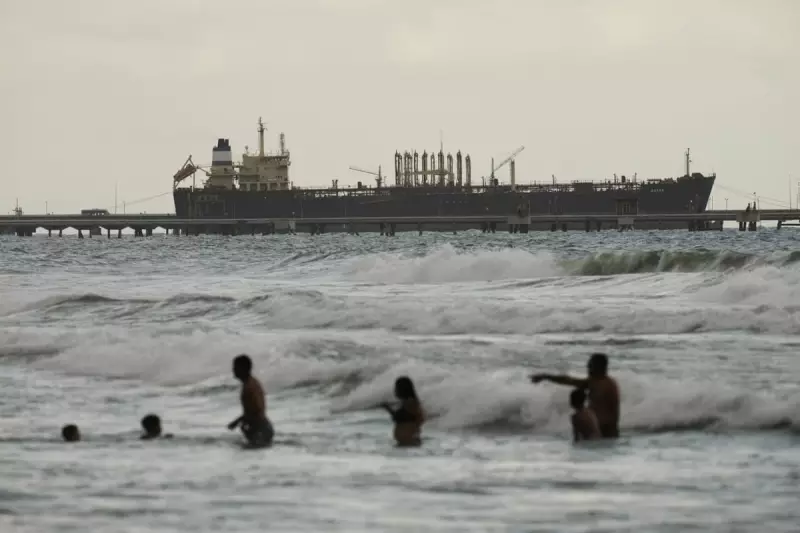
The oil tanker Evana, which docked at El Palito port in Puerto Cabello, Venezuela, on 21 December, now symbolises a volatile flashpoint in this uncompromising geopolitical stance, with implications far beyond the Caribbean.