Trump's Name and Face Dominate US Public Spaces, Sparking 'Dictator Vibes'
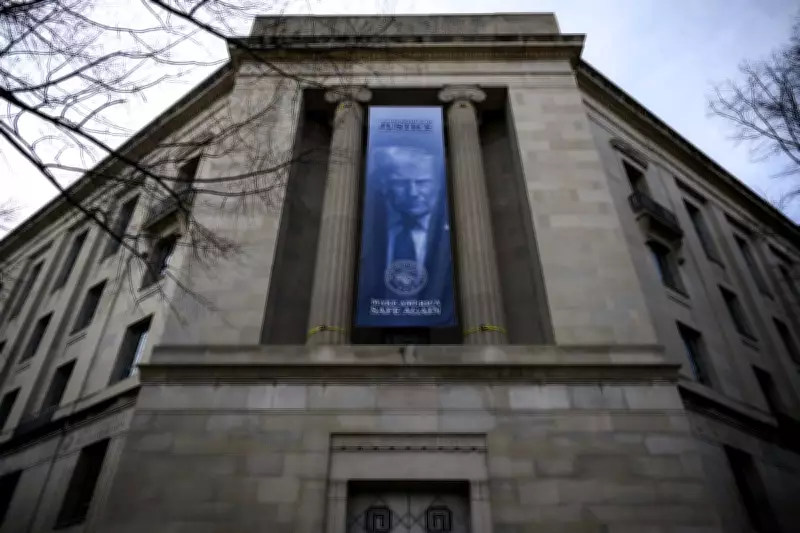
The United States Justice Department headquarters in Washington now features a massive banner bearing the visage of Donald J. Trump, the 47th US president, on its exterior. This installation is merely the latest in a series of moves that have placed Trump's name and image front and center across American public life, leading some critics to describe the phenomenon as giving off "dictator vibes."
Observers note that the US increasingly resembles regimes where giant images of leaders loom over citizens, with Trump's persona becoming inescapable in daily life. Since his return to office last year, the president has systematically imposed his brand on numerous facets of the nation, from government buildings to transportation infrastructure.
Public Buildings Targeted for Trump's Image
Public buildings where people gather have been a primary focus for Trump's branding efforts. The John F. Kennedy Center for the Performing Arts, originally a memorial to the assassinated president, saw its board taken over by Trump allies, leading to plummeting ticket sales and artist boycotts. In December, Trump added his name to the center, a move critics, including Kennedy's relatives, deemed illegal.
The US Institute of Peace also fell victim to Trump's second-term efficiency drive, with its board ousted and staff fired. By December, engravers had chiseled Trump's name into the institute's wall. Similar giant banners of Trump's face were erected at the Department of Agriculture and the Labor Department last year, mirroring the Justice Department installation.
Transportation Hubs Renamed in Trump's Honor
In Florida, the Republican-dominated legislature voted to rename West Palm Beach airport as "President Donald J. Trump International Airport," following a trademark application by the Trump Organization. The road between the airport and Trump's Mar-a-Lago club was also renamed President Donald J. Trump Boulevard.
Reports suggest Trump is targeting other transportation hubs, such as New York's Penn Station and Washington's Dulles International Airport, with federal funding for infrastructure projects potentially tied to renaming efforts supported by Democratic leaders.
Military and Sports Facilities Emblazoned with Trump's Brand
The US military has seen Trump's influence with the announcement of Trump-class destroyers, part of a "golden fleet" featuring advanced weaponry. In sports, the Washington Commanders' new $3.7 billion stadium, set to open in 2030, may be named Trump Stadium if the White House prevails, leveraging National Park Service land for the project.
Monumental Ambitions and Financial Initiatives
Trump's ambitions extend to public monuments, with proposals to carve his face into Mount Rushmore, though legislation has stalled. A plan for a 250-foot "Arc de Trump" along the Potomac River in Washington DC has drawn criticism for its authoritarian connotations.
Financially, Trump aims to launch "Trump accounts," a savings initiative for new parents offering $1,000 per child born before 2028. Critics argue this could become a tax shelter for wealthy families while excluding immigrant children.
These widespread efforts to imprint Trump's name and image across America have intensified debates about presidential overreach and the erosion of democratic norms, with many labeling the trend as emblematic of authoritarian tendencies.