Trump's Second Term: A Deliberate Assault on Transatlantic Alliances
European political leaders who possess a deep understanding of their continent's turbulent history must now confront an uncomfortable reality. The current American president, Donald Trump, appears to be actively aligning himself with forces that historically threatened European stability and democracy. His approach represents not mere neglect of old partnerships, but a conscious effort to dismantle them.
The Historical Warning from Davos
In January 2018, during the early phase of Trump's first administration, German Chancellor Angela Merkel delivered a sobering address at the World Economic Forum. She opened with a poignant reminder about Europe's past, noting how political leaders had "sleep-walked" into the catastrophe of the First World War. With living memory of the Second World War fading, Merkel emphasised that subsequent generations bore the responsibility to demonstrate they had truly absorbed the lessons about peace's fragility.
Eight years later, Europe faces renewed threats on multiple fronts. Vladimir Putin continues aggressive actions along Europe's eastern borders, while to the west, a second-term President Trump, now celebrated as Davos' guest of honour, openly discusses annexing Greenland. This geopolitical landscape suggests the hard-won lessons of twentieth-century history remain dangerously unheeded.

Merkel's Early Recognition of the Threat
Although Angela Merkel's post-chancellorship reputation has suffered criticism for perceived economic stagnation and inadequate preparation for global turbulence, her assessment of Donald Trump proved remarkably prescient from the outset. Within hours of his 2016 election victory, Merkel's congratulatory message contained a notably cool qualification. Her statement carefully noted that German-American relations had traditionally been founded upon shared commitment to democratic values, rule of law, political pluralism, and protections against discrimination.
Like every NATO leader, Merkel found herself compelled to manage the unpredictable outbursts of a capricious American president, primarily to delay rather than prevent potential betrayal of Europe's crucial military alliance. Democratic leaders worldwide have experimented with various approaches—flattery, negotiation, occasional assertiveness—yet no strategy has successfully tempered Trump's destructive tendencies for any sustained period. The president's protective shell of self-interested calculation appears impervious to conventional diplomatic engagement.
The Failure of Historical Appeals
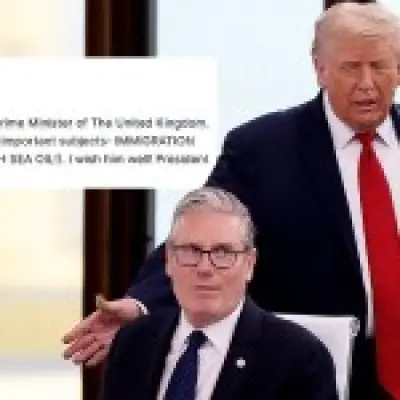
Merkel advocated for "strategic patience," but Trump's relentless temperament ultimately outlasted her tenure. Recently, UK Prime Minister Keir Starmer, facing retaliatory tariffs after expressing solidarity with Denmark regarding Greenland, urged calm diplomatic resolution. The response was an unhinged social media tirade condemning Britain's decision to relinquish sovereignty over the Chagos Islands—a deal Trump previously endorsed but now dismisses as "great stupidity" that somehow justifies American territorial ambitions in the North Atlantic.
No argument grounded in liberal democratic principles, nor any appeal to America's national interest through multilateral cooperation, carries greater weight with this president than his instinctive attraction to authoritarian figures who envision a world divided into personal fiefdoms. Among all potential methods of influence, invoking historical lessons proves particularly ineffective.
Territorial Ambition and Presidential Legacy
Trump's interest in Greenland stems primarily from its value as prime real estate, fitting for a leader who styles himself as the world's foremost property developer. The territory's mineral wealth and strategic Arctic positioning gain importance as polar ice retreats. Furthermore, its substantial land mass presents an irresistible opportunity—acquiring Greenland would surpass Thomas Jefferson's Louisiana Purchase, securing Trump's legacy as the president who most significantly expanded American territory. Overnight, the United States would become geographically larger than Canada.

The abstract benefits of maintaining a rules-based international order cannot compete with such potent satisfactions of monarchical vanity. The prospect of global lawlessness holds no terror for a ruler convinced of his nation's supremacy, or at least its dominance over the Western hemisphere in a world where power dictates right. Such a leader remains unmoved by risks that collapsing economic cooperation and escalating trade conflicts might trigger resource grabs, intensify territorial disputes, and ultimately spark military confrontations.
The Rejection of European Historical Consciousness
Merkel's warning about European history demonstrating the dangers of "national egoisms" carries no meaning for Donald Trump. He perceives no distinction between his personal ego and the national interest, declaring that neither will submit to external authority or moral constraint. This philosophy, historically known by other names, applies equally to foreign and domestic policy.
From the perspective of the US Department of Homeland Security, defiance of presidential will becomes as reprehensible as terrorism, potentially leading to forfeiture of constitutional protections. European history provides clear precedents for where this trajectory leads—security forces granted impunity to enforce leadership decrees gradually expand their authority. New categories of offence emerge to criminalise growing dissent. Democratic institutions become captured by the state's coercive apparatus. Political opposition becomes equated with treason, and polling stations transform into theatres for compulsory displays of regime loyalty.
The Precarious American Democratic Foundation
This outcome is neither inevitable nor even the most probable scenario. American democracy possesses deep institutional roots. Trump himself remains unpopular and visibly aging. Yet he appears irreplaceable as the figurehead for an ideologically contradictory MAGA movement that combines protectionist, free-market, interventionist, isolationist, chauvinist, and libertarian impulses no potential successor could coherently embody.
Nevertheless, Trump retains sufficient power to drive the United States dangerously close to disaster, ignoring all historical warning signs, until either congressional resistance or mortality intervenes. While European leaders understandably seek to buy time through engagement, they must not underestimate the costs of complicity with the comforting fiction that Trump remains amenable to rational persuasion, or that his America represents the same ally they once considered a friend.
A Fundamental Clash of Values
The current White House's failure to honour transatlantic partnerships stems not from simple stupidity or arrogance, though both traits are present. The historical narratives that teach Europeans to view multilateral governance as a necessary restraint on ultranationalism directly contradict the doctrine now guiding American power. There exists no misunderstanding here. Donald Trump is not merely neglecting old alliances; he actively despises them as fundamentally incompatible with both his political ideology and personal character.
If European leaders are correct about the values they believe America should uphold, then logically the United States itself requires regime change. If history validates their perspective, then the current president must inevitably fail—and he understands this reality completely. Sycophantic diplomacy cannot bridge this fundamental divide. European leaders who attempt flattery merely deceive themselves. Trump isn't ignoring the lessons European democracies learned from their traumatic past; he has consciously chosen to fight for the opposing side in history's enduring conflict between cooperation and domination.