White House Pressure Campaign Stalls in Key States
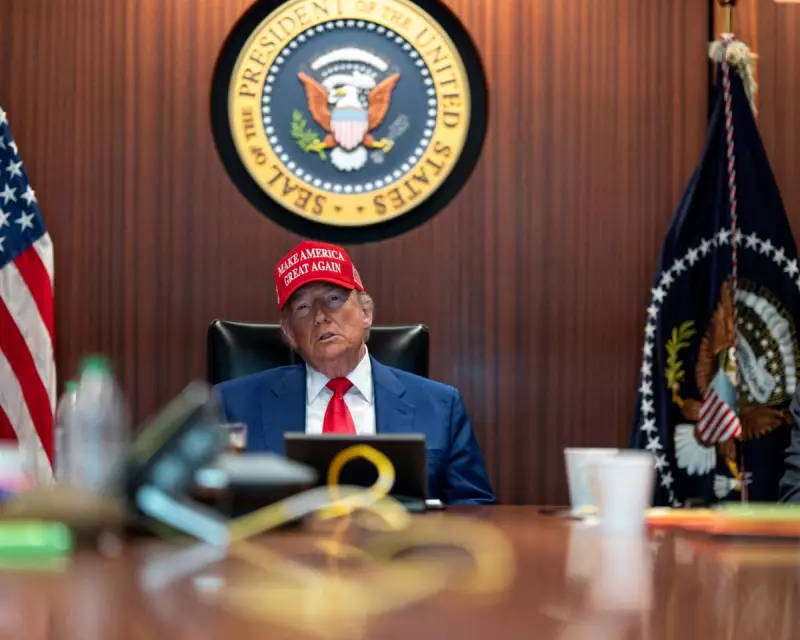
An unprecedented push by Donald Trump to redraw congressional maps mid-decade is meeting significant resistance from state lawmakers across the political spectrum. The former president's effort to create more Republican-friendly districts ahead of the 2026 midterms has encountered unexpected obstacles in Republican-controlled statehouses, with officials expressing philosophical, political and practical concerns about the controversial strategy.
Bipartisan Concerns Over Democratic Process
Lawmakers from both parties are pushing back against what they see as a nakedly partisan process that could further undermine public faith in democratic institutions. Several Republican legislators have voiced philosophical opposition to redistricting outside the normal ten-year census cycle, arguing it sets a dangerous precedent for American democracy.
Mark Schreiber, a Republican representative in the Kansas House, stated plainly: "I'm not just going to redistrict just to accommodate trying to increase chances for maintaining a majority in the US House." His colleague Clarke Sanders echoed these concerns, noting that Kansas had only drawn new districts three years earlier and warning that redrawing lines could actually risk Republican seats rather than secure them.
The Domino Effect: State-by-State Calculations
The redistricting battle began when Trump pressured Texas to create five additional Republican-leaning districts. Texas complied, but a federal court blocked the new maps, and the US Supreme Court has agreed to review that decision. The ruling could deal a fatal blow to the entire redistricting strategy.
California responded to Texas's move by approving a ballot measure to create five more Democrat-friendly districts, illustrating how one state's actions can trigger reactions across the country. This domino effect has created a fragile holding pattern, with states watching each other closely before making their moves.
Rodric Bray, the Republican president pro tem of the Indiana Senate, has emerged as a key holdout despite direct pressure from Trump. In a statement on 18 November, Bray acknowledged wanting a Republican majority in the US House but disagreed on how to achieve it. He argued that focusing on electing a Republican in Indiana's first congressional district made more sense than redrawing maps.
Practical Risks and Political Calculations
Beyond philosophical objections, practical political calculations are driving the resistance. Lawmakers fear creating what's known as a "dummymander" - districts intended to help one party that unintentionally benefit the opposition. There are also legal considerations, as new districts inevitably invite costly lawsuits that could disrupt election planning.
David Becker, executive director of the Center for Election Innovation & Research, described the pushback as a "really positive development on both sides." He expressed admiration for legislators who are thinking about the big picture and their voters rather than gaining one more seat in a closely divided House of Representatives.
The resistance comes despite intense pressure from Trump and his allies. The former president targeted Indiana specifically on his Truth Social platform, promising to support lawmakers who back redistricting while threatening to primary those who don't. Some Indiana legislators who haven't publicly approved redistricting have even had their homes swatted - a dangerous prank involving false emergency calls.
Democratic Responses and National Implications
On the Democratic side, states have largely operated in response to Republican efforts. Illinois Governor JB Pritzker stated his state is "watching what Indiana does" and may have to react accordingly. This reactive approach highlights how the redistricting battle has become a high-stakes game of political chess.
In Maryland, Senate president Bill Ferguson has faced intense scrutiny from his own party for opposing redistricting efforts. He warned that if Maryland moves forward, Republican states will follow suit, potentially wiping out any Democratic gains and worsening the national outlook for his party.
Public opinion on gerrymandering appears conflicted. While a YouGov survey found most voters in both parties oppose the practice when described in general terms, a more recent Politico poll showed majorities in both parties want their own parties to create more favorable districts.
The situation remains fluid, with Republican states having greater opportunity to game the system due to their legislative majorities overseeing more Democratic seats than Democratic majorities oversee Republican seats. As the 2026 midterms approach, the question remains how many state lawmakers will maintain their stand against the White House pressure campaign despite threats of primaries, swatting attacks, and internal party strife.