The Ultimate Test: Constitutional Safeguards and Presidential Fitness
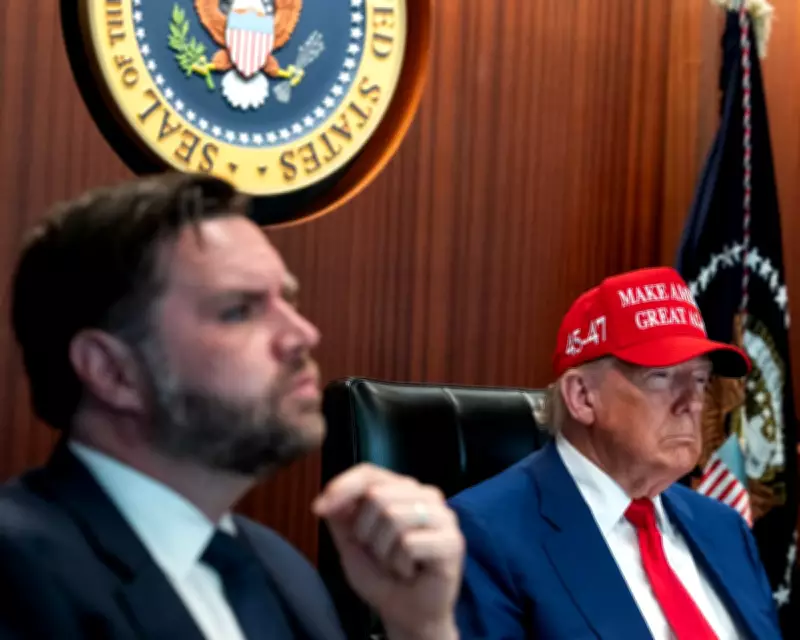
Presidential decisions carry life-or-death consequences for millions worldwide, which is precisely why constitutional safeguards exist. But do these protections function effectively when confronted with questions about a leader's cognitive fitness? Donald Trump's mental capabilities are extraordinary, at least according to the former president himself, who recently boasted about acing what he described as "a very hard test for a lot of people." This test is believed to be a screening tool for mild cognitive impairment in elderly individuals.
Public Perception Versus Presidential Reality
Despite Trump's self-proclaimed brilliance, 61% of Americans perceive their president as becoming more erratic with age, while 56% question his mental sharpness to handle complex challenges, according to recent polling. The 79-year-old leader recently interrupted a critical cabinet meeting during wartime to extensively discuss a conversation with the head of the Sharpie pen company about supplying custom presidential markers, though the company found no record of such discussion. He also made a perplexing Pearl Harbor reference before Japan's alarmed prime minister and referred to the Strait of Hormuz as the "Strait of Trump," insisting this was intentional because "there are no accidents with me."
The Global Stakes of Presidential Judgment
Imagine if public concerns about presidential fitness were valid. Consider that 45 million people face acute hunger risks if farmers cannot obtain sufficient fertilizer, a crucial byproduct of the disrupted Gulf gas industry. What mechanisms exist to challenge an elected president's decisions when global stability hangs in the balance? Trump has reportedly prepared nearly 10,000 troops for potential Middle East deployment without congressional approval for war declaration, creating momentum that could escalate conflicts independently of political intentions.

Constitutional Mechanisms Under Pressure
The United States maintains checks and balances intended to prevent presidential overreach, but none appear ironclad. The constitutional requirement for congressional war declaration approval represents the ultimate backstop, yet Trump's military preparations proceed regardless. Following a classified briefing, Republican representative Nancy Mace warned that military objectives presented to lawmakers differed from those shared with voters. Currently, Wall Street's market reactions seem to exert more restraining influence than Washington's political mechanisms.
The 25th Amendment Dilemma
Under the 25th Amendment, presidential powers can be suspended if the vice-president and cabinet majority agree the president is unfit. However, this provision typically requires presidential consent and has been invoked briefly, such as during George W. Bush's surgical anesthesia. Presidential medical examinations don't guarantee transparency, as demonstrated when Joe Biden's frailty only became fully apparent after he abandoned reelection plans. The public learned posthumously that John F. Kennedy received amphetamine and steroid cocktails during the Cuban missile crisis, just as Britons remained unaware of Winston Churchill's heavy drinking or Harold Wilson's likely early dementia during his final premiership.
The Human Element in Constitutional Protections
Constitutional safeguards ultimately depend on the resolve of a leader's inner circle, often composed of individuals devoted to maintaining power regardless of circumstances. Why would anyone conceal truth about a physically or mentally declining leader? Fear represents the obvious answer: fear of reprisal, lost influence, or public panic during crises. A less apparent explanation involves fierce loyalty and protectiveness bred through years of political service.
Personal Parallels to Political Realities
For those with aging parents experiencing memory decline, the journey from initial concern to medical diagnosis involves numerous sleepless nights. Should they continue driving? Is independent financial management still safe? The fear of intervening prematurely conflicts with guilt over potential consequences of inaction. Constitutional safeguards exist specifically to override such emotional dilemmas in political leadership contexts.

Without effective constitutional protections, citizens become helpless passengers in a superpower's speeding vehicle, watching anxiously as the driver swerves unpredictably, wondering how close to catastrophe we must approach before someone intervenes. The intersection of presidential cognitive fitness and constitutional safeguards represents one of democracy's most critical contemporary challenges.