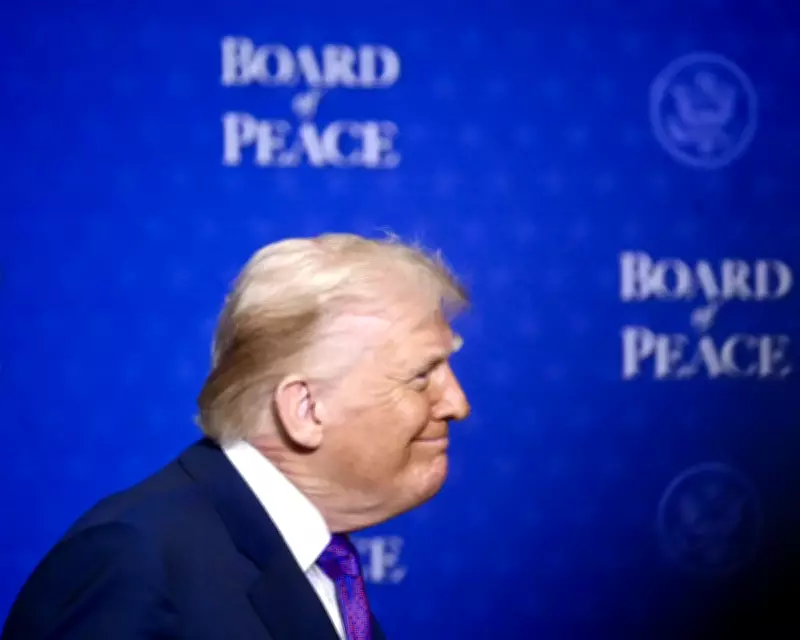
Trump's 'Board of Peace' Under Fire for Alleged Bias Toward Private Interests
A recent examination of Donald Trump's proposed 'Board of Peace' has sparked significant controversy, with critics arguing that the initiative is designed more to serve private interests than to advance the public good. This board, intended to shape foreign policy strategies, is facing scrutiny for its potential lack of transparency and accountability, raising alarms among political observers and public interest advocates.
Structure and Composition Raise Red Flags
The board's structure, as outlined in preliminary proposals, includes members with close ties to corporate and financial sectors, leading to concerns about conflicts of interest. Analysts note that this composition could prioritize business deals and economic gains over diplomatic and humanitarian objectives. For instance, key positions are reportedly earmarked for individuals from industries that stand to benefit from specific foreign policies, such as defense contractors and energy firms.
This setup has drawn comparisons to previous administrations where private sector influence overshadowed public welfare goals. Critics emphasize that such an approach risks undermining trust in government institutions and could lead to policies that favor narrow interests at the expense of broader societal benefits.

Implications for Foreign Policy and Public Trust
The potential consequences of this board's operations are far-reaching. If private interests dominate decision-making, it could result in foreign policies that are less focused on peace-building and more on profit-driven agendas. This might include:
- Advocating for military interventions that benefit defense industries.
- Negotiating trade deals that prioritize corporate profits over environmental or labor standards.
- Ignoring human rights concerns in favor of economic partnerships with authoritarian regimes.
Such outcomes could erode public confidence in the government's ability to act in the national interest, potentially leading to increased polarization and skepticism toward political processes. Experts warn that without robust oversight mechanisms, the board's actions might go unchecked, further entrenching private influence in public affairs.
Calls for Reform and Greater Transparency
In response to these concerns, advocacy groups and some lawmakers are calling for reforms to ensure the board operates with greater transparency and public accountability. Proposed measures include:
- Implementing strict conflict-of-interest rules for board members.
- Requiring public disclosure of all meetings and decisions.
- Establishing independent oversight committees to review the board's activities.
These steps aim to balance the inclusion of private sector expertise with safeguards that protect the public good. As debates continue, the future of Trump's 'Board of Peace' remains uncertain, with its legitimacy hinging on whether it can address these criticisms and demonstrate a commitment to serving broader societal interests over private gains.