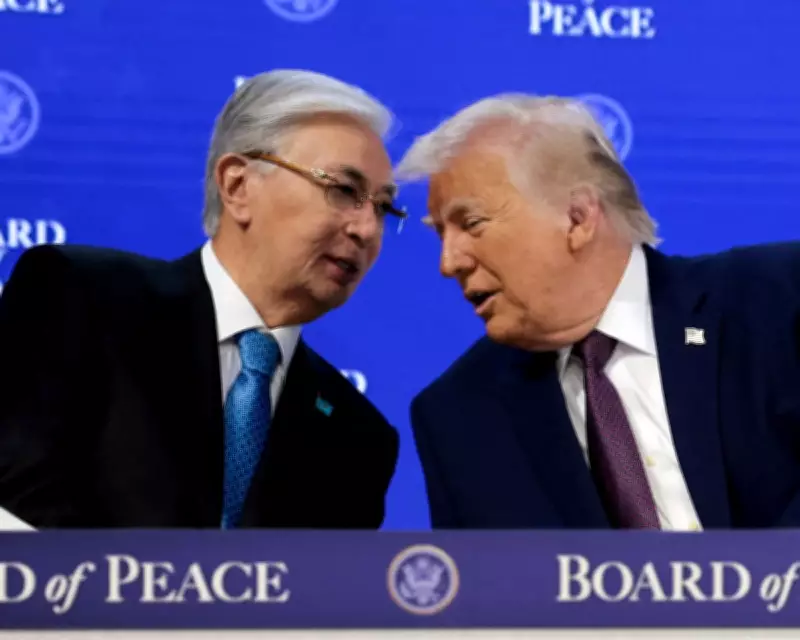
Trump's Board of Peace Inaugural Meeting Draws Global Authoritarian Figures
Washington is set to host the inaugural meeting of Donald Trump's newly established Board of Peace, with representatives from largely oppressive and authoritarian regimes flying in for the event. This body, created to implement Trump's vision for Gaza's future post-destruction by Israel, has been expanded in scope, with Trump hailing it as "the most consequential international body in history." Global powers, including traditional U.S. allies, fear this U.S.-led initiative aims to sidestep the more democratic United Nations, potentially replacing it with a fee-paying members' club controlled by a single individual.
Attendance and Global Concerns
It remains unclear how many of the over 20 Board of Peace members will attend Thursday's meeting, prompting several governments like Italy and Greece to send observers as a workaround. Many founding member countries are military regimes or dictatorships, while others joined to appease Trump. The gathering highlights a shift in international diplomacy, with democracies largely avoiding participation due to concerns over human rights and democratic principles.
Middle East Representatives
Egyptian Prime Minister Mostafa Madbouly represents a country rated "Not Free" with a Freedom House score of 18/100. The latest report criticizes Egypt for tightly restricted civil liberties and press freedoms, noting that President Abdel Fattah al-Sisi has ruled in an increasingly authoritarian manner since the 2013 coup, with dissent often leading to criminal prosecution.
Turkish Foreign Minister Hakan Fidan, part of the Gaza Executive Board under Trump's body, serves under President Recep Tayyip Erdoğan, whose government has consolidated power through constitutional changes and imprisonment of opponents, earning a "Not Free" rating of 33/100.
Israeli Foreign Minister Gideon Sa'ar represents Israel, rated "Free" at 73/100, but the Palestinian territories under occupation score much lower, with Gaza at 2/100 and the West Bank at 22/100, highlighting severe restrictions on political rights and civil liberties.
Asian Attendees
Cambodian Prime Minister Hun Manet leads a country rated "Not Free" at 23/100, following an undemocratic transfer of power from his father, Hun Sen, with the government using intimidation and prosecutions to suppress opposition.
Indonesian President Prabowo Subianto represents a "Partly Free" nation at 56/100, offering troops for Gaza but facing challenges like systemic corruption and discrimination against minorities.
Kazakh President Kassym-Jomart Tokayev, with a "Not Free" score of 23/100, will attend and meet with American executives, despite Kazakhstan's restricted freedoms and endemic corruption.
Pakistani Prime Minister Shehbaz Sharif joins in "good faith," but Pakistan's "Partly Free" rating of 32/100 reflects military influence over politics and media intimidation.
Uzbek President Shavkat Mirziyoyev and Vietnamese Communist Party General Secretary Tô Lâm both represent "Not Free" countries, with scores of 12/100 and 20/100 respectively, characterized by authoritarian rule and tight restrictions on dissent.
European and South American Participants
Albanian Prime Minister Edi Rama, a founding member with a "Partly Free" score of 68/100, has declined permanent membership due to its $1 billion price tag, though Albania faces corruption issues.
Hungarian Prime Minister Viktor Orbán, a close Trump ally rated "Partly Free" at 65/100, is known for anti-migrant and anti-LGBT+ policies that hamper opposition groups and media.
Kosovan President Vjosa Osmani, the only female founding member with a "Partly Free" score of 60/100, leads a country with credible elections but entrenched corruption.
Argentine President Javier Milei, a Trump ally with a "Free" rating of 85/100, represents a vibrant democracy, though his government has accused universities of indoctrination, signaling political shifts.
Implications and Future Outlook
The Board of Peace meeting underscores Trump's efforts to reshape global governance, drawing criticism for including regimes with poor human rights records. As democracies largely abstain, the body's effectiveness and legitimacy remain in question, potentially altering international diplomatic norms and exacerbating tensions with traditional allies.