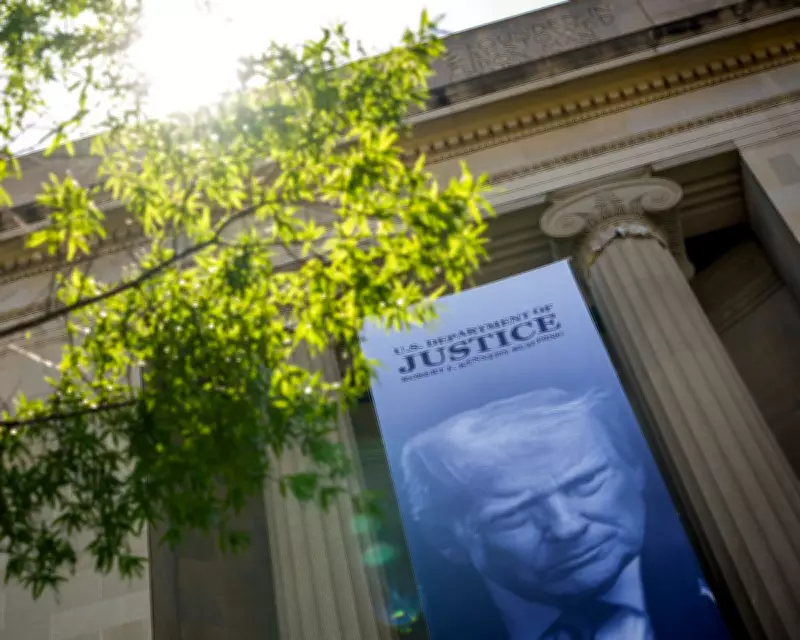
A US federal judge has reopened President Donald Trump's lawsuit against the Internal Revenue Service (IRS) to scrutinize a controversial $1.8bn settlement with the Justice Department. The out-of-court agreement, which created a fund for the Trump administration to distribute at its discretion, has sparked bipartisan outrage and accusations of cronyism.
The Settlement and Its Backlash
The settlement stems from a 2024 case where an IRS contractor leaked tax returns of high-net-worth individuals, revealing that Trump paid only $750 in federal income tax in 2016 and 2017, and no income tax in 10 of the previous 15 years. Trump sued the IRS for $10bn over the leak. Despite an internal IRS memo deeming the lawsuit weak, the administration overruled this and settled, creating a $1.8bn fund for victims of "weaponised lawfare."
Critics argue the fund is a slush fund for Trump allies, as a five-member commission appointed by Acting Attorney General Todd Blanche—a former Trump personal lawyer—will decide payouts, with the president able to fire commissioners at will. Over a dozen Republican senators have urged the administration to change course, and a federal judge reopened the case after a bipartisan group of judges filed a lawsuit alleging collusion and fraud.

Unprecedented Self-Enrichment
Guardian US political enterprise editor George Zornick described the level of graft as "truly unprecedented" in the modern era. Trump, unlike his first term, has openly leveraged his presidency for profit. His sons, Eric and Don Jr., and son-in-law Jared Kushner are conducting deals in key foreign policy locations, building towers, golf courses, and resorts. Domestically, they have spun up companies in drones, AI, and crypto that win government contracts. The Trump family cryptocurrency firm, partly owned by the UAE, saw its wealth balloon by billions.
A 2024 Supreme Court ruling granting presidents absolute immunity for official acts has emboldened the administration. Zornick noted that the ruling allows Trump to pardon anyone in his administration, encouraging risky behavior for profit.
Impact on Democracy
Zornick highlighted the corrosive effect on American democracy, as people become numb to the blending of business and presidency. With midterms approaching, Democrats may focus on corruption, but the Supreme Court's immunity ruling remains a barrier. Trump's opponents hope for an anti-corruption package if they win Congress in 2028.
The White House's optics—Trump seated at his desk surrounded by aides like a king—reinforce the message: "I am the boss, I will do what I want and take my spoils."