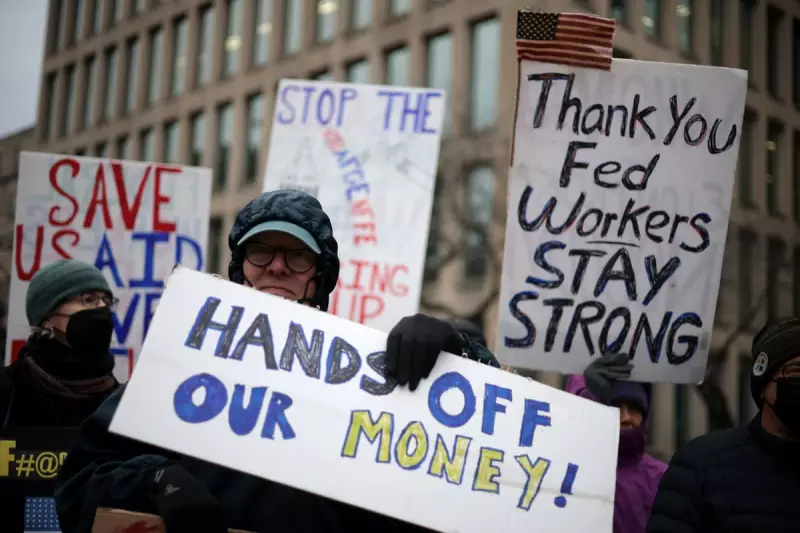
A damning new analysis has revealed that the administration of former US President Donald Trump spent an estimated $10bn of taxpayer money on placing federal employees on extended paid leave in 2025, a strategy condemned as a colossal waste of public funds.
A $10 Billion Bill for an Idle Workforce
The report, compiled by the watchdog group Public Employees for Environmental Responsibility (Peer), estimates that more than 154,000 federal workers were placed on paid administrative leave that year. This staggering figure represented nearly 7% of the entire federal civilian workforce, who were paid to stay home and not work.
In a letter to the US Government Accountability Office (GAO), Peer's senior counsel, Peter Jenkins, slammed the policy. "Spending over $10bn of taxpayer money to prevent people from working is a hell of a way to run a railroad," he stated. "Ironically, this outrageous waste of human capital – when key federal agencies such as the National Park Service were horribly understaffed – was done in the name of government efficiency."

Legal Labyrinth and an 'Accountability Black Hole'
The analysis alleges the Trump administration's actions violated the 2016 Administrative Leave Act (ALA), which Congress passed to prevent exactly this kind of abuse. The law limits paid administrative leave to no more than 10 workdays per year, with few exceptions.
However, enforcement has proven almost impossible, creating what researcher Madeline Materna, a Stanford University doctoral student, calls an "accountability black hole." The first Trump administration failed to implement the specific regulatory rules needed to enforce the ALA. Although the Biden administration eventually developed these rules after a lawsuit by Peer, they did not take effect until September 2025, long after the mass leave placements.
Furthermore, the Trump administration created separate classifications of paid leave, arguing the ALA's 10-day rule only applied to what it termed "investigative" leave. "They totally gut the law," said Materna. "They did not lawfully implement Congress's statute, they did something else."
Blocked Paths to Justice and Oversight
Peer has filed complaints with both the GAO and the US Office of Special Counsel, but multiple barriers stand in the way of accountability. For the GAO to act, it must first rule the paid leave illegal, which could then allow for criminal prosecution of agency heads. Yet, as Peer's Jeff Ruch noted, this would require "a US attorney armed with a profile in courage because they would be prosecuting their own administration."
Other potential avenues are also blocked. The Merit Systems Protection Board, which could hear such cases, has been left without a quorum after the Trump administration fired all its Democratic members. A federal lawsuit is theoretically possible but would require a plaintiff who was directly harmed to first get a ruling from the very board that is currently incapacitated.
"There's clever dancing around the law, and things that make it challenging to take the issue to court or any regulatory body, and that's why [the paid leave program] has been allowed to proceed," Materna concluded.