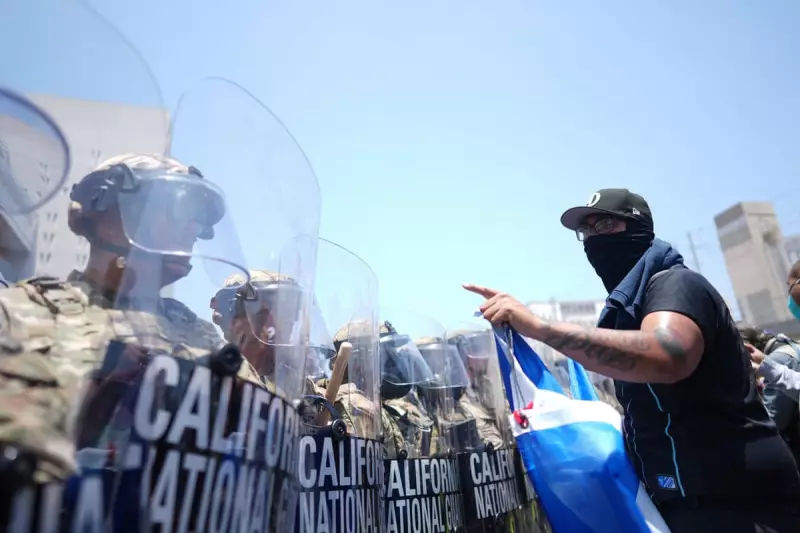
In a significant reversal, former President Donald Trump has abruptly ended his administration's efforts to maintain federal control of National Guard troops in three major American cities. The decision, announced on Wednesday, sees troops withdrawn from Los Angeles, Chicago, and Portland after a series of legal and judicial defeats.
A Legal and Political Setback
The unexpected shift followed a key concession from the US Department of Justice. Its lawyers stated they would no longer contest a California court's ruling that returned control of the state's National Guard to Governor Gavin Newsom. This legal development forced the administration's hand.
The move also comes just days after a rare rebuke from the US Supreme Court, which blocked the White House's attempt to deploy National Guard units in Illinois. Together, these events represent a substantial check on executive power.

Trump attempted to frame the withdrawal as a tactical pause on his Truth Social platform. He claimed the initiative had successfully reduced crime and vowed a future return. "We are removing the National Guard from Chicago, Los Angeles, and Portland, despite the fact that CRIME has been greatly reduced," he wrote, adding that the federal government would "come back, perhaps in a much different and stronger form."
State Leaders Hail the Retreat
Governor Newsom, who had vociferously opposed the federal deployment in Los Angeles, welcomed the Justice Department's filing with the Ninth Circuit Court of Appeals. The filing abandoned the argument that Trump held indefinite authority over state guard troops.
"This admission by Trump and his occult cabinet members means this illegal intimidation tactic will finally come to an end," Newsom stated. The deployment began in June 2024 in response to protests against Immigration and Customs Enforcement (ICE) raids, with Newsom consistently arguing it was an unjustified federal overreach.
A lower court had ruled earlier this month that Trump's seizure of control was illegal, ordering the troops' return to state authority. The administration's decision to stop fighting this ruling marks a clear retreat.
Broader Implications for Federal Power
This week's climbdown is the second major setback for Trump's policy of federalising National Guard units to quell dissent against his immigration agenda. The administration had characterised protests in these cities as violent riots requiring a federal response.
The Supreme Court's refusal to allow deployments in Chicago, opposed by Mayor Brandon Johnson and Governor JB Pritzker, set a powerful precedent. This latest development casts doubt on the future of similar deployments in other Democratic-led cities like Washington DC and New Orleans, where 350 troops were anticipated by New Year's Eve.
In Washington DC, where troops have been deployed since August 2024, a federal appeals court recently ruled they can remain while judges determine the legality of their presence. The death of one guardsman and the wounding of another in a November shooting, allegedly by an Afghan asylum seeker, had intensified both the deployment and Trump's anti-immigrant rhetoric. Over 2,000 troops, many from Republican-led states, are currently in the capital.
This series of events underscores the ongoing tension between federal authority and states' rights, a conflict brought sharply into focus by the Trump administration's contentious law enforcement strategies.