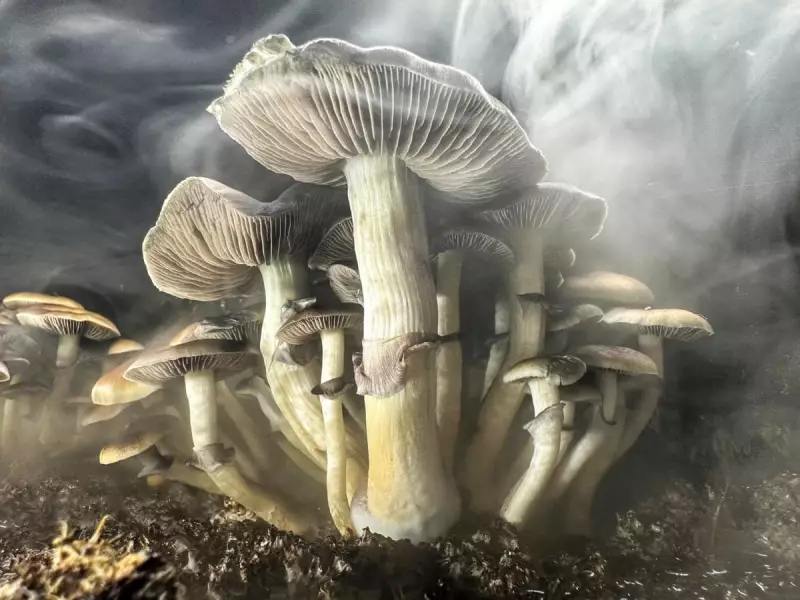
In a quiet basement in Connecticut, a humidified monotub cultivates psilocybin mushrooms. This scene, captured in December 2023, is emblematic of a quiet revolution unfolding across the United States. A growing number of religious institutions are incorporating banned psychedelic substances into their ceremonies, leveraging legal protections for faith to challenge decades-old drug laws.
The Legal Battleground: From Courtrooms to DEA Petitions
The landscape for psychedelic churches has shifted dramatically since the early 2000s. The pivotal moment came in 2006, when a New Mexico-based religious group successfully sued the Drug Enforcement Administration (DEA) under the Religious Freedom Restoration Act (RFRA). This law mandates that the government must meet a very high legal threshold before it can interfere with sincere religious practices. This victory set a new precedent.
Since then, a handful of organisations have secured legal protections after protracted fights. However, 2024 marked a significant turning point. The Church of Gaia in Spokane, Washington, became the first to receive an exemption by directly petitioning the DEA, rather than through litigation. Its leader, Connor Mize, emphasises that their use of ayahuasca—a potent brew that can induce intense physical and psychological effects—is "a purely spiritual practice."

This success is part of a broader trend. Attorney Sean McAllister, who specialises in psychedelic law, notes that with the Church of Gaia's win and two recent settlements, three new psychedelic practices have been recognised in the last year alone. "There is more of an openness now to granting these exceptions," McAllister observes, partly because the DEA has "lost every time they've litigated the case."
A Surge in Spiritual Seeking and Underground Churches
This legal evolution coincides with a profound cultural shift. As traditional religious affiliation declines in the US, many are turning towards alternative spirituality. A 2023 Pew Research Center survey found that four in ten American adults have become more spiritual over their lifetime, compared to just 24% who say they have become more religious.
Into this void step psychedelic churches. Experts like Jeffrey Breau of Harvard's Center for the Study of World Religions estimate that more than 500 such churches now operate across the country, with many founded in the last five to seven years. While only a few are legally recognised, hundreds function in a grey area, testing the boundaries of law and belief.
The substances used vary. Thus far, all legally exempt churches use ayahuasca, partly due to its strong traditional and ceremonial ties. However, underground groups utilise a wider pharmacopoeia, including psilocybin (magic mushrooms), LSD, MDMA, and newer compounds like 2C-B. Some even use multiple substances, raising complex future questions about multi-sacrament groups.
High Stakes: Risks, Raids, and the Fight for Mushrooms
Operating at this controversial intersection carries serious risks. Beyond logistical hurdles like securing insurance, leaders face the constant threat of law enforcement. Bridger Jensen, founder of the Utah-based church Singularism, experienced this firsthand in November 2023. After an undercover officer infiltrated his group, a SWAT team surrounded him, raided his centre, and confiscated its psilocybin mushrooms.
Singularism fought back using Utah's state-level RFRA, successfully halting criminal proceedings, recovering its sacraments, and winning permission to continue operating while its federal case proceeds. If Jensen ultimately prevails, Singularism would become the first mushroom church ever legally recognised in the US, potentially opening doors for other psychedelic practices beyond ayahuasca.
Yet Jensen voices a sobering warning. He fears his church's progress could inspire others to pursue similar claims without proper legal safeguards. "I think some people will end up going to jail having tried to replicate our process," he said. "Will there be more practices getting recognition after this? Absolutely, but it won't be without tremendous casualties as well."

As these churches plan for the future—from constructing dedicated ceremonial buildings to bringing in teachers from abroad—the legal and cultural landscape continues to evolve. With a potential administration under Donald Trump that may emphasise religious rights, and a public increasingly disenchanted with conventional religion, the American psychedelic church boom shows no signs of slowing down.