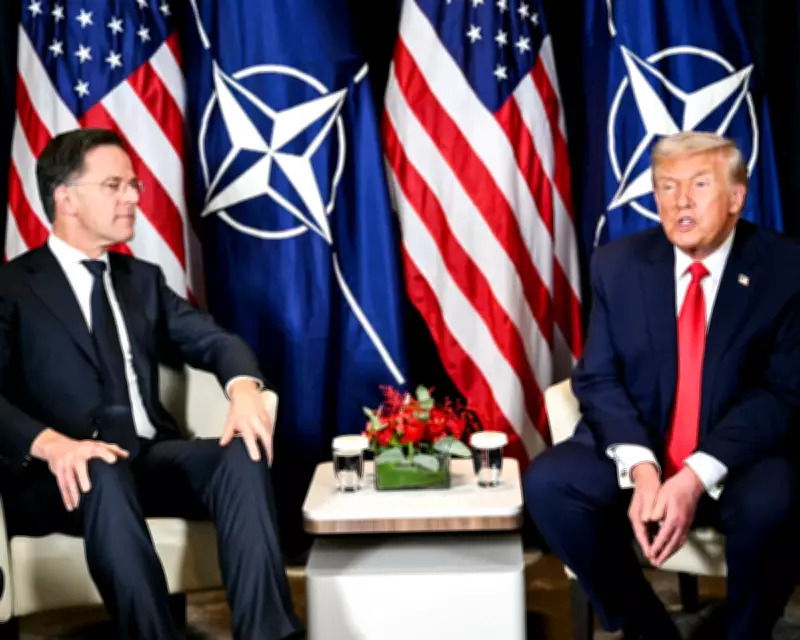
Trump Escalates NATO Threats Amid Iran Conflict Disagreement
Former President Donald Trump has declared he is "absolutely" considering withdrawing the United States from the North Atlantic Treaty Organization (NATO), marking his most determined threat to date against the military alliance. This warning comes directly after NATO allies refused to participate in the month-long, faltering US-Israeli assault on Iran, with Trump stating the matter is now "beyond reconsideration." The president's growing contempt for North Atlantic allies has intensified as they have resisted being drawn into his war on Iran, leading to what experts describe as the most severe crisis in NATO's 77-year history.
Historical Skepticism Turns to Concrete Threat
While Trump has long expressed vocal skepticism about the benefits of NATO membership for the United States, his rhetoric has dramatically escalated since the alliance's refusal to join the military campaign against Iran. Although it could be politically and constitutionally challenging for Trump to formally withdraw from the 1949 Washington Treaty that established NATO, the damage to the alliance may already be irreversible. Ivo Daalder, who served as the US permanent representative to NATO from 2009 to 2013, emphasized that military alliances fundamentally rely on trust—the confidence that allies will come to each other's defense when attacked.
Daalder wrote in an online commentary: "This is by far the worst crisis NATO has ever confronted. It's hard to see how any European country will now be able and willing to trust the United States to come to its defence."Broader Political Context and Additional Developments
The NATO threat emerged alongside several other significant political developments on Wednesday, April 1. In a primetime address, Trump declared the war in Iran a success "nearing completion," despite widespread economic turmoil, fractured transatlantic alliances, and declining approval ratings. Meanwhile, Republican leaders agreed to advance funding legislation that could end the partial shutdown of the Department of Homeland Security, though immigration enforcement operations would remain unfunded.

In other news:
- The Supreme Court appeared poised to protect birthright citizenship, dealing a potential blow to Trump's immigration policies.
- The death of a Rohingya refugee left in a parking lot by US border agents was ruled a homicide.
- Florida and Mississippi governors signed legislation requiring documented proof of citizenship for voter registration.
- Snow surveys revealed record-low snowpack levels across the American West after a historically warm winter.
This confluence of events underscores a period of intense political strain, with Trump's NATO threats representing a pivotal moment for international security architecture. The alliance, founded on mutual defense commitments, now faces unprecedented uncertainty as trust erodes between the United States and its European partners.