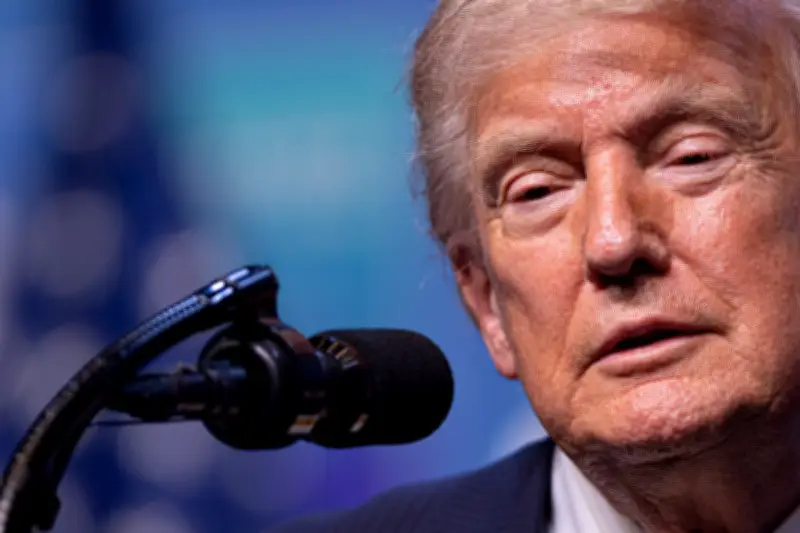
Donald Trump is into the second day of a new phase of bombing Iran, with the US military claiming to have struck 170 Iranian targets in the past 48 hours. The strikes follow Trump's declaration at the Nato summit in Ankara that the US-Iran memorandum of understanding was "over."
Trump's remarks and threats
Speaking at the summit on 8 July 2026, Trump described Iran's leaders as "evil, sick people" and threatened renewed military action and a blockade of Iranian ports, while also leaving the door open to negotiations. On Truth Social, he wrote: "This is in retribution for yesterday's bombing of ships by Iran. If it happens again, it will get much worse!"
Collapse of the memorandum
The memorandum's collapse began almost immediately after it was signed, according to Sina Toossi, a senior non-resident fellow at the Center for International Policy. The central problem is a lack of trust: Tehran had little reason to believe Washington would deliver durable sanctions relief or abandon its strategy of coercion and regime change. The struggle over the Strait of Hormuz became the defining issue.
On paper, the memorandum offered a pathway to de-escalation: shipping through Hormuz would resume under Iranian "arrangements," the US blockade would be lifted, Tehran would receive an oil waiver and access to frozen assets, and the war in Lebanon would end. However, from Tehran's perspective, Washington violated key provisions immediately—the war in Lebanon continued, the US resisted releasing frozen assets, and Trump continued military threats, including publicly threatening to kidnap Iranian negotiators.
Mutual distrust and historical context
Each side concluded the other was pocketing concessions while withholding its own. This distrust reflects decades of failed diplomacy. Iranian policymakers have seen sanctions repeatedly imposed, partially lifted, and reimposed across US administrations. Much of the US sanctions architecture is embedded in congressional legislation, leaving presidents to rely on renewable waivers that can be revoked easily. Businesses and investors understand this, which is why even after the 2015 nuclear deal, sanctions relief failed to produce expected investment and economic stability.
Tehran has concluded that promises of future sanctions relief are too fragile to build long-term security and economic development upon.
Iran's leverage through Hormuz
That leverage is arguably more consequential today than before the war. US strategic petroleum reserves remain substantially depleted, and global oil inventories are tight as shipping through Hormuz remains far below prewar levels. This reduces the cushion to absorb a prolonged disruption, increasing the risk of a global energy shock.
Unlike trading away its nuclear programme for temporary sanctions relief, Hormuz offers Tehran a guarantee that rests in its own hands. By routing commercial traffic through its designated corridor and potentially establishing a joint administration with Oman to collect transit fees, Iran ties its prosperity directly to the global economy. Future US presidents could still abandon diplomacy, but doing so would no longer be cost-free.
Broader strategic shift in Tehran
Iran today possesses three principal forms of leverage: military capabilities and regional alliances (missiles, drones, Hezbollah, Houthis), its nuclear programme (still offering options despite damage), and control over strategic energy chokepoints—above all, the Strait of Hormuz. The latter has become indispensable.
Toossi argues that the question is not whether Iran is prepared to negotiate, but whether the US can offer an arrangement Tehran believes will endure after it surrenders leverage. The memorandum never answered that question. It rested on assurances Iranian leaders regarded as reversible while asking them to dilute durable leverage. Agreements built mainly on promises of future sanctions relief are unlikely to survive.
If Washington fails to grasp how the war has reshaped Tehran's strategic calculus, it will keep negotiating against outdated assumptions and producing agreements neither side believes the other will honour.