President Donald Trump has significantly qualified his earlier assertion that the United States would directly "run" Venezuela, following a dramatic military operation that resulted in the capture of the country's president, Nicolás Maduro, and his wife. The shift comes amid mounting questions from senior figures within his own Republican party and growing international condemnation.
From 'Running' to Demanding Compliance
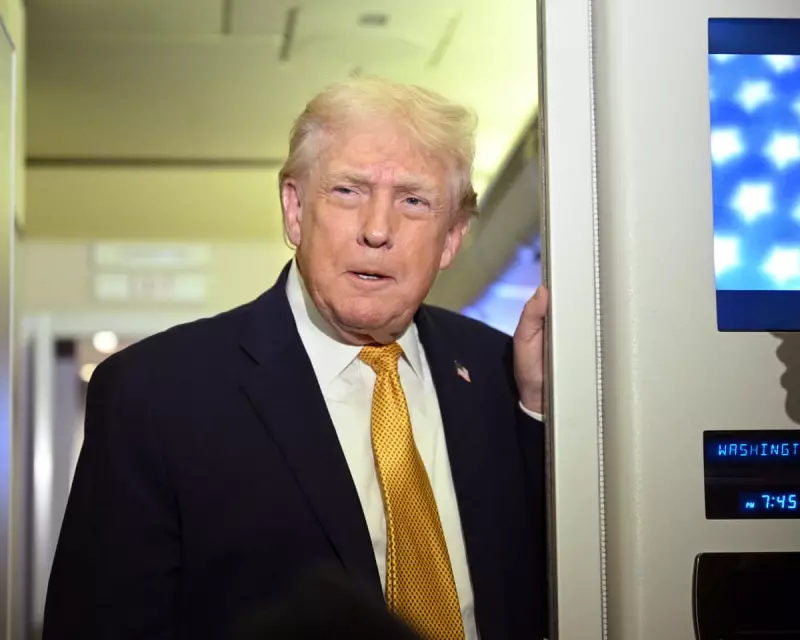
Speaking to reporters aboard Air Force One on 4 January 2026 while returning to Washington DC, Trump outlined a revised stance. He revealed that US Secretary of State Marco Rubio had spoken with Venezuela's new interim president, Delcy Rodríguez. According to Trump, the 56-year-old, who had just days prior pledged loyalty to the ousted Maduro, told Rubio "'we'll do whatever you need'".
"She, I think, was quite gracious, but she really doesn't have a choice," Trump added, indicating that the threat of a fresh military intervention remains if US demands are not met. This marks a retreat from the initial proclamation that America would seize direct control of the South American nation.

Domestic Fury and Military Posturing
The unilateral action has sparked fierce backlash at home. Democratic leaders lambasted the intervention as an illegal act conducted without the constitutionally required approval from Congress. Senator Chris Murphy of Connecticut accused the administration of deceit, stating that officials had previously described the operation as a limited counter-narcotics mission, not one aimed at regime change.
Despite the scaled-back political rhetoric, the US military posture remains assertive. Officials confirmed that a 15,000-strong force is being maintained in the Caribbean region, poised for potential further action should Rodríguez fail to accommodate Washington's requirements.
Reactions: From Street Protests to Diaspora Celebration
The intervention has triggered a complex tapestry of reactions. Across several US cities, protests erupted over the weekend as demonstrators condemned the administration's unilateral move. Simultaneously, in communities with large Venezuelan diasporas, such as Doral, Florida, hundreds celebrated Maduro's downfall with singing and flag-waving.
Internationally, the fallout continued. Danish Prime Minister Mette Frederiksen forcefully rejected renewed threats from Trump regarding Greenland, stating the US has "no right" to annex any part of the Danish kingdom. Meanwhile, Canadian officials issued warnings that US health institutions could no longer be relied upon for accurate information, particularly on vaccinations, due to fears of misinformation emanating from the Trump administration.
In other related developments, Homeland Security Secretary Kristi Noem stated that Venezuelans under Temporary Protected Status (TPS) could now apply for refugee status, and experts warned that Trump's policies have left the United States less prepared for natural disasters due to the gutting of key federal agencies and climate science programmes.