A Trump-appointed council has released a proposal that would fundamentally weaken the Federal Emergency Management Agency (FEMA), the nation's primary disaster response coordinator, at a time when climate change is fueling more frequent and severe extreme weather events. The 12-member "FEMA Review Council," co-chaired by Homeland Security Secretary Markwayne Mullin and Defense Secretary Pete Hegseth, presented its final report on Thursday, calling for a dramatic shift in disaster response responsibilities from the federal government to states and local communities.
Key Recommendations
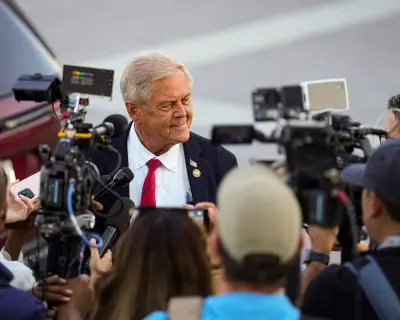
The report, which includes 150 recommended actions, aims to transform FEMA into a "more of a supporting role," according to Kevin Guthrie, a committee member and executive director of the Florida Division of Emergency Management. Among the most significant changes, the council proposes raising the threshold for disaster declarations that unlock federal assistance, leaving evacuation and emergency shelter management to local authorities, and capping payouts to affected homeowners and renters. Guthrie argued that declarations should only be made when events have truly "broken the back of local and state government," and that administrative costs are consuming a growing share of FEMA's assistance funds.
The council also introduced a new funding model for FEMA's public assistance program, which supports infrastructure repair and debris removal. Instead of traditional reimbursements, the plan would issue lump-sum payments within 30 days based on projected damages. Additionally, the report recommends reducing federal environmental and historical reviews, audits, and inspections, shifting these responsibilities to local entities. It also suggests that the private market should take a primary role in the National Flood Insurance Program (NFIP), which is currently over $20 billion in debt. Following the announcement, Neptune Flood, an insurance company advocating for more private participation, saw its stock surge by 22%.

Criticism from Experts
Experts have sharply criticized the proposal, warning that it will leave the United States ill-equipped to handle the escalating risks of climate-driven disasters. "The FEMA review council completely missed the moment we are in right now," said Shana Udvardy, senior climate resilience policy analyst at the Union of Concerned Scientists. She noted that the Trump administration has already "done its best to break FEMA down," cutting hundreds of millions in preparedness funding and losing roughly a third of its full-time staff through firings, retirements, and resignations.
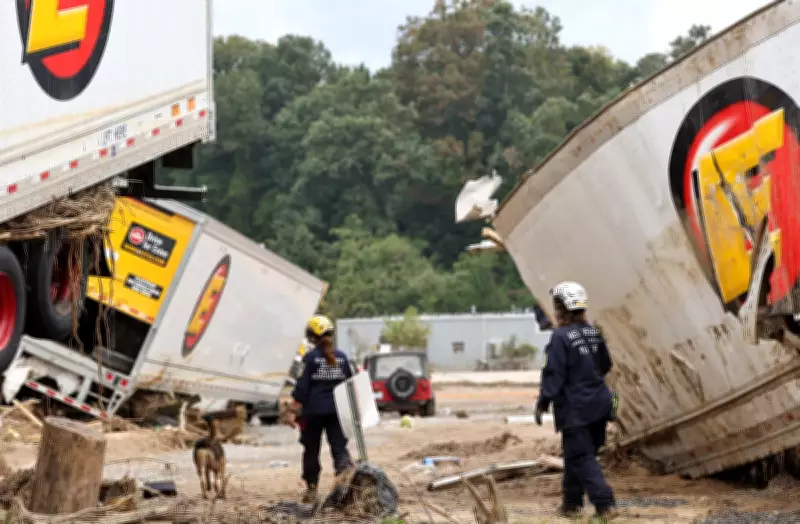
Dr. Andrew Rumbach, a senior fellow at the Urban Institute, highlighted that small local governments are far from prepared to take on additional responsibilities. Many lack dedicated emergency management departments and rely heavily on FEMA's expertise. "I think that this is going to be really a challenging proposition for them," he said. The report's lack of focus on climate change has also drawn criticism. The word "climate" appears only once in the 74-page document, with no reference to the crisis that is intensifying extreme weather events. In the first half of 2025, weather and climate disasters caused over $101 billion in damages, according to Dr. Adam Smith, now a senior climate impacts scientist at Climate Central. He called it "by far the most costly first half of any year on record dating back to 1980."
Lack of Inclusivity and Transparency
The council's claim of extensive public outreach has been questioned. The committee held listening sessions in 13 cities and with four tribal nations, but these meetings were closed-door with limited documentation. Few minority voices were included, despite the fact that minority communities disproportionately bear the brunt of disasters. The council itself is composed primarily of current and former officials from states like Texas, Mississippi, Louisiana, Florida, and Virginia, along with a former chair of the Republican National Committee, a Florida sheriff, and the mayor of Tampa. Only one member, Robert J. Fenton Jr., has decades of FEMA experience and has been outspoken about bureaucratic inefficiencies.

Impact on Disaster Preparedness
The proposal fails to account for the significant damage already done to FEMA under the Trump administration. Before Trump took office, a federal analysis advised more investments in the disaster workforce to reduce burnout. Instead, Trump cut national preparedness funding and slashed staff. He has also denied more disaster declaration requests than his predecessors and taken longer to make decisions, delaying aid distribution. Advocacy group Sabotaging Our Safety gave FEMA a failing grade ahead of the report's release, citing vacant leadership positions, an overloaded workforce, delayed training exercises, and no strategic plan for the upcoming hurricane season. "You cannot cut your way to a capable disaster response agency," said Rafael Lemaitre, a former FEMA public affairs director and advisory council member for the group.
While the recommendations are not yet binding—half would require legislation, four need new policies, and only one could be enacted by executive order—they align closely with the Trump administration's previous positions. Rumbach noted that the report provides some clarity for local officials but expressed disappointment that it did not address how to make disasters cost less in an era of worsening hazards. "A lot of the presentation was focused on post-disaster programmatic implementation versus the big question—how do we make disasters cost less in this country—especially in an era when we know that the hazards themselves are getting worse?"