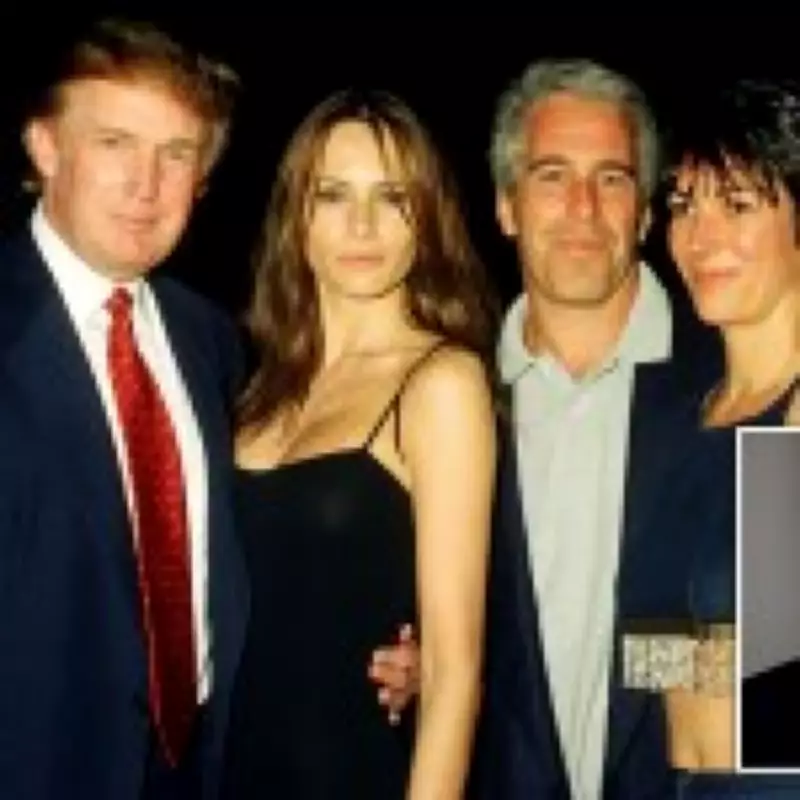
Congressman Reveals Staggering Number of Trump References in Epstein Documents
Democratic Congressman Jamie Raskin has made a startling claim regarding the unredacted Jeffrey Epstein files, asserting that former President Donald Trump's name appears "more than a million" times in the database. Raskin is among the select group of representatives granted access to view the complete, uncensored versions of the documents at the Department of Justice headquarters this week.
Search Results Yield Overwhelming Number of References
"Trump's name... it appears more than a million times. So it's all over the place," Raskin told Axios in an exclusive interview. "In the database, I typed in the words 'Trump,' 'Donald or Don' and it came up with more than a million results."
The congressman added important context to his findings, noting: "I obviously didn't have the time to review each one, and I obviously cannot guarantee that every mention of a Donald is Donald Trump as opposed to some other Donald."

Dramatic Increase from Previously Released Documents
This revelation represents a significant escalation from the initial trove of redacted documents released by the Department of Justice, in which Trump's name appeared approximately 5,300 times. Raskin's claims suggest the former president is mentioned far more frequently than previously understood, though it's crucial to emphasize that these mentions do not necessarily indicate any wrongdoing.
Bipartisan Concerns About Redactions
The controversy surrounding the Epstein files has drawn attention from both sides of the political aisle. Republican Thomas Massie and Democrat Ro Khanna, who fought for the files' release for over a year, revealed that one individual they identified in the unredacted data was "pretty high up in a foreign government."
Massie further disclosed that another person involved was a "well-known, retired CEO," questioning why the Department of Justice had redacted this information. "DOJ should unredact this. Why did they redact it?" he demanded.
Department of Justice Defends Redaction Process
Deputy Attorney General Todd Blanche has defended the redaction decisions, stating: "The document you cite has numerous victim names. We have just unredacted Les Wexner's name from this document, but his name already appears in the files thousands of times. DOJ is hiding nothing."
Contradictions in Trump's Narrative
One particularly notable revelation from the files appears to contradict Trump's longstanding narrative about his relationship with Epstein. The former president has repeatedly claimed that he kicked Epstein out of his Mar-a-Lago club in the mid-2000s because the financier was a "creep."
However, according to an unredacted email that Raskin says he reviewed, Epstein's lawyers summarized a conversation in which Trump stated that "Jeffrey Epstein was not a member of his club at Mar-a-Lago — but he was a guest at Mar-a-Lago and he had never been asked to leave."
Raskin expressed confusion about why this information was originally redacted, calling the decision "inscrutable."
Additional Context from Released Documents
Another document from the Epstein files shows that Donald Trump called the Palm Beach Police Department following Epstein's arrest, expressing relief that authorities were taking action. According to the document, Trump told police: "Thank goodness" they were stopping Epstein, adding that "everyone knows he's been doing this."
Throughout the ongoing controversy, Trump has consistently denied any wrongdoing in relation to Jeffrey Epstein. The former president maintains that he had minimal contact with the convicted sex offender and has distanced himself from the scandal that has ensnared numerous high-profile individuals.
Broader Implications and Continuing Investigation
The revelation of over a million references to Trump in the Epstein files raises significant questions about the extent of their association and the thoroughness of previous document releases. While the sheer volume of mentions is striking, legal experts caution that frequency of appearance does not equate to evidence of criminal activity.

As more representatives gain access to the unredacted files, additional details about the relationships between powerful figures and Jeffrey Epstein may emerge. The ongoing examination of these documents continues to fuel political debates about transparency, accountability, and the proper handling of sensitive information involving prominent individuals.