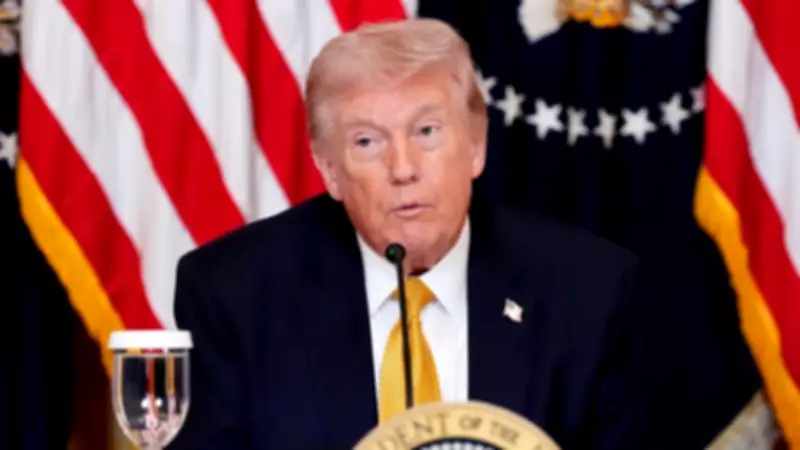
Trump Fooled by Fake AI Video: Four Key Takeaways from Recent Appearances
Donald Trump's latest public appearances have raised serious questions about the type of content the US president is consuming and believing on social media, according to analysis by Sky News correspondent Mark Stone. The president's comments and musings highlight several concerning patterns that could impact both domestic and international policy.
Inconsistencies Over Discussions with Iran
The US president has repeatedly claimed in recent hours that dialogue with Iran is ongoing, stating multiple times that "they want to make a deal." However, when pressed for details about who exactly he was speaking with and what such a deal might entail, Trump was unable to provide coherent answers. Instead, he bizarrely claimed that all the people they had been talking to were now dead, attributing this to the success of military operations.
Trump further complicated matters by questioning whether he would even want to make a deal with Iran if they were indeed interested. These contradictory statements create significant uncertainty about the administration's actual Iran policy and raise questions about the president's grasp of diplomatic negotiations.

Artificial Intelligence Deception
In perhaps the most alarming revelation, President Trump disclosed that he had seen a video on social media showing the US aircraft carrier Abraham Lincoln under attack and on fire. The president revealed that he called his generals to ask about the apparent emergency, only to be informed that the video was completely fake.
This incident raises profound concerns about the president's ability to distinguish between authentic information and manipulated content. As artificial intelligence technology becomes increasingly sophisticated, the potential for such deception to influence presidential decision-making represents a significant national security vulnerability.
The Starmer Phone Call
Following his phone conversation with UK Prime Minister Keir Starmer on Sunday, Trump provided additional insight into their discussion that wasn't included in the official Downing Street readout. The president revealed that Starmer told him he needed to "meet with my team to make a determination" regarding potential assistance with mine sweepers in the Strait of Hormuz.
Trump expressed frustration with this approach, telling the prime minister: "You don't need to meet with the team. You're the prime minister. You can make your own... why do you have to meet with your team to find out whether or not you send some mine sweepers to us..." This exchange highlights differing approaches to decision-making between the two leaders and suggests potential friction in their working relationship.
Geographical Knowledge Gaps
In another revealing moment, Trump indicated that he had only recently been educated about the complex geographical power structure in Lebanon, a crucial understanding given current US support for Israeli military operations in the region. More concerning was his apparent surprise that people actually live in countries like Ukraine and Lebanon.
The president's verbatim comments included: "...substantial person, wealthy person, whose parents live in Lebanon. I said: 'Really, how do you live in Lebanon? Your parents? Oh, yeah, they live there. And over the years, they've gotten used to the fact that it's being bombed.'" He continued with similar astonishment about people living in Ukraine, stating: "You would think they wouldn't live in Ukraine, but they live in Ukraine."
These four takeaways from Trump's recent appearances collectively paint a picture of a president who may be vulnerable to misinformation, inconsistent in policy discussions, and potentially lacking in fundamental geographical understanding of regions where the United States is actively engaged. As artificial intelligence continues to advance and social media platforms remain flooded with manipulated content, the implications for presidential decision-making and national security warrant serious consideration.