Trump Unleashes Fury on Supreme Court Following Tariff Ruling Defeat
In a dramatic confrontation with the judicial branch, former President Donald Trump experienced a significant legal defeat on Friday when the US Supreme Court declared many of his global tariffs illegal. The 6-3 ruling represents the first time the court has overturned a key policy from Trump's second term, striking at the heart of his aggressive economic agenda.
Court Rejects Legal Basis for Trump's Tariff Strategy
The Supreme Court determined that a 1977 law designed for national emergencies did not provide sufficient legal justification for the majority of tariffs imposed by the Trump administration on countries worldwide. This sharp rebuke dismantles a central pillar of the president's trade policy, which had been a cornerstone of his "America First" economic approach.
Trump responded with characteristic vitriol, taking to his Truth Social platform to launch a blistering attack on the justices who ruled against him. He labeled them "fools and lap dogs," accused them of being "very unpatriotic" and "disloyal to the Constitution," and made unsubstantiated claims that "the court has been swayed by Foreign Interests." Notably, his criticism extended to justices he had appointed during his first term.

Presidential Retaliation and Escalating Rhetoric
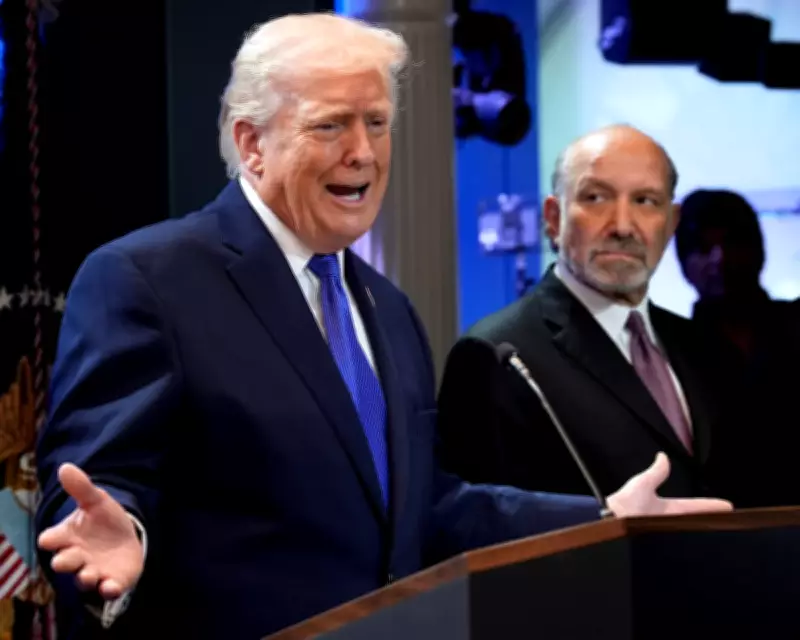
At a subsequent press conference, Trump escalated his rhetoric, declaring the six justices who ruled against his tariffs "a disgrace to the nation." He suggested they would be "barely" invited to the upcoming State of the Union address at the US Capitol, though such invitations are traditionally extended to all Supreme Court justices.
The president claimed the ruling had "emboldened" him to pursue "very powerful alternatives" to the tariffs declared illegal. This threat materialized later Friday when Trump signed documents imposing a sweeping 10% tariff on all countries, scheduled to take effect on Tuesday, February 24, according to a White House fact sheet.
Broader Political Context and International Reactions
The Supreme Court decision comes amid a series of controversial developments in Trump's second term. Britain and the European Union announced they were assessing the implications of the ruling, while business groups reacted with cautious concern. The Department of Homeland Security is reportedly considering a $70 million aircraft with luxurious interiors for deportation flights, which would also transport administration officials to engagements.
In related political developments, Florida Republicans passed legislation to rename West Palm Beach airport as "President Donald J Trump International Airport," drawing condemnation from Democratic colleagues. Meanwhile, New Mexico will reopen its investigation into Jeffrey Epstein's Zorro ranch following public pressure for a fuller accounting of the location's role in the financier's sex-trafficking conspiracy.
Additional Administration Controversies
The tariff controversy unfolded alongside other significant developments. A federal judge accused the Trump administration of "terrorizing" immigrants and recklessly violating law in deportation efforts, citing specific cases where US citizens were killed during protests. The Food and Drug Administration retreated from plans to ban artificial colors in food, loosening labeling requirements instead.
US Ambassador to Israel Mike Huckabee stirred controversy by telling podcaster Tucker Carlson that Israel has a biblical right to take over the entire Middle East, stating "it would be fine if they took it all." California lawmakers introduced legislation to ban federal immigration agents from polling places amid concerns about interference in upcoming midterm elections.
These developments highlight the ongoing tensions between the Trump administration and various institutions, with the Supreme Court ruling representing a particularly significant check on executive power during the president's second term.